


Driving without License not Proof of Contributory Negligence: Punjab & Haryana HC
 Copy Link
 Share
 Save
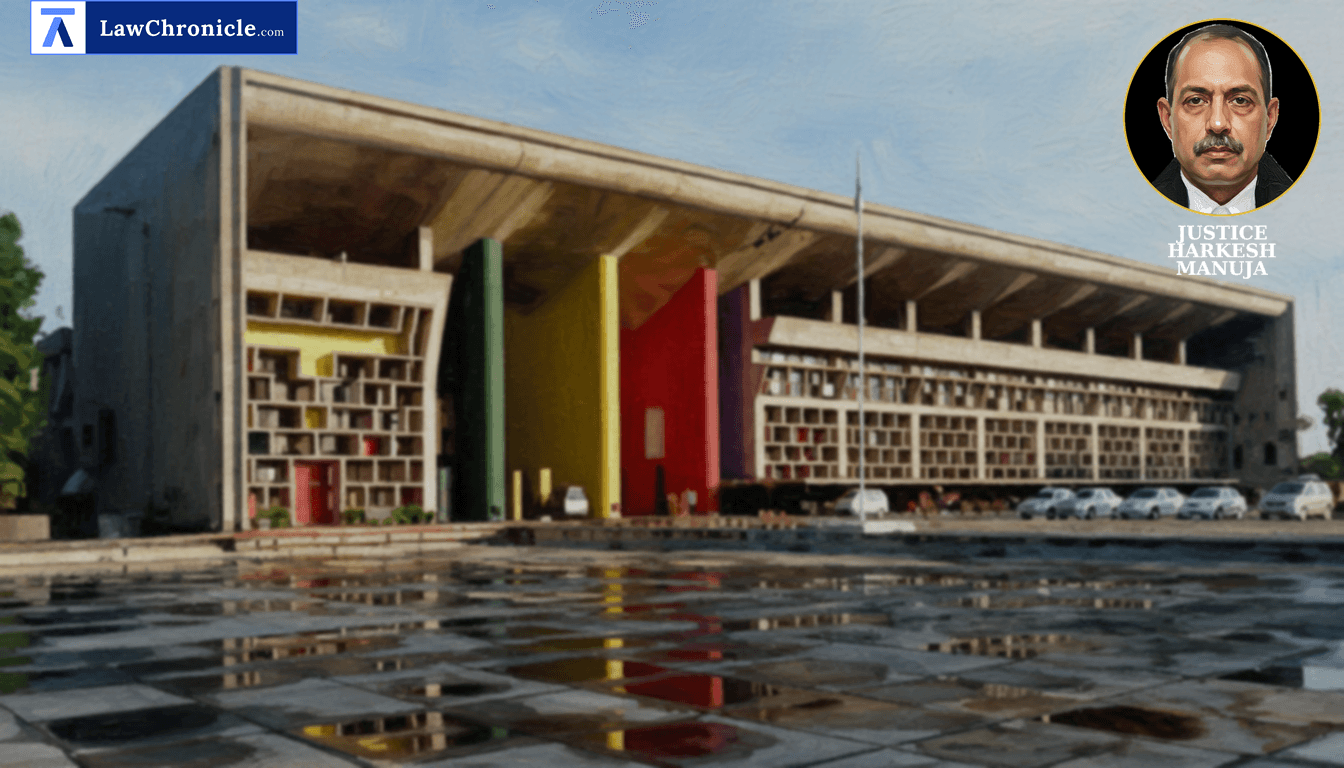
The High Court of Punjab and Haryana has clarified that the mere absence of a valid driving license cannot be equated with contributory negligence unless a direct nexus between the lack of license and the accident is proven.
Developing a nuanced approach to motor accident claims, Justice Harkesh Manuja presided over the appeal challenging a Tribunal's award that had reduced compensation for a deceased motorcyclist's family by 30%. The High Court set aside this reduction, emphasizing that statutory violations do not automatically imply negligence in the physical cause of an accident.
High Court Rejects 30% Deduction for Lack of License
The Court found that the Motor Accident Claims Tribunal, Kaithal, erred by attributing 30% contributory negligence to the deceased solely because he did not possess a valid driving license. The Court observed that the testimony of the eyewitness, corroborating evidence from the FIR, and the failure of the respondent driver to testify all pointed towards the rash and negligent driving of the offending vehicle on the wrong side of the road.
The Court, in its reasoning, observed: "The finding of the Tribunal that non-possession of a driving licence by itself constitutes 30% contributory negligence is, therefore, legally unsustainable. Although driving without a licence may amount to violation of statutory provisions, the same cannot ipso facto lead to a finding of contributory negligence unless a nexus between the absence of licence and the occurrence of the accident is established."
Application of Established Precedents
In arriving at its decision, the Court relied on the principles laid down by the Supreme Court in National Insurance Co. Ltd. v. Swaran Singh and Sudhir Kumar Rana v. Surinder Singh ( "2008 (12) SCC 436": 2008 CaseBase(SC) 380), which established that an invalid license does not establish negligence by itself. Furthermore, for the calculation of compensation, the Court integrated the principles of future prospects and personal expense deductions as per National Insurance Co. Ltd. v. Pranay Sethi and Sarla Verma v. Delhi Transport Corporation ( "2009 (3) RCR (Civil) 77": 2009 CaseBase(SC) 380). The Court also addressed the assessment of consortium and conventional heads based on the ruling in United India Insurance Co.Ltd. vs. Satinder Kaur ( "(2021) 11 SCC 780": 2020 CaseBase(SC) 22).
Directions on Enhanced Compensation
Beyond setting aside the contributory negligence finding, the Court enhanced the interest rate from 7.5% to 9% per annum, citing Smt. Supe Dei and others vs. National Insurance Company Limited and other and Puttamma and others vs. K.L. Narayana Reddy and another. The Court has the following directions:
"The appellants/claimants shall be entitled to receive above enhanced compensation in the proportion already determined by the learned Tribunal. The interest is enhanced to 9% per annum on the amount of compensation re-assessed from the date of institution of claim petition till its realization. In case the said amount is not paid within three months, the same shall be payable thereafter along with 12% interest from the expiry of period of three months from today."
Background:
The dispute arose from a road accident on April 18, 2011, where Ravinder Rai succumbed to injuries after his motorcycle was struck by a vehicle driven by respondent No. 1 on the wrong side of the road. The claimants approached the High Court seeking enhancement of the Rs. 7,44,520/- award granted under the Motor Vehicles Act, 1988. The primary legal issue was whether the Tribunal was justified in deducting 30% of the compensation amount on the ground of the deceased not having a license. The High Court ultimately allowed the appeal, increasing the total compensation to Rs. 13,17,600/- and holding the respondent solely liable.
Case Details:
Case No.: FAO-4382-2014 (O&M)
Case Title: LAXMI AND OTHERS Vs. SHIV KUMAR AND ANOTHER
Appearances:
For the Petitioner(s): Mr. Sandeep Berwal, Advocate
For the Respondent(s): Mr. Punit Jain, Advocate for respondent No.2/Insurance Company
Source: 2026 CaseBase(PNH) 52
Similar Articles
 Breaking News


