


Non-Production Of Driving Licence Does Not Prove Contributory Negligence: Jharkhand HC
 Copy Link
 Share
 Save
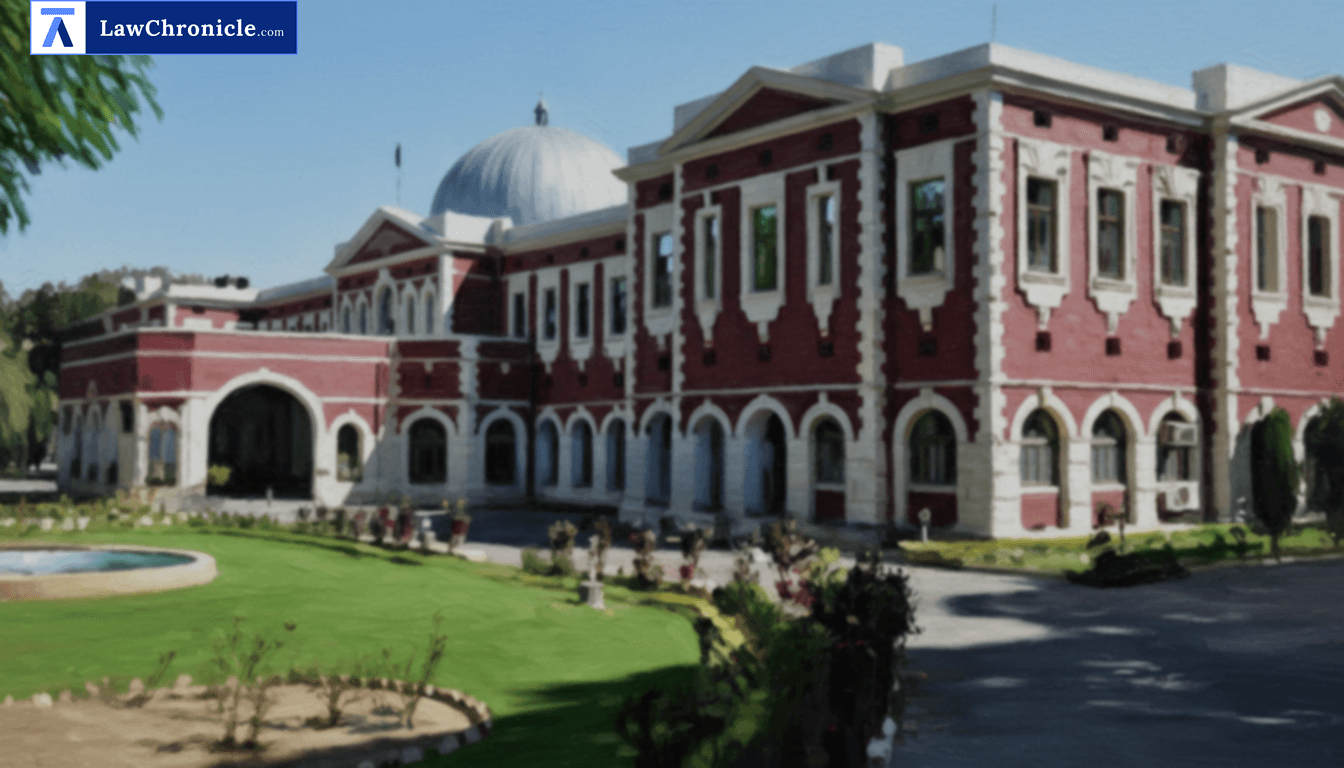
Setting aside the automatic inference of contributory negligence, the High Court of Jharkhand has ruled that the mere non-production of a victim's driving licence cannot shift liability or reduce compensation in motor accident cases without positive evidence of causation. The decision firmly reinforces that powers under Order XLI Rule 33 of the Code of Civil Procedure, 1908 allow appellate courts to enhance compensation to ensure complete justice even in the absence of a cross-appeal by the claimant.
A single-judge bench comprising Chief Justice M. S. Sonak adjudicated an appeal filed by a vehicle owner challenging the compensation award passed by the Motor Vehicles Accident Claims Tribunal, Dhanbad. The appellant contested the quantum of compensation, arguing that the Tribunal erred in its evaluation of evidence regarding contributory negligence, the non-production of the victim's driving licence, and the calculation of medical expenses.
Key Takeaways
No Automatic Contributory Negligence: Non-production of a driving licence or the occurrence of a frontal collision does not inherently prove contributory negligence without direct causal connection.
Appellate Power to Enhance Compensation: Courts can invoke Order XLI Rule 33 of Code of Civil Procedure, 1908 to remove unsustainable deductions and award just compensation without a formal cross-appeal.
Interest Accrual Standardized: Absence of insurance or owner's financial hardship are legally invalid grounds to defer statutory interest under Section 171 of Motor Vehicles Act, 1988.
Evaluating the contentions, the High Court held that the burden of proving contributory negligence lies entirely on the party asserting it, as held in Mohammed Siddique & Anr. v. National Insurance Co. Ltd. & Ors. ( "(2020) 3 SCC 57": 2020 CaseBase(SC) 1515). The Court affirmed that a mere head-on collision or lack of a driving licence does not automatically lead to an inference of negligence, relying on Jiju Kuruvila v. Kunjujamma Mohan ( "(2013) 9 SCC 166": 2013 CaseBase(SC) 991) and Dinesh Kumar J. v. National Insurance Co. Ltd.. It observed that unless an explicit causal link is proved between the absence of a licence and the occurrence or aggravation of the accident, such non-production remains wholly irrelevant under Section 166 of Motor Vehicles Act, 1988.
The Court, in its reasoning, observed: "In the present case, no such evidence has been led. The appellant has neither proved that the absence of the licence was in any manner responsible for the accident nor that it aggravated the injuries suffered by the claimant. Once the rash and negligent driving of the driver of the offending vehicle stands established based on the ocular evidence, the non-production of the claimant’s driving licence becomes wholly irrelevant for the purpose of determining liability or quantum under S. 166 of the Motor Vehicles Act, 1988."
The Court has following directions:
"The appellant is now directed to deposit the enhanced compensation amount with this Court within six weeks from today, after giving due intimation to the learned counsel for the respondent. There was no clarity about whether the originally deposited amount was deposited. If the same was not deposited, then the appellant must deposit the same as well within six weeks after giving due intimation to the learned counsel for the respondent. Such amount should also be paid to the respondent in the manner indicated above. Once the amount is deposited, the Registry is directed to permit the respondent (original claimant) to withdraw it by transferring it into his bank account. Under no circumstances should the transfer be made otherwise than through regular banking channels. The learned counsel for the respondent shall provide the identity and bank details of the respondent so that the transfer of the compensation can be effected at the earliest."
Ratio
The absence of a valid driving licence or non-production thereof does not constitute contributory negligence per se unless a direct causal nexus is established between such absence and the cause or worsening of the accident. Furthermore, appellate courts possess the power under Order XLI Rule 33 of Code of Civil Procedure, 1908 to rectify erroneous tribunal deductions and enhance compensation to achieve 'just compensation' without requiring a cross-appeal or cross-objection from the claimant.
Background
The appeal arose out of a motor accident claim where the Tribunal had calculated the overall compensation at Rs. 3,12,331/- but restricted the liability of the vehicle owner to 75% (Rs. 2,35,000/-) on account of imputed contributory negligence. The Tribunal had also awarded interest from the date of the award rather than the date of filing the petition due to the vehicle being uninsured. The vehicle owner appealed against the tribunal's findings.
Rejecting the owner's appeal, the High Court observed that the ocular testimony of three independent eyewitnesses clearly established rash and negligent driving by the offending vehicle's driver. The Court declared the Tribunal's deduction for contributory negligence unsustainable as no specific issue was framed on the matter. Citing Nagappa v. Gurudayal Singh ( "(2003) 2 SCC 274": 2002 CaseBase(SC) 1060) and Surekha v. Santosh ( "(2021) 16 SCC 467": 2020 CaseBase(SC) 1026), the Court exercised powers under Order XLI Rule 33 of Code of Civil Procedure, 1908 to enhance the total compensation to Rs. 3,12,500/- and modified the interest award under Section 171 of Motor Vehicles Act, 1988 to run at 6% p.a. from the date of filing of the claim petition until realization.
Case Details:
Case No.: M. A. No. 145 of 2017
Neutral Citation: 2026:JHHC:23726
Case Title: Sri Shiv Kumar Agarwal v. Md. Sultan
Appearances:
For the Petitioner(s): Ms Neeharika Roy Mazumdar, Advocate
For the Respondent(s): Mr P.K. Mukhopadhyay, Advocate, Mr S.K. Murtty, Advocate
Source: 2026 CaseBase(JHKD) 66
Similar Articles
 Breaking News


