


Dubious Dying Declaration Cannot Sustain Murder Conviction: Allahabad HC
 Copy Link
 Share
 Save
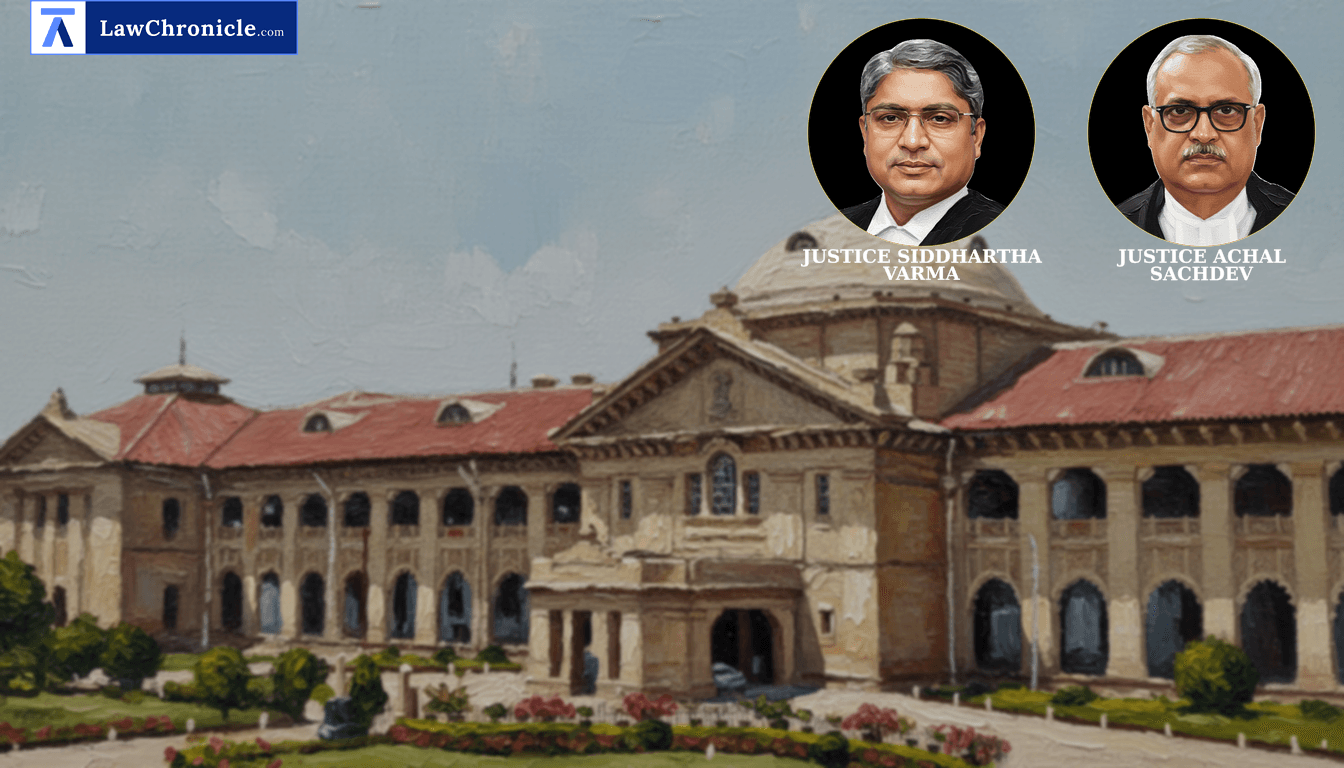
Exposing serious procedural improprieties and manipulated evidence, the Allahabad High Court set aside a life sentence while ruling that a dubious dying declaration recorded without medical certification of mental fitness cannot sustain a conviction for murder.
A division bench comprising Justice Siddhartha Varma and Justice Achal Sachdev allowed the criminal appeal, reversing a conviction handed down under Section 302 read with Section 34 of the Indian Penal Code. The Court was hearing a challenge against the judgment of the Additional Sessions Judge, Saharanpur, which had sentenced the appellant to life imprisonment for allegedly burning a man to death.
Key Takeaways
Unreliable Dying Declarations: Dying declarations recorded when the victim is in a critical condition without a doctor's certificate of fitness cannot be relied upon, especially when discrepancies suggest external manipulation.
Fatal Procedural Failures: Non-compliance with statutory procedure regarding the prompt dispatch of police reports under Section 173(2) of the Cr.P.C. severely jeopardizes the prosecution's case.
Chain of Circumstantial Evidence: Contradictions between medical findings, physical evidence, and witness testimony shatter the unbroken chain required to establish guilt beyond reasonable doubt.
The High Court critically evaluated the prosecution's reliance on a dying declaration, noting that the medical record initially listed the patient as an unidentified person brought in with extensive burns, while treating doctors confirmed there was no smell of kerosene on the victim.
The Court, in its reasoning, observed: "A definite conclusion thus can be arrived at that while the burnt patient was unable to speak, a dying declaration was drawn in the handwriting of Naib Tehsildar and the names of the accused were incorporated in the dying declaration... All these create a grave doubt in the minds of the Court and it thus has no other option but to conclude that since the prosecution had so many lacuna, the case becomes absolutely doubtful and thus, the judgment and order dated 13.6.2018/14.6.2018 passed by the Additional Sessions Judge, Saharanpur in Sessions Trial No.216 of 2014 cannot be sustained in the eyes of law."
The Court issued the following directions:
"The appeal stands allowed. The judgment and order dated 13.6.2018/14.6.2018 passed by the Additional Sessions Judge, Saharanpur in Sessions Trial No.216 of 2014 is set aside. The appellant Amit, if is not required in any other criminal case, be released forthwith."
Ratio
A dying declaration recorded in suspicious circumstances without explicit medical certification of mental fitness cannot form the sole foundation of conviction. Where prosecution evidence in a circumstantial case is riddled with material contradictions and unexplained gaps, the benefit of doubt must accrue to the accused.
Background
The dispute originated from an incident on September 22, 2013, where the victim was found with severe burn injuries and subsequently died. An FIR was lodged alleging that the accused had called the victim out and set him ablaze over a financial dispute. The trial court convicted the accused based on the victim's recorded dying declaration and witness statements.
In appeal, the appellant contended that while the FIR claimed the accused personally visited the victim's house, the dying declaration alleged a phone call was made. Furthermore, defense counsel cited Meharaj Singh vs. State of U.P. to highlight that the failure to transmit police reports undermines the investigation, and referenced Suresh vs. State : Represented by Inspector of Police to argue that contradictory dying declarations must be discarded. Accepting these arguments and identifying gross inconsistencies in the documents authorizing the Naib Tehsildar to record the statement, the High Court quashed the conviction and ordered the appellant's immediate release.
Case Details:
Case No.: Criminal Appeal No. 3585 of 2018
Case Title: Amit Kumar v. State of U.P.
Appearances:
For the Petitioner(s): Akhilesh Chandra Shukla, Rajiv Lochan Shukla, Subhash Chandra Pandey
For the Respondent(s): AGA
Source: 2026 CaseBase(ALL) 633
Similar Articles


 Breaking News


