


Dying Declaration Untrustworthy When Victim Suffers Over 90% Burns: Karnataka HC
 Copy Link
 Share
 Save
The Karnataka High Court has overturned a conviction for murder and dowry death, ruling that a victim with 90-95% burn injuries cannot be deemed mentally or physically fit to record a legally valid dying declaration without stringent medical certification. This decision reinforces the evidentiary threshold required for dying declarations, emphasizing that judicial and police officers must strictly verify a declarant's capacity to speak before recording statements in high-intensity trauma cases.
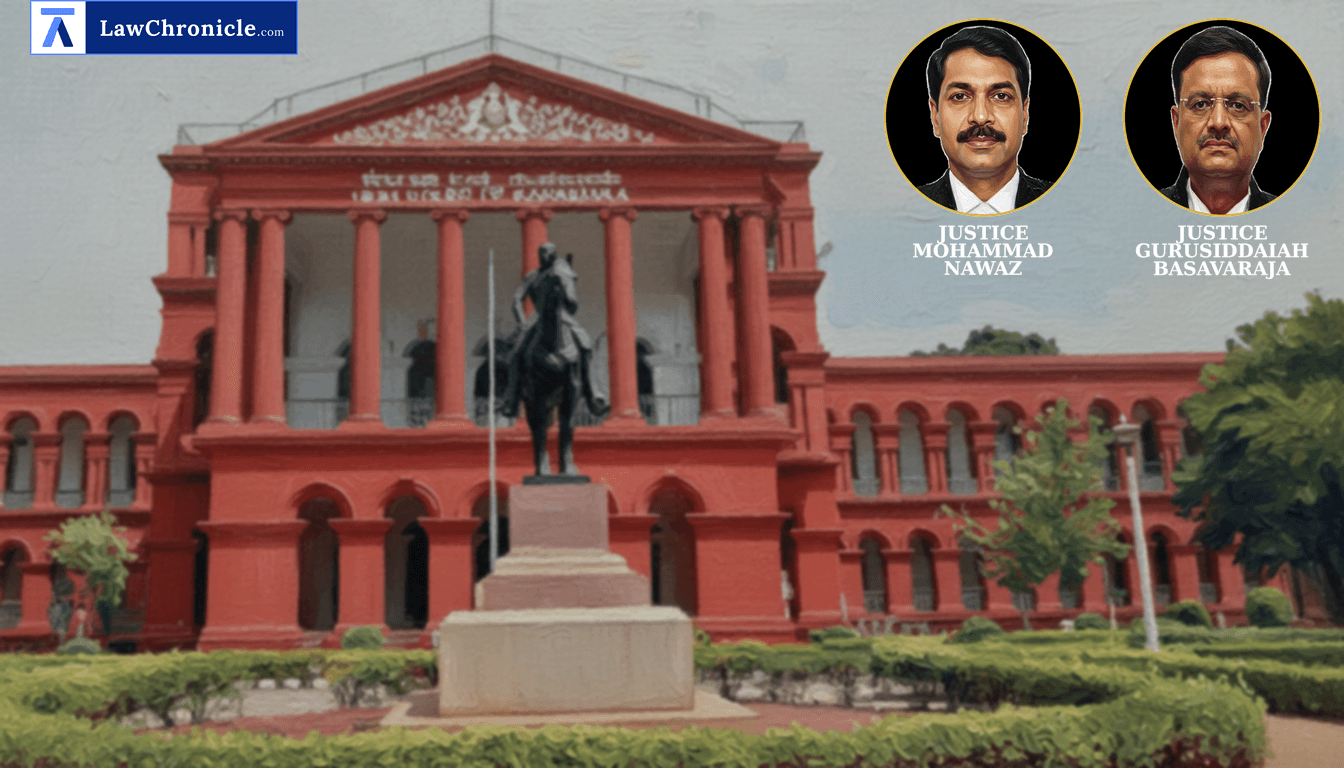
A bench of Justice Mohammad Nawaz and Justice G Basavaraja set aside the life imprisonment sentence of a man accused of immolating his wife. The Court found that the prosecution's reliance on a statement recorded by a Tahsildar was fundamentally flawed, as the medical evidence suggested the victim was in no state to provide a coherent narrative.
Medical Impossibility of Statement Recording
The Court, in its reasoning, observed: "PW10-Dr. Krishnamurthy himself admitted in his evidence that the injured sustained burn injuries to an extent of 90-95% and she is unable to give any statement. The evidence of prosecution will falsify the evidence of Tahsildar, who has put a signature on Exhibits P13 and P14. The injured was not in a position to give statement to the Police or to the Tahsildar."
The Court noted that the medical officer had not endorsed the physical or mental condition of the victim on the statement recorded under Section 374(2) of the Code of Criminal Procedure. Furthermore, the absence of hospital case sheets, pulse rate records, and blood pressure monitoring at the time of the alleged declaration cast a heavy shadow of doubt on the prosecution's story.
Inconsistencies in Dying Declarations and Procedure
The bench highlighted the procedural lapses by the Investigating Officer, including a significant delay in forwarding the First Information Report (FIR) to the Magistrate under the Indian Penal Code. While the prosecution invoked Section 498A, 302, and 304B of the Indian Penal Code and Section 3 of the D.P Act, the Court found zero evidence of any dowry demand or eye-witness testimony to support the immolation theory.
The Court has the following directions:
"1. Appeal is allowed;
2. The judgment of conviction dated 1st March, 2018, and order on Sentence dated 5th March, 2018, passed in SC No.87 of 2015 by the V Additional District & Sessions Judge, Hassan, is set aside;
3. Accused is acquitted of the offences punishable under Sections 498-A, 302, 304-B of Indian Penal Code and Section 3 of Dowry Prohibition Act;
4. Registry is directed to communicate the judgment to the concerned Jail Authority to release the accused forthwith, if he is not required in any other case;
5. Registry to send a copy of this judgment along the trial Court records to the concerned Court;
6. The Secretary to High Court Legal Services Committee is directed to pay the requisite fee as per rules to Sri H.S. Suresh, learned Counsel, who has assisted the court."
Background:
The appellant was originally convicted for the murder of his wife, Sarita, following an incident on January 29, 2015. It was alleged that the accused, an alcoholic, doused his wife with kerosene and set her on fire after a quarrel regarding the sale proceeds of paddy. The victim succumbed to 90-95% burn injuries on February 5, 2015. The prosecution relied heavily on a complaint (Exhibit P14) and a dying declaration (Exhibit P13) recorded by the Taluk Executive Magistrate.
Defense counsel Sri H.S. Suresh argued that the dying declaration was recorded belatedly and that the victim’s condition made it medically impossible for her to give a statement. The defense also pointed out that the doctor who supposedly certified her fitness admitted during cross-examination that a person with such extensive burns would be unable to speak. The High Court agreed, noting that the documents used to convict the appellant were mechanically produced and inconsistent with the medical reality of the victim's injuries.
Key Takeaways:
Stricter Scrutiny of Declarant's Fitness
Judges must look beyond the mere presence of a doctor’s signature to see if there is a substantive endorsement of the victim’s physical and mental capacity to provide a statement.
High-Degree Burns Limit Testimony Reliability
Testimony that a victim with over 90% burns gave a detailed, coherent statement will be viewed with extreme caution by the courts in the absence of corroborative medical monitoring records.
Impact of Investigating Delays
Unexplained delays in dispatching the FIR and dying declarations to the jurisdictional Magistrate can prove fatal to the prosecution's case in criminal appeals.
Ratio Decidendi:
A conviction cannot be sustained based on a dying declaration where the medical evidence and the extent of injuries (90-95% burns) suggest the victim was incapable of making a statement, and where the prosecution fails to provide consistent medical certification of the declarant’s fitness.
Case Details:
Case No.: CRIMINAL APPEAL NO.150 OF 2019
Case Title: NAGARAJA U D v. STATE OF KARNATAKA
Appearances:
For the Petitioner(s): SRI. SURESH H S., ADV.
For the Respondent(s): SRI. RAHUL RAI K., HCGP.
Source: 2026 CaseBase(KAR) 234
Similar Articles
 Breaking News


