


Dying Declaration Lacking Authenticity Cannot Sustain Conviction: Jharkhand HC
 Copy Link
 Share
 Save
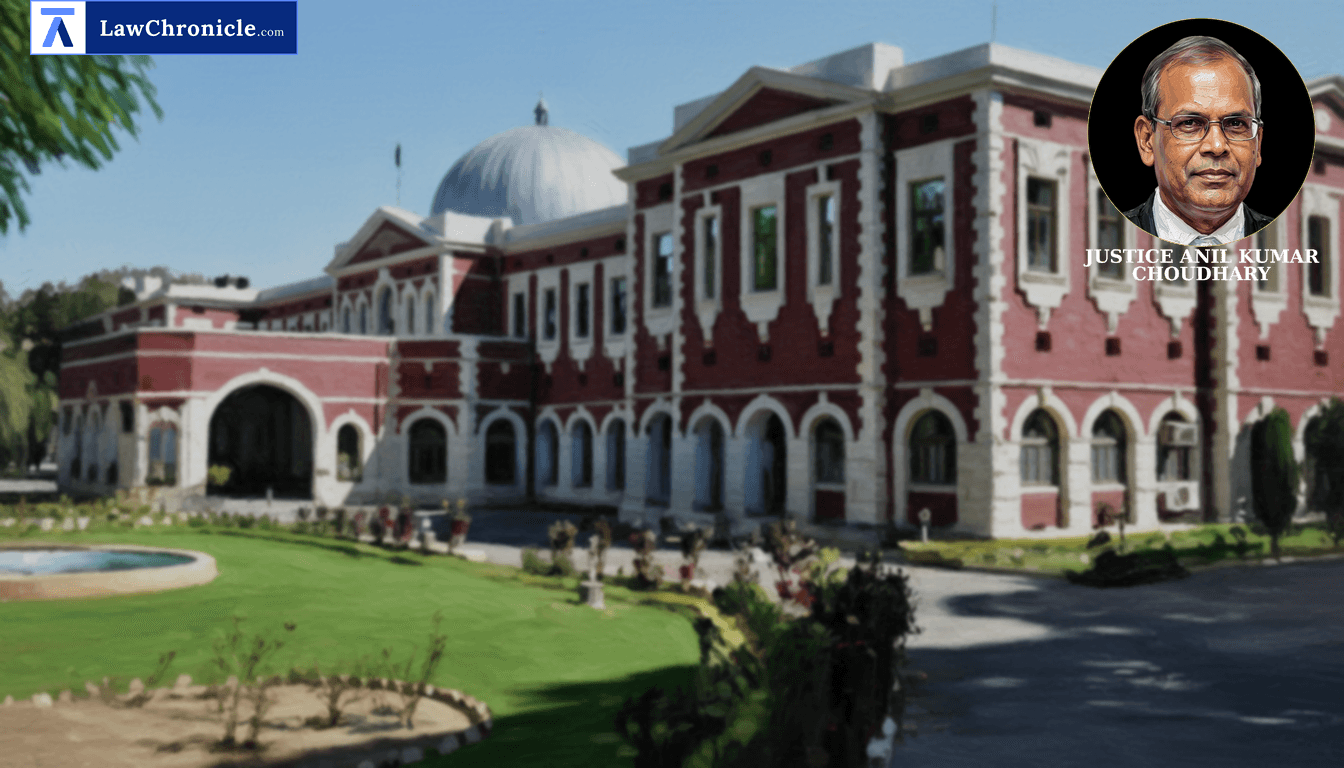
The Jharkhand High Court has overturned a culpable homicide conviction, ruling that an oral dying declaration failing to inspire the court's 'full confidence' due to medical discrepancies and the victim's unconscious state is legally untenable. This judgment underscores the stringent evidentiary threshold required to sustain a conviction solely based on the final statements of a deceased person, particularly when medical evidence suggests a lack of cognitive fitness.
A single-judge bench of Justice Anil Kumar Choudhary heard the appeal challenging the judgment of conviction and order of sentence passed by the Additional Sessions Judge-IX, Giridih. The appellant had been convicted under Section 304 Part II of the Indian Penal Code and sentenced to five years of rigorous imprisonment.
Key Takeaways
Strict Scrutiny of Oral Declarations
An oral dying declaration must be free from suspicion and must clearly establish that the deceased was in a fit state of mind to make a statement.
Medical Corroboration is Essential
Convictions cannot stand when the prosecution's claim of a conscious dying declaration is directly contradicted by medical testimony indicating the victim was unconscious or in a precarious condition.
Impact of Investigative Gaps
Failure to recover the alleged weapon of offence and unexplained delays in filing a First Information Report (FIR) significantly weaken the prosecution's narrative, necessitating the benefit of doubt for the accused.
Judicial Scrutiny of Dying Declarations
The High Court meticulously examined the reliability of the oral dying declaration. While acknowledging that such declarations can form the sole basis of conviction, the Court emphasized the necessity of authenticity. The Court, in its reasoning, observed: "...it is a settled principle of law that dying declaration can be the sole for conviction but the rider is that such dying declaration must inspire full confidence of the court as has been held by the Hon’ble Supreme Court of India in the case of Atbir v. Government (NCT of Delhi)."
The Court noted significant inconsistencies in the testimonies of the prosecution witnesses regarding the victim's state of mind. Several witnesses admitted in cross-examination that the deceased was unconscious upon reaching her parental home. Furthermore, the medical professional who first saw the victim refused treatment due to her "precarious condition," casting grave doubt on whether she was capable of speaking at all.
Contradictions in Medical Evidence
The Court highlighted the discrepancy regarding the nature of injuries. While witnesses claimed the deceased was assaulted all over her body with a kitchen skimmer, the autopsy report by P.W.6 revealed only a single head injury. The Court observed: "The suspicion regarding unfit state of mind of the deceased arises from the fact that the doctor of the hospital, where the deceased was claimed to be admitted has categorically stated that when she was brought to the hospital, because of her precarious condition he refused to treat her and advised to take her to the district hospital."
The Court has the following directions:
"Accordingly, the impugned judgment of conviction dated 27.02.2025 and order of sentence dated 28.02.2025 passed by the learned Additional Sessions Judge-IX, Giridih in Sessions Trial No. 21 of 2024 is set aside and the appellant is acquitted of the charge by giving him the benefit of doubt. The appellant who is in custody is directed to be set free unless his detention is required in connection with any other case."
Ratio
An oral dying declaration can serve as the sole basis for conviction only if it inspires the full confidence of the Court and is proved to have been made in a fit state of mind. Where the medical evidence or witness testimonies suggest the deceased was unconscious or where there are material contradictions regarding the injuries and weapon of offence, the declaration loses its evidentiary value, and the accused is entitled to the benefit of doubt.
Background
The prosecution alleged that the appellant, who was in a live-in relationship with the deceased Sunny Murmu, assaulted her on March 23, 2023, following a domestic dispute. The deceased reportedly reached her parental home crying, naming the appellant as the assailant before succumbing to her injuries the next day. The trial court relied heavily on the precedent set in Rajendra vs. State of Maharashtra, which held that an authentic dying declaration inspiring confidence does not require corroboration, to convict the appellant under Section 304 Part II of the Indian Penal Code.
However, the High Court found that the prosecution failed to explain a two-day delay in lodging the FIR and failed to recover the weapon of offence. The Court also noted potential motives for false implication due to the parents' disapproval of the couple's relationship. Consequently, the High Court set aside the conviction and allowed the appeal.
Case Details:
Case No.: Cr. Appeal (SJ) No. 586 of 2025
Neutral Citation: 2026:JHHC:27436
Case Title: Baburam Chaude v. The State of Jharkhand & Anr.
Appearances:
For the Petitioner(s): Mr. Rajiv Sinha, Sr. Advocate; Mr. Niraj Kumar, Advocate; Ms. Shreesha Sinha, Advocate
For the Respondent(s): Mr. Sardhu Mahto, Addl. P.P.
Source: 2026 CaseBase(JHKD) 2749
Similar Articles
 Breaking News


