


Electricity Arrears Form Charge On Premises, Recoverable From Owner: Orissa HC
 Copy Link
 Share
 Save
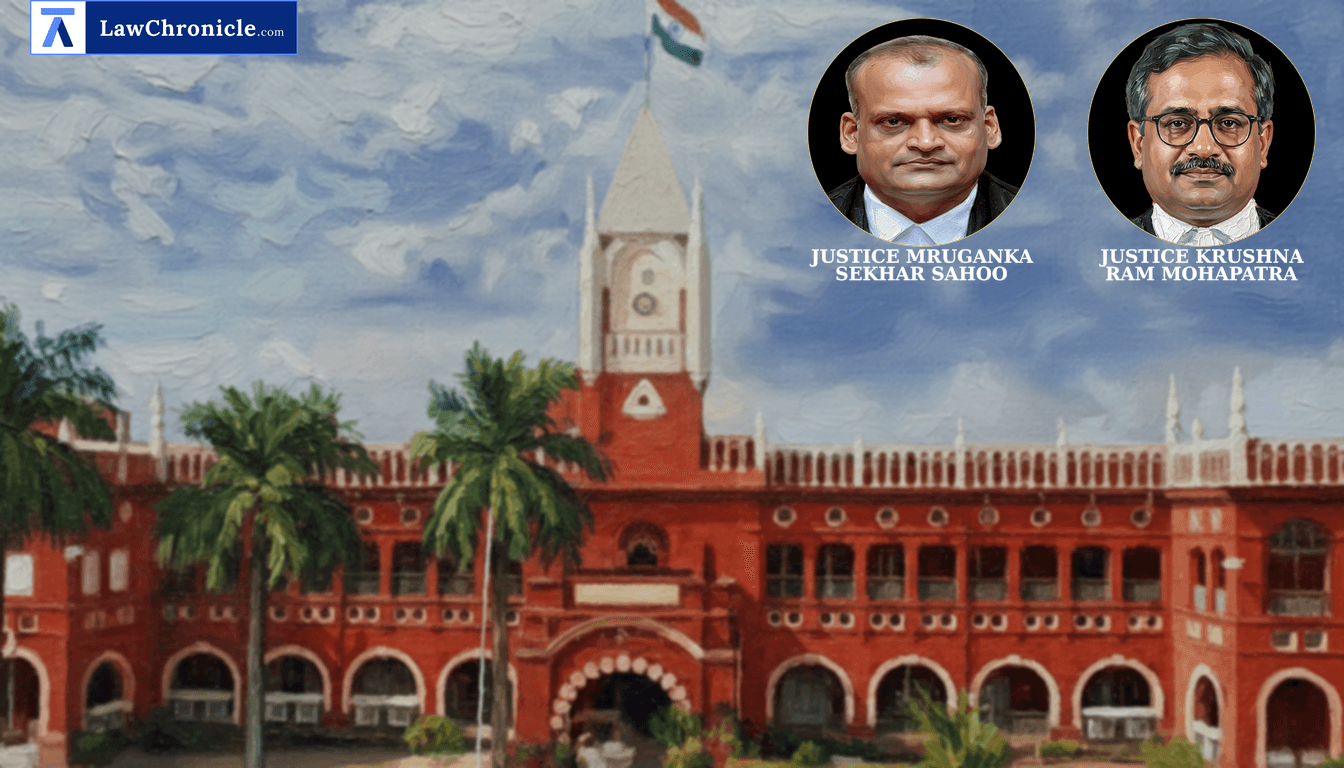
In a decisive verdict upholding statutory cost-recovery mechanisms for public utilities, the High Court of Orissa held that unpaid electricity dues constitute an encumbrance on the premises itself rather than a mere personal liability of an individual consumer. The Court ruled that a property owner remains liable to clear outstanding electricity arrears attached to the premises, even if the connection was originally issued in the name of a third party without explicit owner consent.
A Division Bench comprising Justice K.R. Mohapatra and Justice Mruganka Sekhar Sahoo heard the writ petition challenging administrative orders confirming a recovery demand raised by the distribution utility TPWODL.
Key Takeaways
- Charge Attaches to Premises: Electricity arrears constitute a statutory charge on the property, rendering the premises itself encumbered regardless of individual identity shifts.
- Owner Liability Upheld: Lawful owners in possession are legally obligated to discharge past unpaid electricity dues attached to their premises.
- No Consent Defense Invalidated: The absence of explicit owner permission or knowledge when a third-party connection was granted does not negate the statutory encumbrance on the property.
- High Court Scope Limited: Concurrent findings of fact recorded by statutory forums like the GRF and Ombudsman will not be re-appreciated in writ jurisdiction under Article 226 unless ex-facie perversity is demonstrated.
Court Observations and Directions
The High Court carefully evaluated the statutory provisions under Regulation 17(vi) of the Odisha Electricity Regulatory Commission Distribution (Conditions of Supply) Code, 2019 alongside binding judicial precedents. Rejecting the petitioner's plea that he had not consented to the power connection granted to another occupant of his premises, the Bench underscored that the statutory framework governing power distribution makes no distinction between connections provided with or without the owner's explicit permission.
The Court, in its reasoning, observed: "When the charge and encumbrance is created in respect of the premises and not against any individual then the lawful owner, i.e., the Petitioner in the instant case is liable to made good the same."
Addressing the scope of judicial review against concurrent administrative findings, the Bench further affirmed that it would not interfere with well-reasoned orders of statutory bodies merely because an alternative view might exist. The Court, in its reasoning, observed: "The impugned findings being outcome of concurrent finding of facts, this Court should not interfere with the same only because a second view may be possible by re-appreciation of evidence."
Ratio
Under statutory supply codes framed pursuant to the Electricity Act, 2003, outstanding electricity dues constitute a statutory charge and encumbrance running with the premises. The distribution utility is legally entitled to recover such arrears from the lawful owner or subsequent occupier in possession of the premises, irrespective of whether the connection was originally taken with or without the owner's express consent.
Background
The petitioner, Sri Sitaram Agarwal, owned and occupied certain premises in Sambalpur Town. While he maintained an active power connection in his name, a separate power supply connection was granted for a portion of the same premises in the name of Sanjay Kumar Agrawalla (who was the petitioner's son). Due to default in clearing electricity charges amounting to Rs.1,35,679/- up to April 2016, the power supply for the second connection was disconnected.
Thereafter, the utility TPWODL raised a demand of Rs.1,35,679/- against the petitioner. The petitioner challenged the demand before the Grievance Redressal Forum (GRF), Sambalpur, claiming he had never consented to or been informed about the power connection granted to Sanjay Kumar Agrawalla, and therefore could not be made liable for his arrears. The GRF rejected the complaint on August 19, 2021. The petitioner's subsequent representation before Ombudsman-II, Odisha Electricity Regulatory Commission was also dismissed on March 7, 2022. Aggrieved, the petitioner approached the High Court under Constitution of India.
The distribution utility placed reliance on the landmark Supreme Court decision in K.C. Ninan vrs. Kerala State Electricity Board and others, which established that regulatory commissions possess wide powers under Sections 50 and 181 of the Electricity Act, 2003 to frame subordinate regulations creating a statutory charge over premises to recover electricity arrears. The utility further invoked Regulation 17(vi) of the Odisha Electricity Regulatory Commission Distribution (Conditions of Supply) Code, 2019, which explicitly stipulates that unpaid electricity dues of an erstwhile owner or occupier shall be a charge on the premises transmitted to the new owner or lawful occupier. The utility also pointed out that the petitioner had illegally extended power supply to the defaulted portion of the premises using his own active meter.
Accepting the utility's submissions and relying on MSEDCL v. APML & others regarding non-interference with concurrent factual findings, the High Court held that the demand was lawfully enforceable against the petitioner as a charge on the premises. Consequently, the High Court found no infirmity in the orders of the Ombudsman and the GRF, and dismissed the writ petition.
Case Details:
Case No.: W.P.(C) No.9278 of 2022
Case Title: Sri Sitaram Agarwal v. TPWODL and others
Appearances:
For the Petitioner(s): Mr. Shakti Prasad Das, Advocate
For the Respondent(s): M/s. Prasanta Kumar Tripathy & Mr. Sambit Pattanayak, Advocates
Source: 2026 CaseBase(ORI) 86
 Breaking News


