


Encroachers Cannot Seek Immunity Through Procedural Technicalities: Allahabad HC
 Copy Link
 Share
 Save
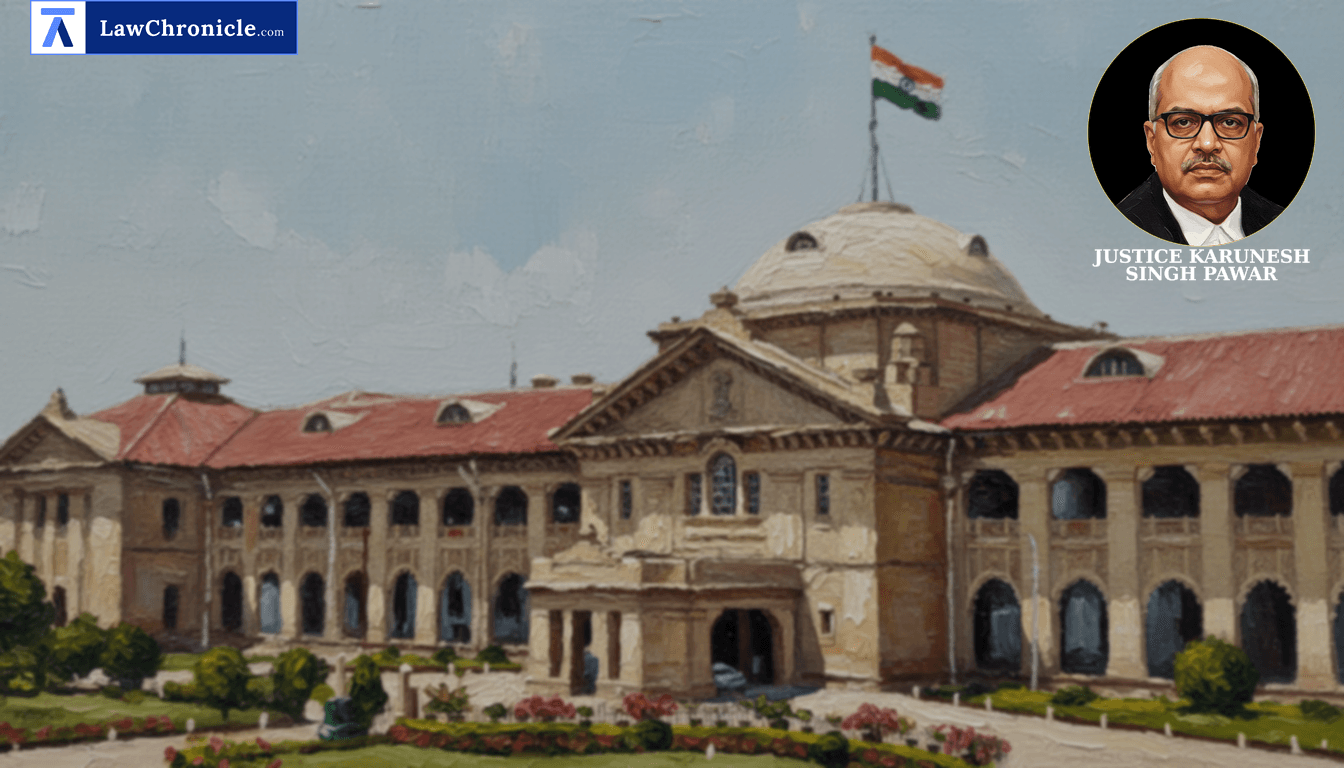
The Allahabad High Court has ruled that summary eviction procedure under the state revenue law cannot be derailed by demanding adherence to non-mandatory guidelines or by citing medical excuses that post-date the eviction order. The Court clarified that judicial discretion will not be exercised to regularize unauthorized constructions, emphasizing that the law will not come to the rescue of those who flout its rigours with a culture of impunity.
A Single-Judge Bench of Justice Karunesh Singh Pawar heard the challenge against orders passed by the Assistant Collector and the Appellate Authority directing the eviction of an individual from public land recorded as 'Naveen Parti'. The petitioner sought to quash these orders and drop proceedings initiated under Section 67 of the U.P. Revenue Code, 2006, alleging a lack of proper hearing and non-compliance with judicial guidelines.
Key Takeaways
Public Land Protection
Encroachments on public land, specifically those recorded as 'Naveen Parti', will be met with strict enforcement and eviction, regardless of subsequent claims of private ownership without evidence.
Guidelines Not Mandatory
The specific procedural guidelines issued in Rishi Pal Singh v. State of U.P. regarding the cross-examination of revenue officials are not mandatory unless formally adopted by the State government through legislative amendment.
Strict Judicial Approach
Courts are mandated to adopt a strict stance against illegal constructions and must avoid using judicial discretion to regularize buildings erected without requisite permissions.
Evidentiary Burden
A litigant who fails to produce evidence over a five-year period during trial cannot later claim a violation of the principles of natural justice or a denial of effective hearing.
Court Rationale on Summary Procedures
The Allahabad High Court observed that the petitioner was afforded ample opportunity between 2018 and 2023 to substantiate his claims but failed to produce any evidence. It rejected the argument that the summary procedure under Section 67 of the U.P. Revenue Code, 2006 must strictly follow the elaborate trial-like guidelines mentioned in Rishi Pal Singh v. State of U.P.. Citing the decision in Shahban v. State of U.P., the Bench noted that converting summary proceedings into regular procedures would defeat the statutory intent unless the U.P. Revenue Code Rules, 2016 were specifically amended.
The Allahabad High Court explained that "The law ought not to come to rescue of those who flout its rigours as allowing the same might result in flourishing the culture of impunity. Put otherwise, if the law were to protect the ones who endeavour to disregard it, the same would lead to undermine the deterrent effect of laws, which is the cornerstone of a just and orderly society."
Regarding the petitioner's plea of illness, the Allahabad High Court found the medical documents were dated after the original eviction order, concluding that the plea was a mere afterthought to challenge concurrent findings of fact. The Bench relied on Municipal Corporation, Aurangabad v. State of Maharashtra and Surinder Singh v. S. Teja Singh Manshia to reiterate that interference under Article 226 of the Constitution of India, 1950 is limited when findings are concurrent and not perverse.
Ratio
Summary proceedings for the removal of encroachment under Section 67 of the U.P. Revenue Code, 2006, do not require the mandatory application of guidelines involving cross-examination of revenue officials as suggested in Rishi Pal Singh v. State of U.P. unless such guidelines are formally adopted by the State through amendments to the Rules. Concurrent findings of fact regarding unauthorized occupation of public land will not be disturbed in writ jurisdiction unless shown to be perverse or based on no evidence.
Background
The dispute originated when a Lekhpal report in April 2018 identified the petitioner as having encroached upon 0.006 hectares of 'Naveen Parti' land (public land) by constructing a house and boundary wall. The petitioner filed objections in July 2018 but failed to produce any evidence supporting his claim that the construction was on his own land. Following a time-bound direction from the High Court in a Public Interest Litigation, the Assistant Collector passed the eviction order in March 2023.
The petitioner appealed this decision, which was initially dismissed for non-prosecution, then restored, and finally dismissed on merits by the Appellate Authority in August 2024. The petitioner then approached the High Court, relying on Rishi Pal Singh v. State of U.P. to argue that the mandatory enquiry procedure was bypassed. The Allahabad High Court , however, upheld the lower authorities' decisions, citing Kaniz Ahmed v. Sabuddin ( "2025 SCC OnLine SC 995": 2025 CaseBase(SC) 929) to emphasize the need for a firm stance against illegal occupants.
Case Details:
Case No.: WRIT - C No. - 9093 of 2026
Case Title: Gorakhnath Dubey Versus State Of U.P. Thru. Prin. Secy. Revenue, Lko. And 2 Others
Appearances:
For the Petitioner(s): Anand Dubey, Prashant Dubey, Advocates
For the Respondent(s): C.S.C.
Source: 2026 CaseBase(ALL) 1006
Similar Articles
 Breaking News


