


Reasons Are The Soul Of Justice: Patna High Court Quashes Cryptic Encroachment Orders
 Copy Link
 Share
 Save
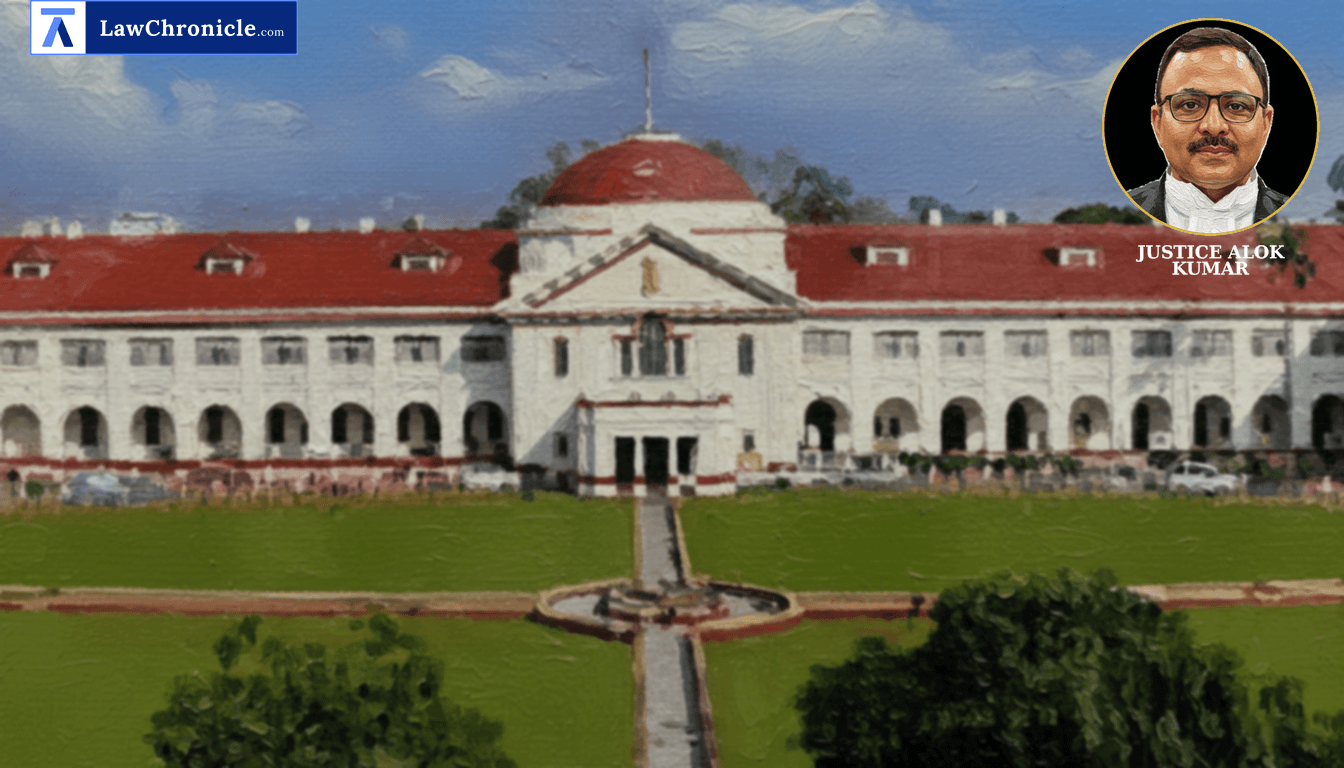
Cryptic administrative orders lacking reasoned justifications cannot legally strip a citizen of their property rights under Article 300A of the Constitution of India, especially within summary land encroachment proceedings. The Patna High Court has quashed eviction notices issued by the Circle Officer, Phulwari Sharif, ruling that the failure to objectively consider raiyati claims and objections vitiates the entire process as an arbitrary exercise of power.
A Single Judge bench of Justice Alok Kumar heard two writ petitions challenging notices issued under the Bihar Public Land Encroachment Act, 1956. The court scrutinized the actions of the Circle Officer, Phulwari Sharif, regarding alleged encroachments on Plot No. 274 and the Malahi Pakri-NH-30 road, where petitioners claimed ownership through registered sale deeds and valid mutations.
Key Takeaways
Property Rights Safeguard
Protection under Article 300A of the Constitution of India ensures that no person is deprived of property without the authority of law, requiring strict adherence to reasoned decision-making.
Reasoned Orders as Necessity
Administrative and quasi-judicial bodies must provide a 'rational nexus' between materials considered and conclusions reached to prevent arbitrary executive action.
Natural Justice in Summary Trials
Summary procedures under the Bihar Public Land Encroachment Act, 1956 cannot bypass the fundamental requirement of giving a real chance to show cause and considering those objections on merit.
Judicial Accountability
Recording reasons is essential for judicial review, allowing higher courts to discern the basis of a conclusion and test its legality.
Fundamental Importance of Reasoned Decisions
The Court emphasized that judicial, quasi-judicial, or administrative bodies cannot pass orders affecting rights in a mechanical manner. Citing Harinagar Sugar Mills Ltd. v. Shyam Sunder Jhunjhunwala ( "AIR 1961 SC 1669": 1961 CaseBase(SC) 6), the Court noted that even administrative decisions require reasons to ensure they are not a result of caprice. The bench further relied on Travancore Rayon Ltd. v. Union of India to highlight that the obligation to record reasons acts as a deterrent against arbitrary executive action.
Referring to Kranti Associates Private Limited v. Masood Ahmed Khan ( "(2010) 9 SCC 496": 2010 CaseBase(SC) 1285), the Court stressed that "reason is the soul of justice" and summarized that insistence on reasons serves the wider principle of justice, ensuring transparency and accountability. The Court further noted the recent precedent in Zulfiquar Haider v. State of U.P. ( "2025 INSC 480": 2025 CaseBase(SC) 1027), which held that the right to shelter under Article 21 of the Constitution can only be taken away by following due process of law.
The Court has the following directions:
"24. From the above, it can be held that an administrative or judicial order that lacks reasons or justifications, or demonstrates a failure to apply its mind, cannot legally deprive a person of their right to property under Article 300A of the Constitution of India, particularly when passed in a summary proceeding like the Bihar Public Land Encroachment Act, 1956. Hence, the order dated 05.03.2024, being cryptic, unreasonable, and arbitrary, is hereby quashed. 25. The matter is remanded to the authorities concerned to pass an appropriate and reasoned order after giving an adequate opportunity of hearing to the petitioner."
The Court, in its reasoning, observed: "It is a settled principle of law that a judicial, quasi-judicial, or administrative body cannot pass an order affecting anyone’s rights in a mechanical manner without applying its mind to the objections raised. In a catena of judgments, the Hon’ble Apex Court has expressed its view that objective consideration and reasons are the foundation of an order."
Ratio
An administrative or quasi-judicial order passed in a summary proceeding that lacks reasons, demonstrates non-application of mind to filed objections, or fails to establish a rational nexus between materials and conclusions is arbitrary and violates the right to property under Article 300A of the Constitution of India. Such cryptic orders are legally unsustainable and must be quashed for failing to satisfy the requirements of natural justice.
Background
The petitioners in CWJC No. 5298 of 2024 and CWJC No. 4839 of 2024 challenged notices dated 05.03.2024 issued by the Circle Officer, Phulwari Sharif. They contended that they were bona fide owners of the land, having acquired it through registered deeds and paying rent to the state for years. Despite a previous order from the High Court in CWJC No. 2080 of 2022 directing the consideration of their objections and maintaining status quo, the Circle Officer issued fresh notices for removal of encroachment without passing a reasoned final order that addressed their claims of being Raiyats.
The State argued that the petitioners were encroachers of public land as per measurement reports and that final orders had been passed after hearing the parties. However, the High Court found that the impugned orders were silent on the specific objections raised by the petitioners. Invoking principles from M/s. Mahabir Prasad Santosh Kumar vs. State of U.P and others, Union of India vs. Mohan Lal Capoor and others, Ram Chander vs. Union of India and others ( "(1986) 3 SCC 103": 1986 CaseBase(SC) 285), Charan Singh vs. Healing Touch Hospital and others ( "(2000) 7 SCC 668": 2000 CaseBase(SC) 1808), and Rajeev Singh and Ors. v. State of Uttar Pradesh and Anr., the Court quashed the notices and remanded the matter for fresh, reasoned adjudication.
Case Details:
Case No.: Civil Writ Jurisdiction Case No. 5298 of 2024 with Civil Writ Jurisdiction Case No. 4839 of 2024
Case Title: Ravindra Kumar and Anr. v. The State of Bihar and Ors.
Appearances:
For the Petitioner(s): Mr. Sushant Kumar, Advocate; Mr. Rajesh Ranjan, Advocate
For the Respondent(s): Mr. Subodh Kumar, AC to SC-26; Ms. Babita Kumari, AC to SC-1; Mr. Md. Irshad, AC to SC-1
Source: 2026 CaseBase(PAT) 3980
Similar Articles

 Breaking News


