


Ex Parte Decree | What happens if Summons are Served at Under-Construction Site? Bombay HC Answers
 Copy Link
 Share
 Save
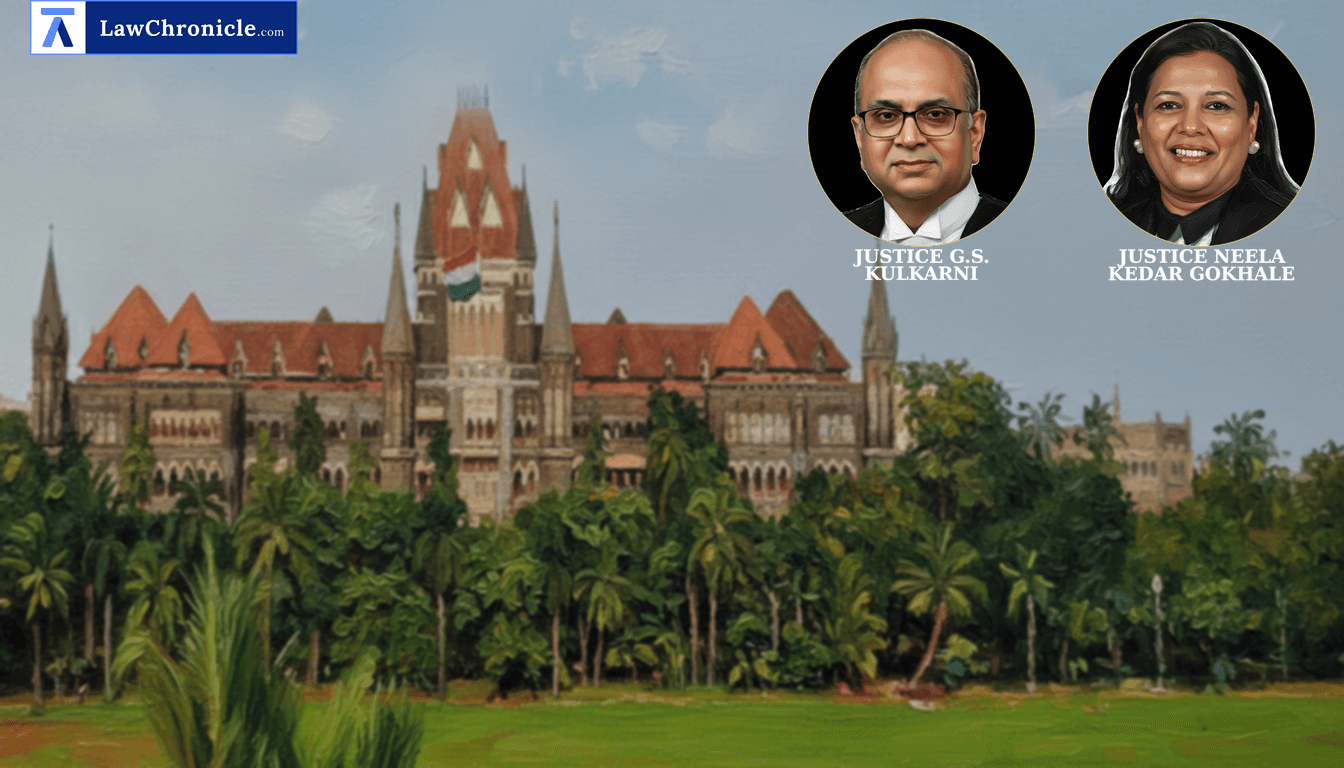
The Bombay High Court has quashed a commercial decree obtained by a plaintiff who deliberately bypassed known habitable addresses to serve summons at an uninhabitable, under-construction site, reinforcing that procedural shortcuts cannot substitute for valid legal notice. The Bench clarified that exploiting incomplete service to secure an ex-parte decree is a fatal procedural error that strikes at the heart of natural justice and the mandatory service requirements of the Code of Civil Procedure, 1908.
In a decisive ruling, a division bench comprising Justice G. S. Kulkarni and Justice Dr. Neela Gokhale set aside a trial court's order that had proceeded ex-parte against a defendant based on a questionable affidavit of service. The Bench emphasized that the mandatory nature of suit summons service cannot be diluted, even under the Commercial Courts Act, 2015.
Key Takeaways
Mandatory Service Standards
Service of summons at an uninhabitable or under-construction site does not constitute valid service under the Code of Civil Procedure, 1908, even if the address belongs to the defendant.
Burden of Proof in Ex-Parte Matters
A plaintiff is not absolved of the burden to provide prima facie proof of their claims simply because the defendant is absent; the court must still verify factual and legal veracity.
Judicial Scrutiny of Service Affidavits
Trial courts must not blindly accept affidavits of service, especially when the record indicates multiple habitable addresses where service could have been more reliably effected.
COVID-19 SOP Protections
Adverse ex-parte orders passed during the pandemic without exhaustive attempts at service at all known addresses violate the prevailing protective Standard Operating Procedures.
Invalidity of Service at Uninhabitable Sites
The Bombay High Court scrutinised the conduct of the respondent who had provided three different addresses in the plaint but chose to attempt service only at a site office of a building under construction. The bench observed that the respondent was well aware of the appellant's correct residential and business addresses through prior correspondence and sub-confirmation of accounts. The Bench observed that "In our opinion, the Respondent's affidavit of service does not satisfy the elementary requirements of the CPC Rules. The addresses of the Appellant are clearly mentioned in the cause-title, but there is no clarity in the affidavit of service, nor any official report of the Registry of the Civil Court that the summons was duly served or effected on the registered address of the Appellant so as to accept such service to be in compliance with Order V Rule 1, 9, 9A and 10 of the CPC."
Trial Court's Duty in Ex-Parte Decrees
The Bombay High Court rebuked the practice of passing decrees based solely on the plaintiff's affidavit without a rigorous examination of the merits. It highlighted that the Commercial Courts Act, 2015 does not dispense with the fundamental requirements of Order V of the Code of Civil Procedure, 1908. The Bench noted that “It is a settled position of law that even if the suit is to be proceeded ex-parte against the defendant, the plaintiff must discharge the burden of prima facie proof qua the existence of relevant facts and circumstances out of which the cause of action has arisen. The Court must pass a decree only after ascertaining the factual and legal veracity of the plaintiff’s claim. The plaintiff's case must stand on its own legs...”
Ratio
Compliance with Order V, Rules 1, 9, 9A, and 10 of the Code of Civil Procedure, 1908 regarding the service of summons is mandatory. Service attempted at a site known to be under construction while ignoring known habitable addresses mentioned in the cause title does not constitute valid service. Furthermore, an ex-parte decree cannot be granted solely on the basis of a plaintiff's affidavit; the court must independently verify the legal and factual veracity of the claim to ensure the plaintiff's case stands on its own merit.
Background
The dispute arose from a commercial summary suit filed by the Respondent (Original Plaintiff) seeking recovery of ₹40,18,890/- based on a loan of ₹25,00,000 advanced in 2010. The Respondent claimed the Appellant had stopped paying interest after September 2016. The Trial Court decreed the suit ex-parte after the Respondent filed an affidavit of service claiming the summons was served at the Appellant's Andheri office.
The Appellant challenged this, arguing the address was a building under construction and uninhabitable, and that the Respondent deliberately avoided serving him at his known residential address at Deepak Building or Smag House, despite having these addresses on record. The Appellant relied on Best Industries Corporation thr its Mr.Jowender Singh Sethi v. the Standard Products Manufcaturing Co. to argue that the procedure followed was flawed. The Respondent, citing Indu Bhushan v. Munna Lal and Anr. ( "(2007) 14 SCC 42": 2007 CaseBase(SC) 1272), argued that service at one of the multiple addresses provided is sufficient. However, the Bombay High Court distinguished Indu Bhushan v. Munna Lal and Anr. ( "(2007) 14 SCC 42": 2007 CaseBase(SC) 1272), noting that in that instance, service had been verified by process servers and postal authorities, unlike the present case where only a private affidavit was relied upon.
Case Details:
Case No.: COMMERCIAL FIRST APPEAL (ST) NO. 24138 OF 2022
Neutral Citation: 2026:BHC-AS:45149-DB
Case Title: Vipul D. Shah v. Dinesh D. Shah
Appearances:
For the Petitioner(s): Mr. Aseem Naphade a/w A. Patel, Viloma Shah, Harshad Vyas and Ishita Desai i/by AVP Partners
For the Respondent(s): Mr. Jagdish Nagar
Source: 2026 CaseBase(BOM) 7157
Similar Articles


 Breaking News


