Existing Industries Cannot Claim New Enterprise Electricity Rebates: SC
 Copy Link
 Share
 Save
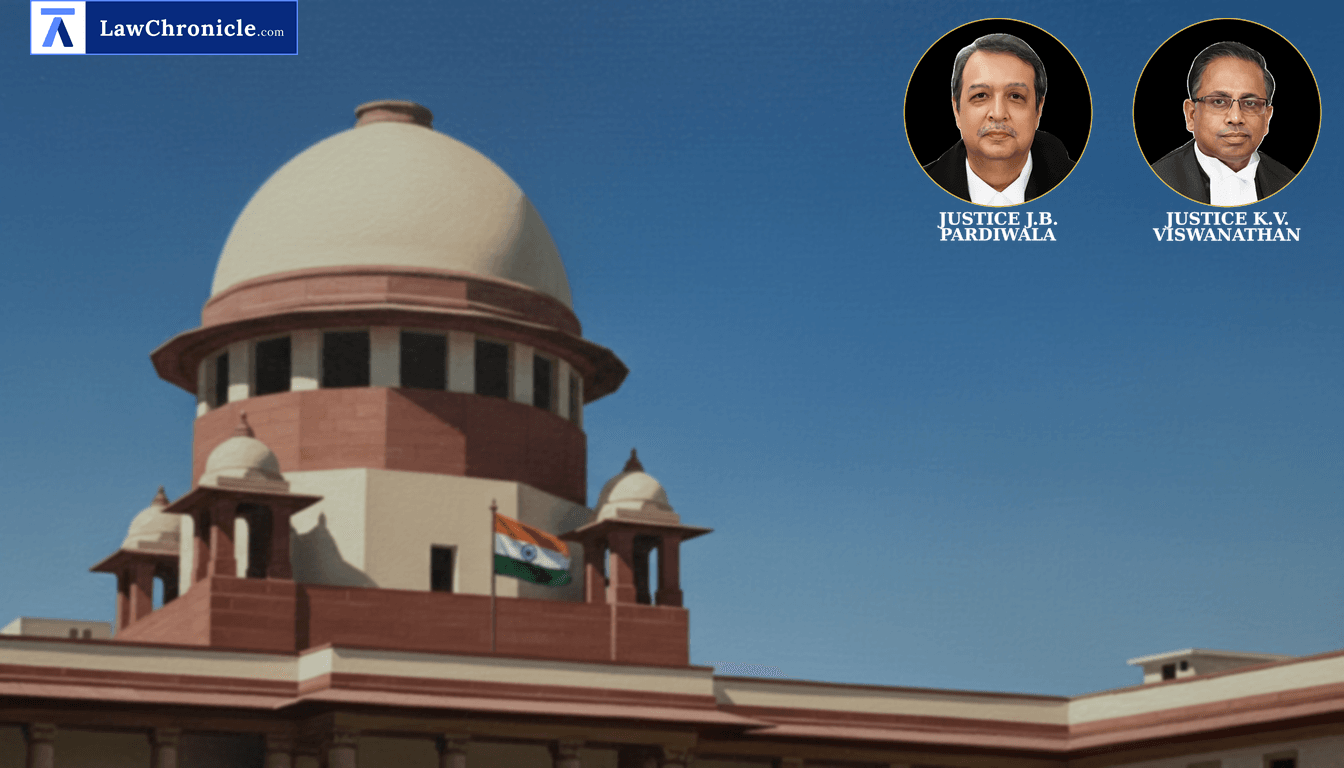
The Supreme Court has clarified that existing industrial enterprises undergoing substantial expansion are not entitled to the same electricity tariff concessions reserved for entirely new units, emphasizing that fiscal incentives must be interpreted to avoid unintended double benefits.
A bench of Justice J.B. Pardiwala and Justice K.V. Viswanathan heard the appeal filed by the State of Himachal Pradesh against a High Court order that had directed the grant of energy charge discounts to an existing unit under the Himachal Pradesh Industrial Policy, 2019. The apex court set aside the High Court's findings, holding that the industrial policy made a clear distinction between 'new' and 'existing' units, and that subsequent amendments were merely clarificatory in nature.
Defining Eligibility: New vs. Existing Enterprises
The core of the dispute revolved around Clause 16(a) of the Himachal Pradesh Industrial Policy, 2019, which initially used the term "eligible enterprises" for a 15% discount on energy charges. The Court noted that while the respondent was an "eligible enterprise" due to its substantial expansion, the specific incentive in Clause 16(a) was intended for new entrants, whereas Clause 16(b) provided a separate rebate for existing units on additional power consumption.
In its analysis, the Court relied on precedents such as Shree Sidhbali Steels Ltd. v. State of U.P. and State of Rajasthan v. J.K. Udaipur Udyog Ltd. to underscore the State's power to modify or withdraw fiscal benefits in the public interest. The Court, in its reasoning, observed: "Accepting the interpretation canvassed by the respondent would therefore not only disturb the internal scheme and classification underlying Clause 16, but would also result in an unintended fiscal burden upon the State by permitting overlapping concessions in favour of one class of enterprises. Such a construction, in our opinion, would run contrary to the larger public interest underlying the Policy, which was to ensure balanced and rational distribution of incentives, concessions, facilities amongst different categories of industrial enterprises, and not to disproportionately enrich one category by extending cumulative benefits never contemplated in the Policy itself."
The Doctrine of Promissory Estoppel and Clarificatory Amendments
The respondent argued that the State was bound by promissory estoppel, having issued a Commencement of Commercial Production (COP) certificate. However, the Court, citing IFGL Refractories Ltd. v. Orissa State Financial Corporation and Arvind Industries v. State of Gujarat ( "(1995) 6 SCC 53": 1995 CaseBase(SC) 27), held that estoppel cannot be used to compel the State to grant a benefit never intended for a specific class. The Court further noted that the 2022 amendment, which replaced "eligible" with "new" in Clause 16(a), was retrospective because it merely corrected a drafting error.
Court Conclusion:
The Court has concluded:
" (i) Clause 16(a) of the Industrial Policy of 2019 and Rule 16(i)(a) of the 2019 Rules were always intended to apply to the “new industrial enterprises” and not to the “existing industrial enterprises undergoing substantial expansion”. The conglomeration of the contemporaneous tariff orders issued prior to and subsequent to the Industrial Policy of 2019, the overall scheme of the Policy, and the structure of Clause 16 itself clearly indicate that the concessional tariff benefit under Clause 16(a) was meant only for new industrial enterprises, whereas the rebate benefit under Clause 16(b) was intended for existing industrial enterprises undergoing substantial expansion.
(ii) The amendment notification dated 29.04.2022, insofar as Clause 16 and Rule 16 respectively are concerned, was merely clarificatory in nature and, therefore, retrospective in operation. The substitution of the word “eligible” with “new” in Clause 16(a) and Rule 16(i)(a) respectively, as also the insertion of the expression “substantial expansion” in Clause 16(b) and Rule 16(i)(b) respectively, did not alter the substance of the Policy but merely clarified the true intent and scope of the provisions as they always stood. However, the amendment introducing, for the first time, the limitation of duration of benefit under Clause 16(b) and Rule 16(i)(b) respectively for a period of three years was substantive in nature and therefore prospective in operation.
(iii) The respondent, being an existing industrial enterprise having undergone substantial expansion, was entitled only to the rebate benefit contemplated under Clause 16(b) read with Rule 16(i)(b) respectively, which benefit has already been indisputably extended to it by the appellants. Mere issuance of the COP Certificate dated 12.02.2021 did not confer any vested or accrued right upon the respondent to claim the concessional tariff benefit under Clause 16(a), particularly when no sanction or approval of such incentive was ever granted by the Director of Industries in accordance with Rule 27 of the 2019 Rules.
(iv) The doctrine of promissory estoppel has no application to the facts of the present case. Once it is held that Clause 16(a), properly construed, was never intended to extend the concessional tariff benefit to existing industrial enterprises undergoing substantial expansion, the respondent cannot invoke the equitable doctrine of promissory estoppel to create an entitlement contrary to the true scope and intent of the Policy itself. More importantly, when the respondent has already received the benefit legitimately attachable to its category under Clause 16(b), no enforceable equity survives in its favour. Any interpretation to the contrary would result in conferring a double benefit upon the same category of industries, contrary to the scheme of the Policy, public interest, and fiscal discipline governing industrial incentives.”
Background:
The respondent, an existing manufacturer since 2006, undertook an 88.69% expansion in 2020. They sought a 15% energy charge discount under Clause 16(a) of the Himachal Pradesh Industrial Policy, 2019, arguing that, as an "eligible enterprise" that expanded, they qualified. The State contended that the respondent was already receiving a rebate under Clause 16(b) for additional consumption and that Clause 16(a) was meant only for new factories. The High Court of Himachal Pradesh had originally ruled in favor of the industry, quashing restrictive rules in the Rules regarding grant of incentives, concessions, facilities for investment promotion in Himachal Pradesh, 2019. The Supreme Court reversed this, concluding that allowing the claim would result in an illegal "double benefit" contrary to fiscal discipline.
Case Details:
Case No.: Civil Appeal No. OF 2026 (Arising out of SLP No. 26731 of 2025)
NeutralCitation: 2026 INSC 534
Case Title: State of Himachal Pradesh & Ors. v. M/S Kundlas Loh Udyog
Appearances:
For the Petitioner(s): Mr. P Chidambaram, Senior Advocate; Mr. Kapil Sibal, Senior Advocate; Mr. Anup Rattan, Senior Advocate; Mr. Vaibhav Srivastava, AAG.
For the Respondent(s): Mr. Navin Pahwa, Senior Advocate.
Source: 2026 CaseBase(SC) 459
Similar Articles
 Breaking News