


SC: State May Withdraw Duty Exemption; Must Give Notice to Captive Units
 Copy Link
 Share
 Save
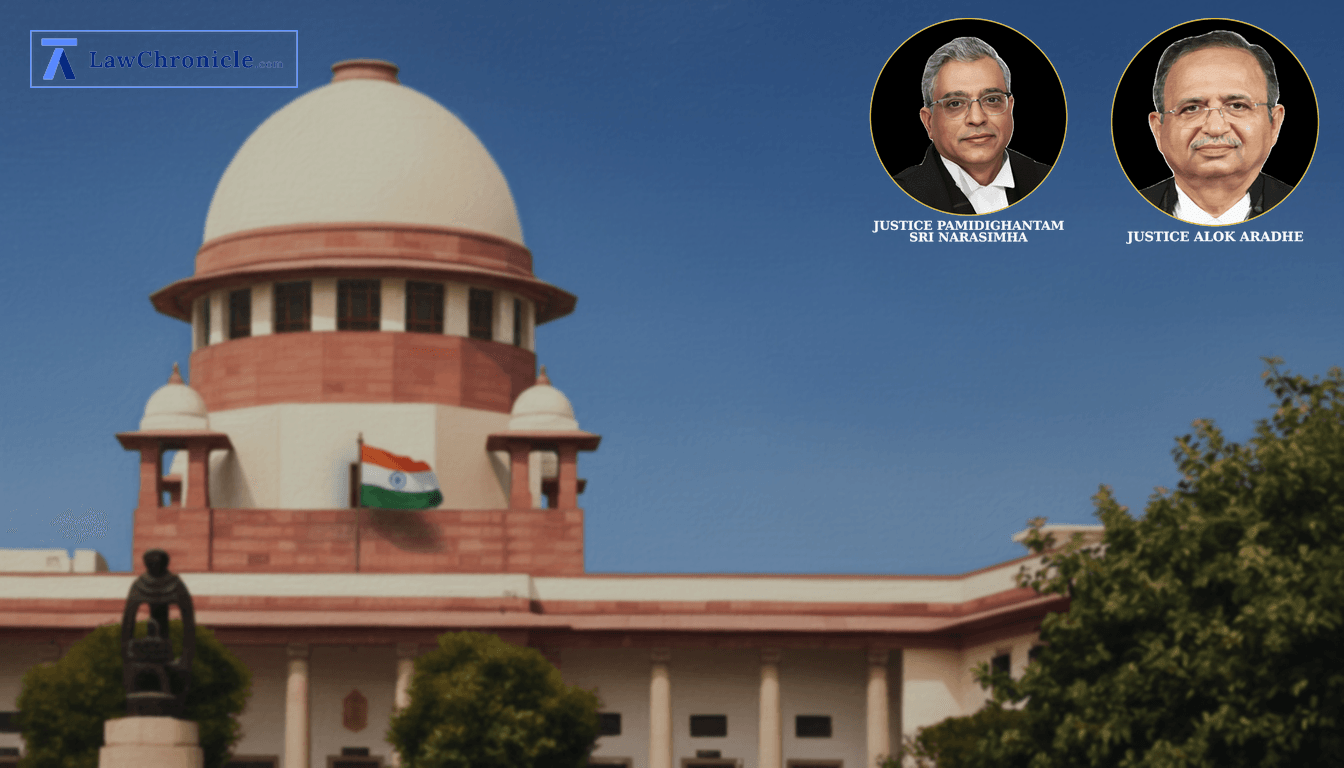
A bench of Justices Pamidighantam Sri Narasimha and Alok Aradhe heard appeals by the State of Maharashtra challenging the Bombay High Court's quashing of notifications dated 01.04.2000 and 04.04.2001 issued under Section 5A of the Bombay Electricity Duty Act, 1958. The appeals raised the question whether the State, after once granting exemption from electricity duty to captive power generators, was legally precluded from withdrawing or modifying that exemption in exercise of the same statutory power.
The Court allowed the appeals in part and upheld the State's statutory power to withdraw or modify concessions granted under Section 5A, but directed that the impugned notifications would take effect only after a reasonable transitional period of one year from their respective dates.
The Court held that the withdrawal was a fiscal policy decision made in the public interest and was not shown to be "manifestly arbitrary, discriminatory or actuated by extraneous consideration." The Court, in its reasoning, observed: "The exemption from payment of electricity duty in favour of captive power generators was granted by the State Government in exercise of statutory power under Section 5A of the Act. The exemption was introduced as a policy measure to encourage the industries to generate electricity for their own consumption and thereby reduce pressure on the public electricity supply system. The exemption was, therefore, clearly like a concession designed to promote industrial self-sufficiency in power generation. The exemption from payment of electricity duty flowed from the exercise of statutory power and therefore there could be no assurance that the exemption from payment of electricity duty, which was in the nature of concession, would continue for all time to come. The very nature of exemption implies that it may be modified or withdrawn if the Government considers such course of action necessary in public interest." The Court further noted that doctrines of promissory estoppel and legitimate expectation had no application where a supervening public interest justified policy change, though the State must act reasonably and fairly in implementing such change.
Background
The dispute arose after the State issued a series of notifications granting and later modifying exemption from electricity duty for electricity generated and consumed by industries through captive power plants. Exemptions were initially granted in 1994 and revised in 1996. Notifications dated 01.04.2000 and 04.04.2001 altered the scope of exemption; those measures were challenged before the High Court. During pendency, a 16.06.2005 notification restored exemption prospectively from 01.05.2005, leaving an intervening period (01.04.2000 to 30.04.2005) in dispute.
The High Court (orders dated 05.10.2009 and 07.11.2009) quashed the 2000 and 2001 notifications, holding that withdrawal of concession was discriminatory, arbitrary and suffered from non-application of mind; it found that budgetary considerations did not justify withdrawal and emphasised the industries' reliance on the concessions. The Court directed representations to be considered but set aside the impugned notifications.
Before the Supreme Court, the State contended that withdrawal was a lawful exercise of a power coupled with a power to withdraw, and that augmentation of revenue and addressing budgetary deficit constituted valid public interest. The captive power generators argued that they relied on the State's representations, invoked promissory estoppel and legitimate expectation, and challenged discriminatory treatment.
The Supreme Court reviewed settled principles: an exemption under a fiscal statute is a concession and defeasible; judicial review of fiscal policy is confined to whether the executive action was manifestly arbitrary or unconstitutional under Article 14; and doctrines of promissory estoppel may yield to overriding public interest. Applying these principles, the Court found the withdrawal to be within State powers and justified by fiscal considerations but required that affected industries be afforded a reasonable time to reorganise. In consequence, the Court quashed and set aside the High Court judgments, upheld the State’s power to withdraw or modify the exemption, and directed that the notifications operate only after the expiry of one year from their dates to allow a transitional period. The appeals were allowed with no order as to costs.
Case Details:
Case No.: Civil Appeal Nos. 3012 - 3026 of 2010; Civil Appeal Nos. 3027 – 3029 of 2010
NeutralCitation: 2026 INSC 296
Case Title: The State of Maharashtra & Others v. Reliance Industries Ltd. & Others
Source: 2026 CaseBase(SC) 263
Similar Articles
 Breaking News


