


Failure To Supply Written Grounds Of Arrest Vitiates Detention: Orissa HC
 Copy Link
 Share
 Save
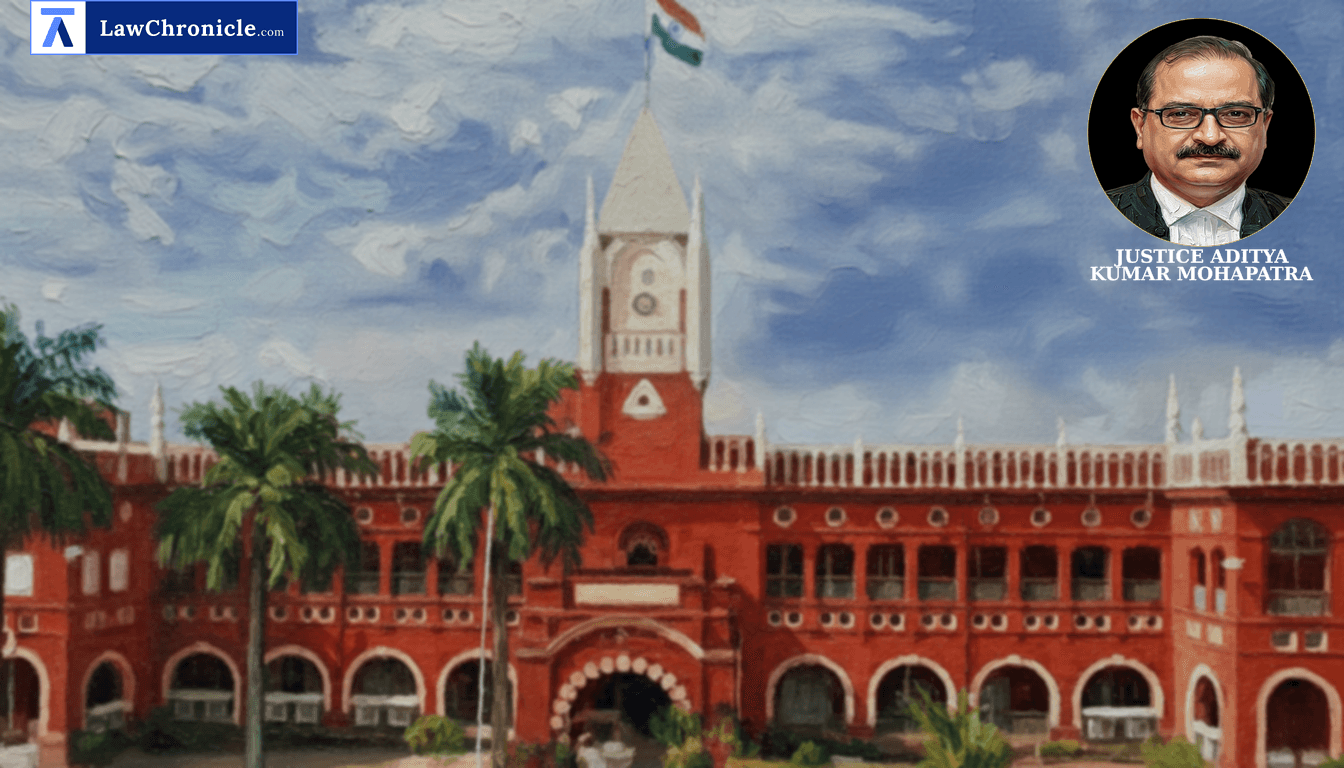
Vindicating fundamental constitutional guarantees against arbitrary state action, the High Court of Orissa declared the arrest and subsequent remand of a high-profile politician illegal due to the police's failure to furnish written grounds of arrest. The Court ruled that no statutory restriction on bail can override the constitutional right to personal liberty when mandatory procedural safeguards are violated during arrest.
In a landmark ruling, Justice Aditya Kumar Mohapatra evaluated the regular bail application filed by a former Member of the Legislative Assembly in connection with a high-profile murder and conspiracy case under the Constitution of India, 1950 and Bharatiya Nagarik Suraksha Sanhita, 2023.
Key Takeaways
Mandatory Written Communication: Investigating agencies must furnish grounds of arrest in writing to the arrestee in a language they comprehend.
Constitutional Supremacy Over Bail Bars: Fundamental rights violations under Article 21 and Article 22(1) overwrite statutory restrictions against granting bail.
Magisterial Oversight Mandate: Remand Magistrates hold an affirmative duty to verify compliance with constitutional arrest safeguards prior to authorizing judicial custody.
Independent Trial Integrity: Invalidating an arrest on constitutional non-compliance does not impact the ongoing trial or the validity of the chargesheet.
Court Observations and Directions
Examining the constitutional framework, the High Court emphasized that the requirement to inform an arrested person of the reasons for their detention is not a mere technical requirement but a core constitutional right. The Court relied on precedents such as Vihaan Kumar v. State of Haryana and Another ( "(2025) 5 SCC 799": 2025 CaseBase(SC) 206), Mihir Rajesh Shah v. State of Maharashtra, Harikisan v. State of Maharashtra ( "1962 SCC OnLine SC 117": 1962 CaseBase(SC) 415), Prabir Purkayastha v. State (NCT of Delhi) ( "(2024) 8 SCC 254": 2024 CaseBase(SC) 73), Lallubhai Jogibhai Patel v. Union of India ( "(1981) 2 SCC 427": 1980 CaseBase(SC) 23), and Pankaj Bansal v. Union of India ( "(2024) 7 SCC 576": 2023 CaseBase(SC) 603) to underline that oral communication or vague entries in arrest memos like "In the strength of above noted case" fail to satisfy the mandate of Article 22(1) of the Constitution of India, 1950.
The Court, in its reasoning, observed: "...the Arresting Officer/Agency has failed to discharge its obligation of satisfying this Court that the grounds of arrest were in fact informed to the Accused-Petitioner, either at the time of arrest or at a subsequent stage... non-communication of grounds of arrest, so far the present Petitioner is concerned, which is evident from the arrest memo and which remains unsubstantiated by the prosecution, violates the Petitioner's fundamental as well as legal rights."
The Court has following directions:
"(i) The arrest of the Accused-Petitioner is held to be vitiated. Therefore, the Petitioner be forthwith set at liberty;
(ii) The finding of this court that the arrest of the Petitioner stands vitiated will not affect the merits of the chargesheet and the pending trial;
(iii) The aforesaid finding is confined to the case of the Accused-Petitioner only;
(iv) The Petitioner is directed to furnish a bail bond in accordance with Section 91 of the BNSS, 2023, subject to satisfaction of the learned trial court and;
(v) The release of the Petitioner shall be subject to such other terms and conditions as would be deemed just and proper by the learned trial court, which would include a condition that the Petitioner shall not harass, threaten, terrorize or influence the victim’s family, the Informant or any other prosecution witnesses, in any manner whatsoever."
Ratio
Non-compliance with the mandatory requirement of communicating written grounds of arrest to an arrestee under Article 22(1) of the Constitution of India, 1950 read with Section 47 of the Bharatiya Nagarik Suraksha Sanhita, 2023 vitiates the arrest and subsequent remand orders, entitling the detainee to immediate release on bail regardless of statutory restrictions.
Background
The dispute stemmed from the fatal shooting of a victim on October 6, 2025, in Berhampur. The prosecution alleged a multi-layered criminal conspiracy involving the petitioner, a former legislator, who purportedly harboured political and personal enmity against the deceased and engaged hitmen to execute the crime. Police arrested the petitioner on October 22, 2025. While the State argued that grounds were orally explained in Odia and that the petitioner refused to sign the arrest memo, the petitioner contended that no written grounds were ever provided, violating Articles 21 and 22(1) of the Constitution of India, 1950 and Section 47 of the Bharatiya Nagarik Suraksha Sanhita, 2023.
Rejecting the State's argument, the High Court held that the burden of proving strict compliance rests on the arresting agency. Finding the arrest memo deficient and uncorroborated by contemporaneous records, the Court held the detention vitiated and granted regular bail while leaving the trial on merits unhindered.
Case Details:
Case No.: BLAPL No. 13860 of 2025
Neutral Citation: ODHC010945452025
Case Title: Bikram Panda @ Bikram Kumar Panda v. State of Odisha
Appearances:
For the Petitioner(s): Mr. Ashok Kumar Parija, Senior Advocate along with Mr. Subir Palit, Senior Advocate & M/s. P.K. Dash, S.N. Das & A. Acharya
For the Respondent(s): Mr. Partha Sarathi Nayak, Additional Government Advocate, Mr. B.K. Ragada, Advocate for the Informant
Source: 2026 CaseBase(ORI) 1288
Similar Articles


 Breaking News


