


Arrest Vitiated Without Written Grounds: Patna HC Directs Release In NIA Case
 Copy Link
 Share
 Save
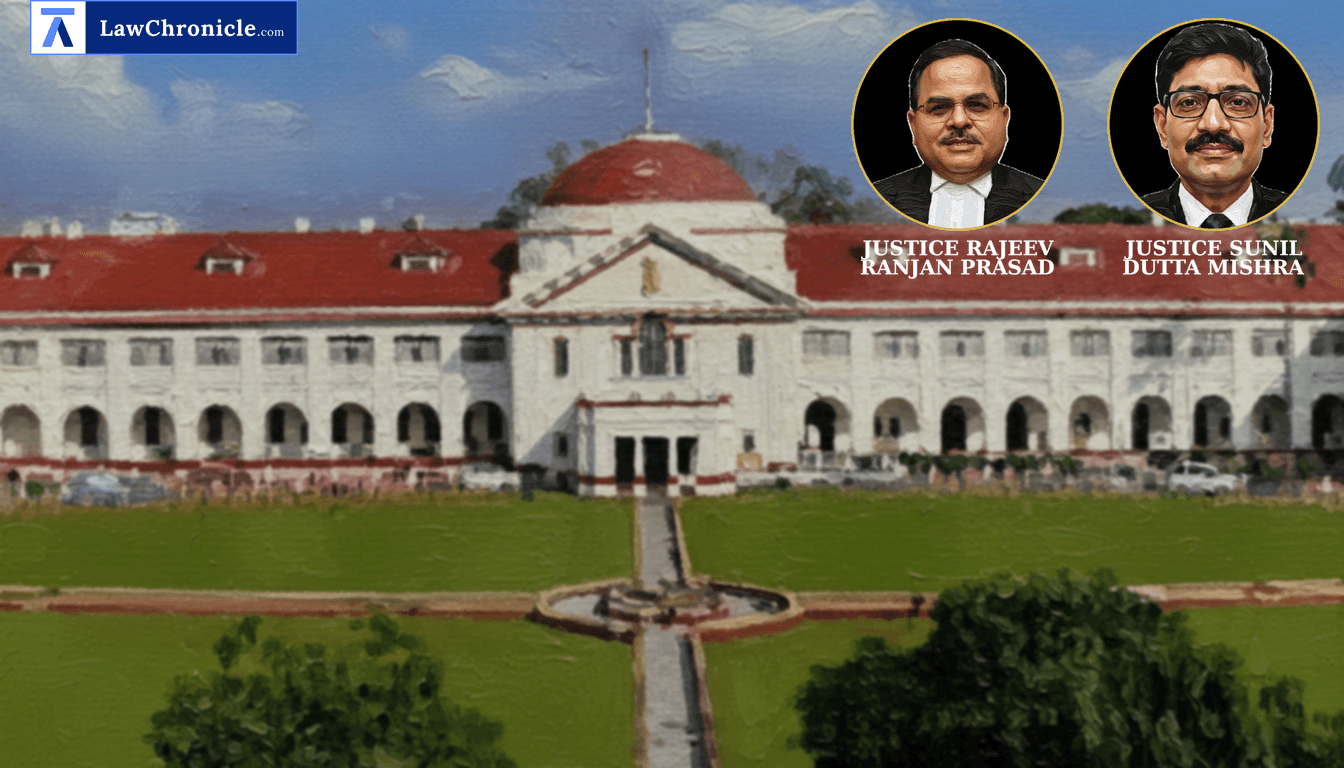
Non-furnishing of written grounds of arrest to an accused at the time of detention constitutes a fatal violation of fundamental rights, rendering the subsequent remand and custody inherently illegal. The Patna High Court has quashed a trial court order denying bail to an accused in a counterfeit currency case, reinforcing that constitutional safeguards under Constitution of India, 1950 are mandatory and not mere procedural formalities.
A Division Bench comprising Justice Rajeev Ranjan Prasad and Justice Sunil Dutta Mishra heard the appeal against the rejection of regular bail by the Special Judge, NIA, Patna. The Court was tasked with determining whether the failure of the investigating agency to provide written grounds of arrest, as mandated by recent Supreme Court precedents, would entitle the appellant to immediate release despite the gravity of the charges involving high-quality counterfeit notes.
Key Takeaways
Mandatory Written Grounds
Failure to provide written grounds of arrest at the time of detention or shortly thereafter violates Constitution of India, 1950 and Article 22(1), making the arrest void ab initio.
Template Memos Rejected
Standardized arrest memos that merely state the accused was "informed of the grounds" do not satisfy the legal requirement for effective communication of the reasons for arrest.
Prejudice to Defense
The absence of written grounds prevents an accused from effectively opposing remand or seeking immediate bail, thereby causing clear legal prejudice.
Constitutional Primacy
Fundamental rights under Constitution of India, 1950 and Article 22(1) override statutory restrictions on bail, such as those found in the Unlawful Activities (Prevention) Act, when the arrest process itself is flawed.
Invalidity of Template Arrest Memos
The court scrutinized the NIA's reliance on a template-based arrest memo. While the agency argued that the appellant was orally informed of the charges, the Bench noted that such a procedure fails the constitutional test established in Mihir Rajesh Shah v. State of Maharashtra & Anr. ( "(2026) 1 SCC 500": 2025 CaseBase(SC) 2876) and Pankaj Bansal versus Union of India ( "(2024) 7 SCC 576": 2023 CaseBase(SC) 603). The court highlighted that communication must be effective and in a language understood by the arrestee to allow for proper legal representation.
The Court, in its reasoning, observed: "The constitutional mandate and the statutory mandate as contained under Article 22(1) of the Constitution of India, 1950 and Section 50 of the Code Of Criminal Procedure, 1973 leave no room for doubt that it would be necessary for the investigating agency/arresting authority, that a copy of the written grounds of arrest is furnished to the arrested person as a matter of course and without exception."
Judicial Rationale and Prejudice Test
The Bench distinguished the present case from State of Karnataka v. Sri Darshan, where the Supreme Court had applied a 'prejudice test'. The High Court noted that unlike in that case, the current appellant had not been able to file for bail immediately before the Magistrate due to the lack of information regarding the specific accusations.
The Court further observed: "Templates of the arrest memo containing the statement to the effect that the arresting officer explained the grounds of arrest to the accused before the arrest, is no compliance with the mandate of Article 22(1) of the constitution of India read with section 50 and 50A of the Code Of Criminal Procedure, 1973 (Now Sections 47 and 48 of the Bharatiya Nagarik Suraksha Sanhita, 2023)."
The Court has following directions:
"Accordingly, we set aside the impugned judgment/order of the learned trial court and direct that the appellant shall be released from custody, giving him the benefit of the ratio in the case Mihir Rajesh Shah v. State of Maharashtra & Anr. ( "(2026) 1 SCC 500": 2025 CaseBase(SC) 2876). The appellant shall be released on bail forthwith, subject to furnishing bail bonds to the satisfaction of the learned trial court. The learned trial court may impose such other conditions as may deem fit and proper to secure the attendance of the appellant in course of trial. The impugned order is, therefore, set aside."
Ratio
The requirement to furnish written grounds of arrest is a mandatory constitutional safeguard under Article 22(1). Non-compliance with this mandate vitiates the arrest and subsequent remand proceedings, entitling the accused to release on bail regardless of statutory restrictions, as the violation of personal liberty under Article 21 is absolute when procedural due process is ignored.
Background
The case originated from the seizure of Fake Indian Currency Notes (FICN) totaling Rs. 1,95,000/- from three individuals in East Champaran, Bihar. During interrogation, the suspects allegedly named the appellant, a resident of Jammu & Kashmir, as the intended recipient of the consignment. The investigation was subsequently transferred to the NIA under the National Investigation Agency Act, 2008.
The appellant was arrested in Anantnag, J&K, on September 12, 2024. He challenged the arrest on the ground that he was never served with written grounds of arrest, violating the principles laid down in Vihaan Kumar v. State of Haryana & Anr. ( "(2025) 5 SCC 799": 2025 CaseBase(SC) 206) and Pankaj Bansal versus Union of India ( "(2024) 7 SCC 576": 2023 CaseBase(SC) 603). While the High Court had initially dismissed his bail plea, the Supreme Court in an SLP remitted the matter back to the High Court specifically to consider the issue of non-furnishing of written grounds. Following the remand, the High Court found that the NIA failed to prove that the grounds were served in writing two hours prior to the production before the Magistrate, leading to the current order of release.
Case Details:
Case No.: CRIMINAL APPEAL (DB) No.1478 of 2025
Case Title: Sarfaraz @ Muzaffar Ahmad Wani v. The Union of India through NIA
Appearances:
For the Petitioner(s): Md. Tahir, Advocate; Mr. Kundan Kumar Ojha, Advocate; Mr. Navneet Prabhakar, Advocate
For the Respondent(s): Dr. Krishna Nandan Singh, ASG; Mr. Arvind Kumar, Advocate; Mr. Tirupati Gaurav Shahi, Advocate; Ms. Angel, Advocate
Source: 2026 CaseBase(PAT) 3299
Similar Articles
 Breaking News


