Foreign Divorce Decree Cannot Shield Husband From Bigamy Prosecution: Supreme Court
 Copy Link
 Share
 Save
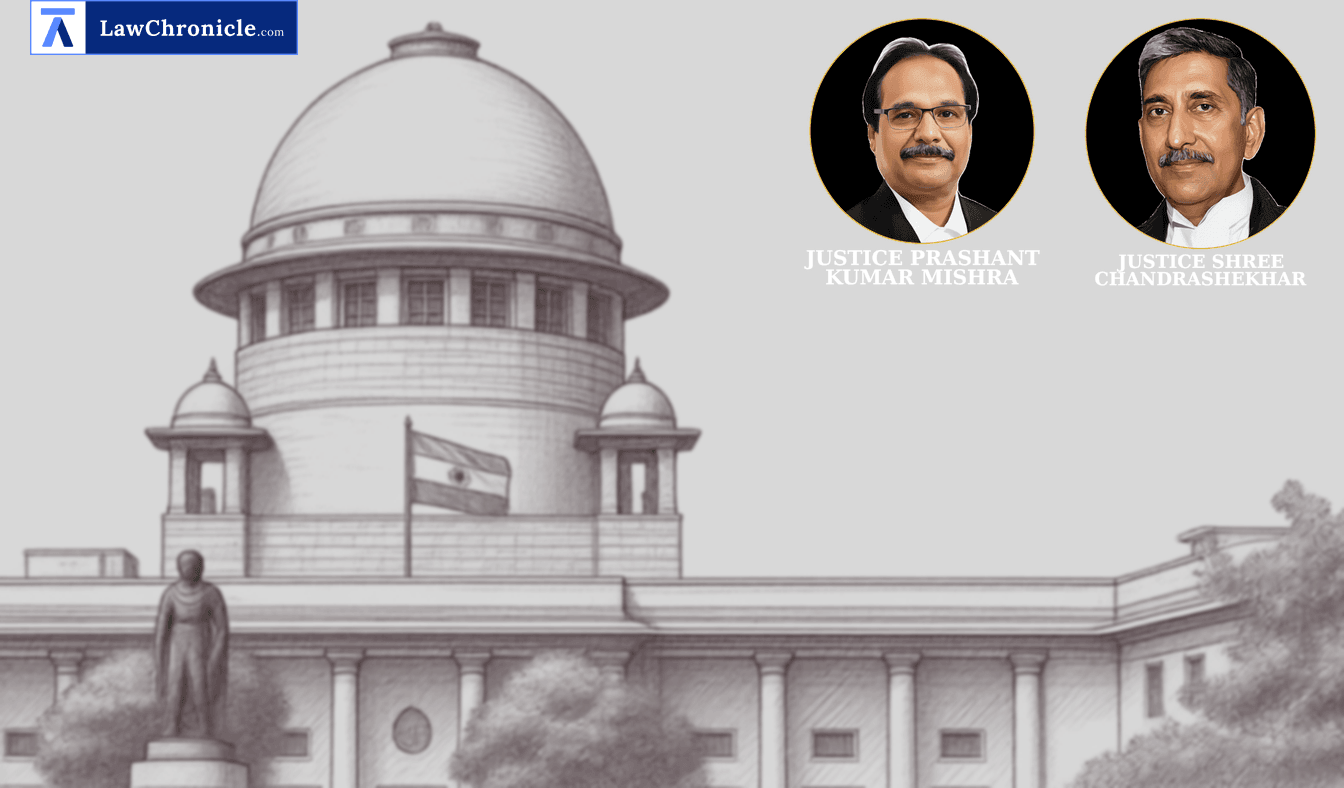
The Supreme Court has ruled that an Indian marriage continues to legally subsist if a foreign court dissolves it without fulfilling the mandatory statutory safeguards governing personal laws in India. The Bench clarified that a foreign divorce decree obtained on grounds not recognized under Indian personal laws offers no immunity against bigamy charges, as the sanctity of matrimonial status cannot be compromised through forum shopping.
A bench comprising Justice Prashant Kumar Mishra and Justice Shree Chandrashekhar adjudicated the appeals challenging an Andhra Pradesh High Court order that refused to quash criminal proceedings initiated under Section 494 and Section 120B read with Section 34 of the Indian Penal Code, 1860.
Key Takeaways
Non-Recognition of Foreign Decrees: Foreign divorce orders granted on grounds unrecognized by Indian personal laws cannot dissolve marriages solemnized under Hindu rites in India.
Bigamy As a Continuing Offence: Changing nationality or securing a second marriage abroad does not negate bigamy allegations, as the law takes into account the subsisting marriage.
Quashing In-Laws' Prosecution: In-laws and second spouses cannot be prosecuted for conspiracy to commit bigamy without proof of specific overt acts or active facilitation.
Foreign Divorce Decree in India
The Supreme Court affirmed that a foreign decree must pass the test of Section 13 of the Code of Civil Procedure, 1908 to be recognized in India. The Bench observed that "In our view, the foreign divorce decree was passed in contravention of the existing matrimonial law in India and on a ground that is not even recognized statutorily. This not only violates the legal threshold of Section 13 of the CPC, which every foreign decree has to pass through, but also the observations made by this Court in Y. Narasimha Rao as to the conditions required to be fulfilled by a foreign decree to be enforceable in India."
Addressing the husband's plea of foreign citizenship, the bench observed that “...accused No.1/husband was married to respondent No.2/first wife in India under the Hindu rites, rituals and customs, thus, even if the second marriage took place outside India, the allegations under Section 494 of the IPC cannot be said to be diluted since enquiry for the offence of bigamy cannot be confined to the place of second marriage but must necessarily take into account the subsisting matrimonial relationship.” Regarding the prosecution of the parents and the second wife, the bench held that mere knowledge or relationship does not constitute conspiracy to commit bigamy. Reaffirming Sivaraman Nair and Others v. State of Kerala and Another ( "2026 INSC 412": 2026 CaseBase(SC) 362) and S. Nitheen and Others v. State of Kerala and Another ( "(2024) 8 SCC 706": 2024 CaseBase(SC) 27), the Court observed that active participation or overt acts must be established.
Ratio
A foreign matrimonial decree granted on grounds not statutorily recognized under the personal law governing an Indian marriage is non-conclusive under Section 13 of the Code of Civil Procedure, 1908. Consequently, such a decree does not dissolve the subsisting marriage in India, and a subsequent marriage by a spouse constitutes bigamy under Section 494 of the Indian Penal Code, 1860 regardless of subsequent acquisition of foreign citizenship.
Background
The parties were married according to Hindu rites in Andhra Pradesh in 2003. After moving to the UK, the husband filed for divorce in India, which was dismissed, and his subsequent appeal was withdrawn. Later, after obtaining British citizenship, the husband filed for divorce before the Cambridge County Court in England, which dissolved the marriage in 2014 on the ground of irretrievable breakdown of marriage. The husband subsequently remarried in the UK.
The first wife filed a complaint in 2016 under Sections 494 and 120B of the Indian Penal Code, 1860. The appellants approached the High Court under Section 482 of the Code of Criminal Procedure, 1973 seeking quashing of the proceedings. The High Court dismissed their petitions, leading to the present appeals before the apex court. Relying on precedents including Y. Narasimha Rao and Others v. Y. Venkata Lakshmi and Another ( "(1991) 3 SCC 451": 1991 CaseBase(SC) 250), Satya v. Teja Singh ( "(1975) 1 SCC 120": 1974 CaseBase(SC) 395), and Kishorekumar Mohan Kale v. Kashmira Kale, the Supreme Court determined that foreign decrees granted without statutory backing under Indian personal laws lack extraterritorial recognition.
Case Details:
Case No.: Criminal Appeal No. 5187 of 2026
Neutral Citation: 2026 INSC 1191
Case Title: N. Sridhar Reddy v. The State of A.P. Through Secretary and Others
Source: 2026 CaseBase(SC) 9523
 Breaking News