


Gauhati HC: Suspension of Excise Licence Without Notice Violates Natural Justice and Article 21
 Copy Link
 Share
 Save
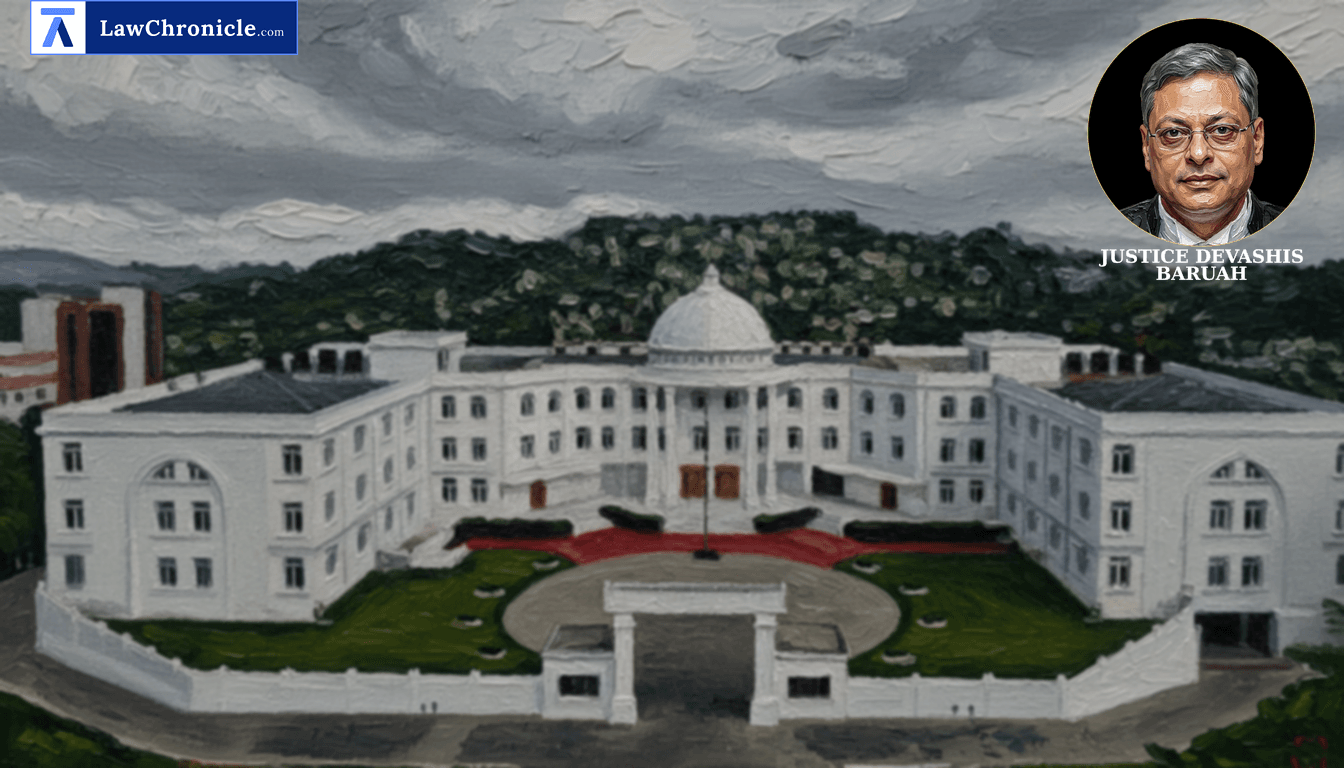
Indefinite suspension of an excise license based on unilateral allegations of breach without granting a prior hearing constitutes a fatal violation of the principles of natural justice and fundamental rights. The Gauhati High Court has quashed an order suspending a bar license, ruling that the subjective satisfaction of authorities regarding a breach cannot be assumed without giving the licensee an opportunity to show cause.
A single-judge bench comprising Justice Devashis Baruah heard the challenge against an order passed by the District Commissioner, Kamrup (M), which had suspended the operations of an IMFL ON Bar-cum-Restaurant. The petitioner, represented by Mr. S. A. Hussain, Advocate, contended that the establishment was shut down indefinitely following a police complaint without any preliminary inquiry or notice.
Due Process Mandatory For License Suspension
The Court scrutinized the powers of the licensing authority under Section 30 of the Assam Excise Act, 2000. While the statute empowers authorities to cancel or suspend licenses for breaches committed by the holder, the Court emphasized that such power cannot be exercised arbitrarily. The bench observed that since the suspension was based on an alleged breach under Clause (c) of Section 30, it required a prior opportunity for the petitioner to present their side.
The Court, in its reasoning, observed: "It is the opinion of this Court that when a breach is being alleged, an opportunity to show cause should have been granted to the license holder prior to exercising the authority to suspend or cancel in as much as the exercise of such power would depend upon the subjective satisfaction of the Authority. This subjunctive satisfaction of the Authority cannot be unilaterally assumed on the basis of an alleged breach without providing an opportunity."
Indefinite Suspension Infringes Article 21
Justice Baruah further noted that the impugned order was particularly flawed as it failed to specify a duration for the suspension or state if it was pending a formal cancellation proceeding. This lack of procedural safeguard was held to be a direct violation of the Constitution of India.
The Court held: "the said suspension order has been passed without specifying any time period... the impugned order violates the mandate of Constitution of India in as much as the said order had been passed without following the principles of natural justice which is a facet of Constitution of India."
The Court has the following directions:
"(i) The impugned order dated 04.07.2026 passed by the Respondent No.3 is set aside and quashed.
(ii) This Court though has set aside and quashed the impugned order dated 04.07.2026, however, liberty is granted to the Respondent Authorities, and more particularly to the Licensing Authority, to take steps in accordance with law, if there is any violation committed by the Petitioner to the terms and conditions of the license.
(iii) The learned counsel appearing on behalf of the Petitioner submitted that the Petitioner, under no circumstance, would violate the terms and conditions of the license. This aspect is taken as an undertaking given before this Court and under such circumstances, the setting aside of the impugned order dated 04.07.2026 shall not permit the Petitioner to violate the terms and conditions of the license as well as the provisions of the Assam Excise Act, 2000 and the Rules framed thereunder."
Key Takeaways
Show-Cause Notice Mandatory
Administrative authorities cannot assume the existence of a breach without allowing the licensee to respond; failure to do so renders the suspension order void.
Anti-Arbitrariness in Excise Matters
Power under Section 30 of the Excise Act must be exercised within the bounds of procedural fairness, ensuring that businesses are not shut down indefinitely without legal justification.
Right to Livelihood Protection
By invoking Article 21, the Court has reinforced that the right to carry on business, once licensed, cannot be curtailed by the State through non-transparent or unilateral executive actions.
Ratio
The power to suspend or cancel a license for an alleged breach under the Assam Excise Act, 2000 is contingent upon the subjective satisfaction of the authority, which cannot be legally reached without complying with the principles of natural justice and Article 21 of the Constitution of India. A suspension order that lacks a definite timeframe and is issued without a show-cause notice is procedurally incompetent.
Background:
The petitioner, the authorized person for 'T Sin Q Bar' in Guwahati, held a valid liquor license and had paid up-to-date fees, including extensions for operating hours. On July 4, 2026, the District Commissioner suspended the license based on a complaint from the Deputy Commissioner of Police (East). Despite several representations made by the petitioner, the authorities failed to respond, prompting the writ petition. The High Court ultimately quashed the suspension but granted the State liberty to proceed against the petitioner strictly following the law and after issuing proper notice.
Case Details:
Case No.: WP(C)/3656/2026
Case Title: Rajpat Son of Baij Nath Vs The State Of Assam And 2 Ors
Appearances:
For the Petitioner(s): Mr. S. A. Hussain, Advocate
For the Respondent(s): Mr. R. R. Gogoi, SC, Excise Deptt.
Source: 2026 CaseBase(GAU) 28
Similar Articles

 Breaking News


