


General Allegations Against In-Laws Under Section 498A IPC Cannot Sustain: Patna HC
 Copy Link
 Share
 Save
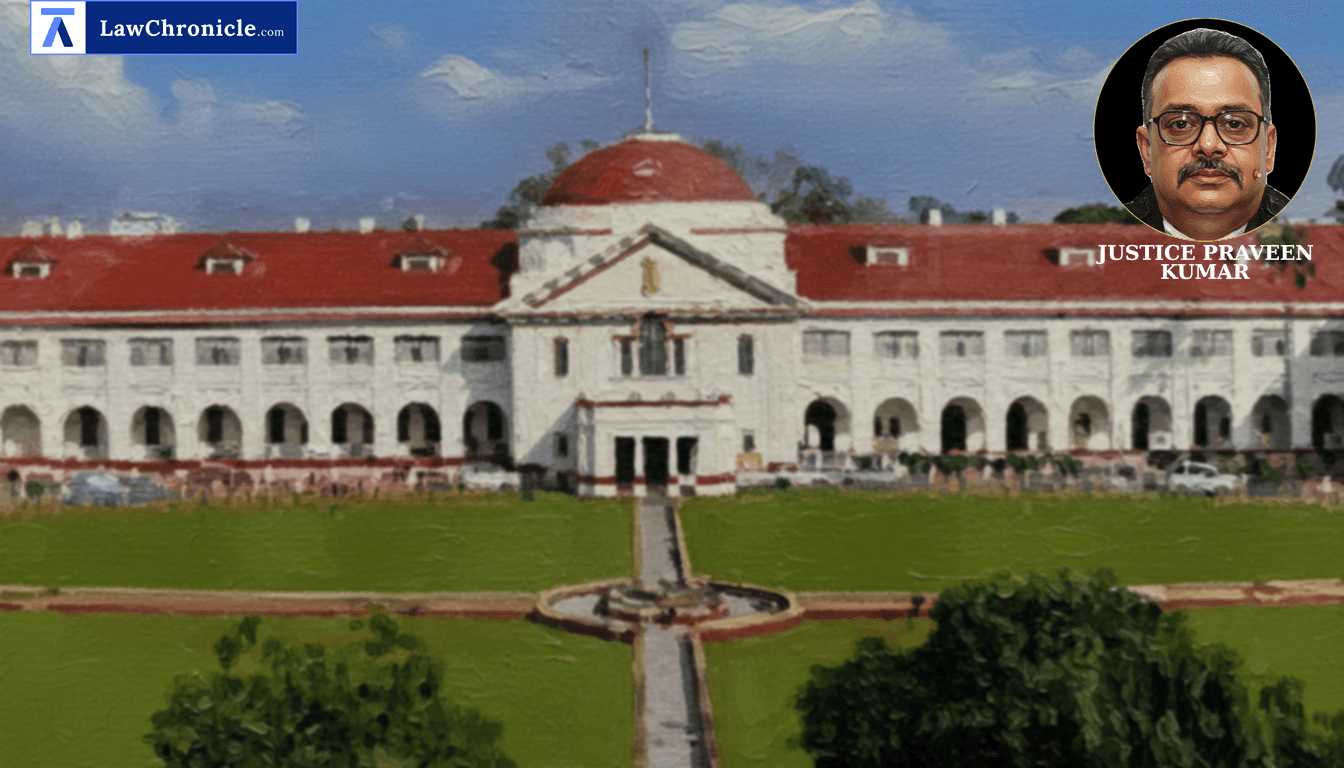
Shielding relatives of the husband from vexatious prosecutions, the High Court has quashed criminal proceedings initiated against in-laws based on vague and omnibus matrimonial cruelty allegations. The Court held that dragging distant or immediate relatives into criminal cases without specific overt acts constitutes a gross abuse of the judicial process.
In a single-judge bench, Justice Praveen Kumar was hearing a petition seeking the quashing of a cognizance order passed by the 1st Class Judicial Magistrate, Chapra, arising out of a complaint case alleging offences punishable under Sections 379, 323, 498(A), 504, and 506 of the Indian Penal Code, 1860.
Key Takeaways
Check On Vexatious Prosecutions: The decision deters complainants from roping in the husband's entire family through generic allegations of matrimonial cruelty.
Quashing Of Proceedings Against In-Laws: Criminal proceedings against the father-in-law, mother-in-law, and sisters-in-law were set aside due to the absence of specific overt acts.
Prosecution Against Husband Continues: The proceedings against the primary accused (husband) remain untouched and will proceed in accordance with law as the petition on his behalf was withdrawn.
Court Observations and Directions
The High Court carefully evaluated the nature of the allegations made in the complaint against the in-laws and determined that they were general and omnibus in nature.
The Court, in its reasoning, observed: "Considering the fact that the allegations are general and omnibus in nature in view of the judgment of the Hon'ble Supreme Court in the case of Abhishek v. State of M.P., reported in (2023) 16 SCC 666 : 2023 SCC OnLine SC 1083 at page 669 and Preeti Gupta v. State of Jharkhand, reported in (2010) 7 SCC 667, continuation of the proceedings against the petitioner Nos. 2 to 5 cannot be sustained."
The Court issued the following directions:
"In such view of the matter, order taking cognizance dated 30.03.2016 passed by learned 1st Class, Judicial Magistrate, Chapra in connection with Complaint Case No. 3219 of 2015, so far as the petitioner Nos. 2 to 5 are concerned, is hereby quashed. However, further proceedings against the petitioner No.1, namely, Nadeem Zeoul, shall continue. Accordingly, the present application stands allowed."
Ratio
When allegations of matrimonial cruelty under Section 498A of the Indian Penal Code, 1860 against the husband's relatives are general, vague, and omnibus without attributing specific overt acts, continuing criminal proceedings against such relatives amounts to an abuse of the court's process and is liable to be quashed.
Background
The case arose from a complaint filed by Opposite Party No. 2, who was married to Petitioner No. 1 in 2013 under Muslim rites. The complainant alleged that after marriage, her husband and in-laws demanded an additional dowry comprising a motorcycle and ₹2,00,000 in cash. Upon expressing her inability to fulfill these demands, she was allegedly subjected to physical assault, locked in a room without food, threatened with being burned or thrown into a well, and eventually driven out of her matrimonial home.
The trial court, via an order dated March 30, 2016, took cognizance of the offences under Sections 379, 323, 498(A), 504, and 506 of the Indian Penal Code, 1860 against the husband, father-in-law, mother-in-law, and sisters-in-law. Aggrieved, the petitioners approached the High Court seeking quashing of the cognizance order.
During the proceedings, the petitioners sought permission to withdraw the application regarding Petitioner No. 1 (husband), which the Court granted. Counsel for the remaining petitioners submitted that allegations against the in-laws were general and omnibus, intended solely to implicate the entire family out of malice and personal vendetta. Reliance was placed on landmark rulings of the Supreme Court, including Preeti Gupta v. State of Jharkhand ( "(2010) 7 SCC 667": 2010 CaseBase(SC) 1262), Geeta Mehrotra v. State of U.P. ( "(2012) 10 SCC 741": 2012 CaseBase(SC) 685), Rajesh Sharma v. State of U.P. ( "(2018) 10 SCC 472": 2017 CaseBase(SC) 1161), Kahkashan Kausar v. State of Bihar ( "(2022) 6 SCC 599": 2022 CaseBase(SC) 396), and Abhishek v. State of M.P. ( "(2023) 16 SCC 666 : 2023 SCC OnLine SC 1083": 2023 CaseBase(SC) 541).
Opposing the petition, the State and the complainant argued that a prima facie case was made out against all accused individuals, justifying the trial court's order taking cognizance. However, the High Court accepted the petitioners' submissions, relying on Abhishek v. State of M.P. ( "(2023) 16 SCC 666 : 2023 SCC OnLine SC 1083": 2023 CaseBase(SC) 541) and Preeti Gupta v. State of Jharkhand ( "(2010) 7 SCC 667": 2010 CaseBase(SC) 1262), and allowed the application by quashing the cognizance order to the extent of the in-laws.
Case Details:
Case No.: Criminal Miscellaneous No.15817 of 2017
Case Title: Nadeem Zeoul and Ors. v. State of Bihar and Anr.
Appearances:
For the Petitioner(s): Mr. Bhagya Narayan Jha, Advocate
For the Respondent(s): Ms. Asha Kumari, APP
Source: 2026 CaseBase(PAT) 113
Similar Articles
 Breaking News


