


Gujarat HC: Property Damage Compensation Cannot Be Awarded on Mere Assumptions
 Copy Link
 Share
 Save
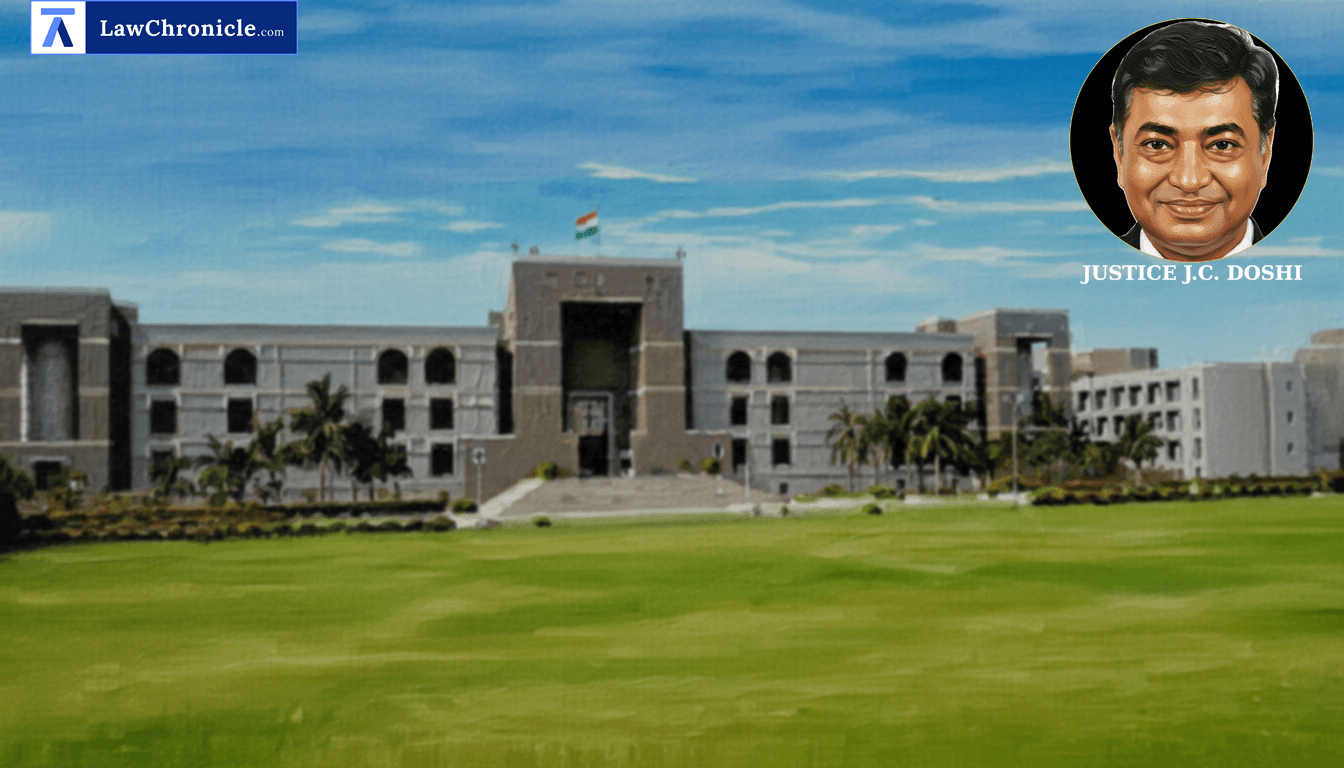
Emphasizing that compensation for property damage cannot be awarded on mere assumptions, the Gujarat High Court set aside a trial court decree directing the State to pay compensation for losses allegedly suffered during the 1986 communal riots. The Court held that the primary burden of proving ownership and the specific value of destroyed articles remains squarely on the plaintiff, regardless of whether the State leads rebuttal evidence.
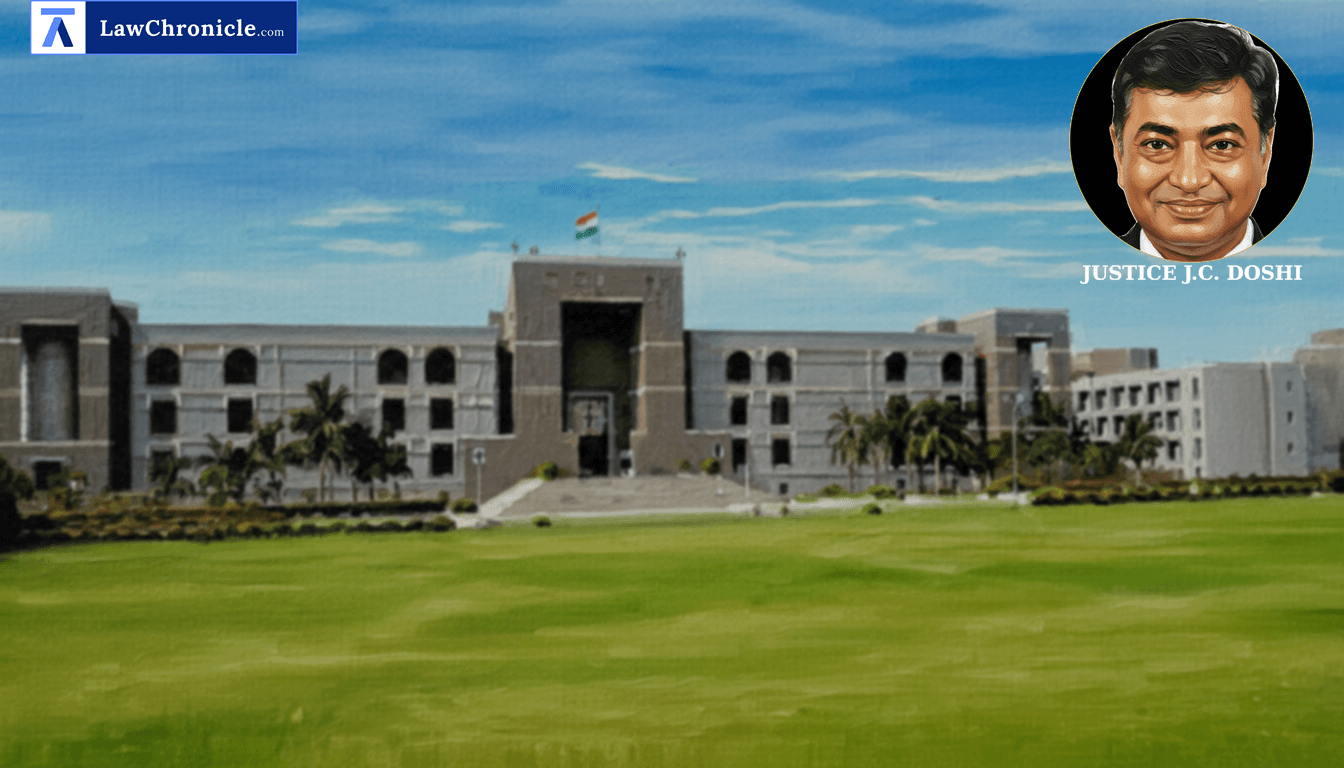
A single-judge bench of Justice J. C. Doshi presided over the first appeal challenging a 1998 judgment of the Ahmedabad City Civil Court. The High Court scrutinized the trial court's decision to award Rs. 45,400 to a tailor whose shop was allegedly looted and set on fire during the civil unrest in Ahmedabad.
The Requirement of Specific Pleadings and Concrete Evidence
The High Court observed that the plaintiff had only made general averments in his plaint regarding the loss of furniture and machines but introduced specific measurements and descriptions for the first time during his deposition. Citing Srinivas Raghavendrarao Desai (Dead) through LRs v. Kumar Vamanrao @ Alok & Ors. ( "2024 INSC 165": 2024 CaseBase(SC) 325), the Court reiterated that no evidence can be led beyond the scope of the pleadings. It found that the trial court erred by accepting this "improved version" as gospel truth without any corroborating documentary evidence like electricity bills, rent agreements, or expert valuation reports.
Legality of Construction and State's Liability
The Court also took issue with the trial court's finding that the legality of the shop's construction was irrelevant. Justice Doshi noted that a person claiming compensation must establish a lawful right or interest in the property. Furthermore, the Court highlighted discrepancies in the Fire Brigade reports, which appeared to be interpolated, yet were relied upon by the lower court.
While the State had provided an ex gratia payment of Rs. 5,000, the Court clarified that this humanitarian assistance did not automatically prove the extent of the specific economic loss claimed in a civil suit. The Court, in its reasoning, observed: "A person claiming compensation for loss of property allegedly caused during communal riots must ordinarily establish his ownership, tenancy, or lawful possession of the property concerned... In the absence of specific and reliable evidence regarding the actual loss suffered by the plaintiff, including destruction of furniture, fixtures, sewing machines and other articles, compensation cannot be awarded on the basis of mere assumptions, surmises and conjectures."
Burden of Proof under the Evidence Act
Addressing the trial court's observation that the State did not enter the witness box to rebut the plaintiff's claims, the High Court applied Sections 101 and 102 of the Indian Evidence Act, 1872. Referring to Rangammal Vs. Kuppuswami ( "AIR (2011) SC 2344": 2011 CaseBase(SC) 530), the Court held that the onus is on the plaintiff to establish their case on the basis of available material and cannot rely on the weakness of the defense. Similarly, relying on C.N. Ramappa Gowda v. C.C. Chandregowda (Dead) by LRs & Anr., the Court noted that under Code of Civil Procedure, 1908, the failure of a defendant to lead evidence does not automatically entitle a plaintiff to a decree.
The Court has the following directions:
"First Appeal is allowed. The impugned judgment and decree dated 22.09.1998 passed by learned City Civil Court, Ahmedabad, in Civil Suit No.6383 of 1987, is hereby quashed and set aside. If any amount deposited by the State Government pursuant to the impugned judgment, either before this Court or before the learned City Civil Court, the same shall be returned to the State in accordance with law."
Background:
The dispute originated from the communal riots that occurred in Ahmedabad on July 13, 1986. The plaintiff, who ran 'Action Tailors' in the Behrampura area, alleged that a mob looted and burned his shop, causing a loss of over Rs. 50,000. While the State paid Rs. 5,000 as ex gratia, the plaintiff filed a civil suit seeking full compensation, citing Article 14, 21, and 38 of the Constitution of India, 1950. The City Civil Court decreed the suit in 1998, prompting the District Collector and the State Government to appeal. The High Court ultimately found the trial court's approach "legally unsustainable" due to the lack of substantive proof regarding the existence and value of the destroyed items.
Case Details:
Case No.: R/FIRST APPEAL NO. 6729 of 1998
NeutralCitation: 2026:GUJHC:38216
Case Title: DISTRICT COLLECTOR & ANR. v. IQBALHUSSAIN IBRAHIM SHAIKH
Appearances:
For the Petitioner(s): MR.URVASHI PUROHIT AGP
For the Respondent(s): MR HASHIM QURESHI
Source: 2026 CaseBase(GUJ) 305
Similar Articles
 Breaking News


