


Gujarat HC Quashes ₹43 Cr GST Demand On 'Amul' Over Cross-Charging Omission
 Copy Link
 Share
 Save
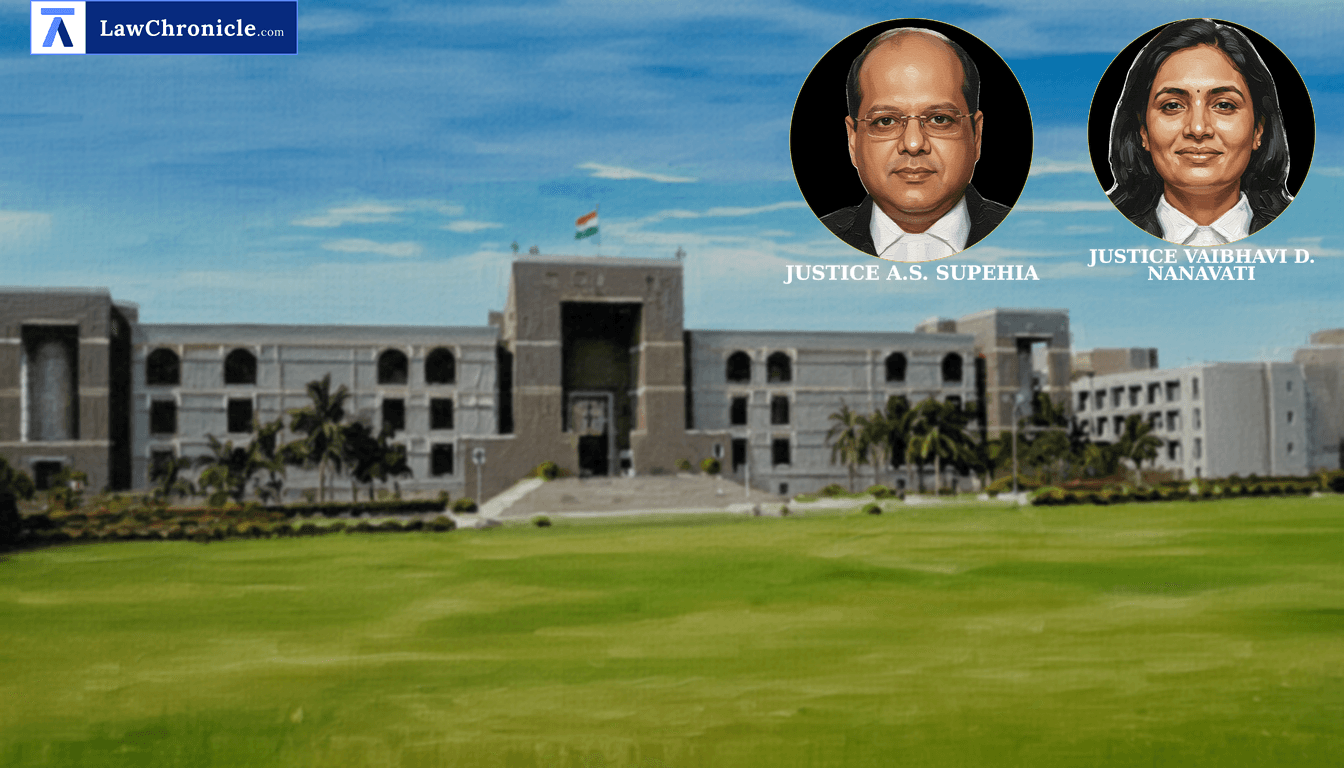
In a decisive check on tax authorities, the Gujarat High Court has invalidated a ₹43.43 crore tax demand against the Gujarat Co-operative Milk Marketing Federation (Amul), ruling that internal services between a head office and its branches are revenue-neutral and cannot be subjected to extended limitation periods without evidence of fraud.
A Bench of Justice A.S. Supehiya and Justice Vaibhavi D. Nanavati heard the challenge against an Order-in-Original that sought to penalize the Federation for not adopting a cross-charging mechanism for common corporate expenses like advertising and salaries during the early GST period.
Key Takeaways
Revenue Neutrality Negates Fraud
If tax paid on internal services is available as Input Tax Credit (ITC) to branches, the situation is revenue-neutral, making allegations of 'intent to evade tax' unsustainable.
Deemed Nil Valuation
In cases where a Head Office does not issue an invoice to its branch for common services, the value of such supply is deemed to be 'Nil' as per Central Goods and Services Tax Act, 2017, provided the recipient is eligible for full ITC.
Strict Standards for Section 74
Authorities cannot mechanically invoke the extended five-year limitation period without providing foundational facts that establish fraud or wilful suppression.
Legal Nuances of Cross-Charging and Distinct Persons
The court examined the status of the Federation under Section 25 of the Central Goods and Services Tax Act, 2017. While the Head Office (HO) and branches with different registrations are considered 'distinct persons', the court noted that the Central Goods and Services Tax Act, 2017 does not explicitly define 'Cross-Charge'. Instead, the mechanism arises from the reading of Section 25(4) and Section 25(5) alongside Entry 2 of Schedule I.
Referring to clarifications issued by the CBIC, the court highlighted that where the HO has not issued a tax invoice to a branch, the value of such services is deemed 'Nil'. The Bench relied on the Delhi High Court's decision in M/s. Metal One Corporation India Private Limited and others Vs. Union of India & Ors., which established that such non-issuance leads to an inescapable conclusion of no plausible tax liability.
The Court, in its reasoning, observed: "The respondent authorities, therefore, cannot determine the value of the services on a proportionate basis merely on the ground that the petitioner did not adopt the cross-charging mechanism to determine the value of the common expenditure by allocating the same in proportion to the turnover of its various branches and depots."
Judicial Rebuking of Mechanical Invocation of Section 74
The High Court took a stern view of the tax department's reliance on Section 74 of the Central Goods and Services Tax Act, 2017 to bypass the normal limitation period. Citing the Supreme Court in Tata Steel Ltd. Vs. Union of India, the Bench noted that foundational facts for fraud must be evident from the notice itself and cannot be mere 'lip service'.
The Court further observed: "The mere allegation that the petitioner failed to adopt cross-charging in respect of internally generated services provided by the Head Office to its branch offices cannot ipso facto lead to the conclusion that the petitioner wilfully or fraudulently evaded payment of tax or suppressed material facts with such intent."
Conclusion and Directions
The Court has the following directions:
"In view of the foregoing discussion, the writ petition succeeds and is accordingly allowed. The Order-in-Original No.74/CGST/ (Ahmedabad South)/ADC/PBM/24-25 dated 01.01.2025 passed by the Additional Commissioner of CGST, Ahmedabad, is hereby quashed and set aside. Rule is made absolute accordingly."
Ratio
Where a recipient unit is eligible for full Input Tax Credit, the value of services provided by a Head Office to its branches is deemed 'Nil' if no invoice is issued, and a mere failure to adopt cross-charging does not constitute 'suppression of facts' or 'intent to evade' necessary to invoke the extended period of limitation under Section 74 of the CGST Act.
Background
The petitioner, the apex body for 'Amul', was served a show-cause-cum-demand notice in 2022 for the period July 2017 to March 2019. The Revenue alleged that the Head Office at Anand failed to 'cross-charge' branches for corporate expenses like IT infrastructure and employee salaries. The petitioner argued that these were internally generated services and, since all records were maintained in their books of account, there was no suppression. The High Court agreed, noting that since any tax paid would have been available as ITC to branches, there was no loss to the exchequer and thus no fraudulent intent could be established.
Case Details:
Case No.: R/SPECIAL CIVIL APPLICATION NO. 7085 of 2025
Neutral Citation: 2026:GUJHC:64765-DB
Case Title: M/S GUJARAT CO-OPERATIVE MILK MARKETING FEDERATION LIMITED Versus UNION OF INDIA & ORS.
Appearances:
For the Petitioner(s): Mr Amal Paresh Dave, Mr Paresh M Dave
For the Respondent(s): Ms Hetvi H Sancheti, Senior Standing Counsel
Source: 2026 CaseBase(GUJ) 29367
Similar Articles



 Breaking News


