


Gujarat High Court Declines State Quota Benefits to NTRO Employee's Ward
 Copy Link
 Share
 Save
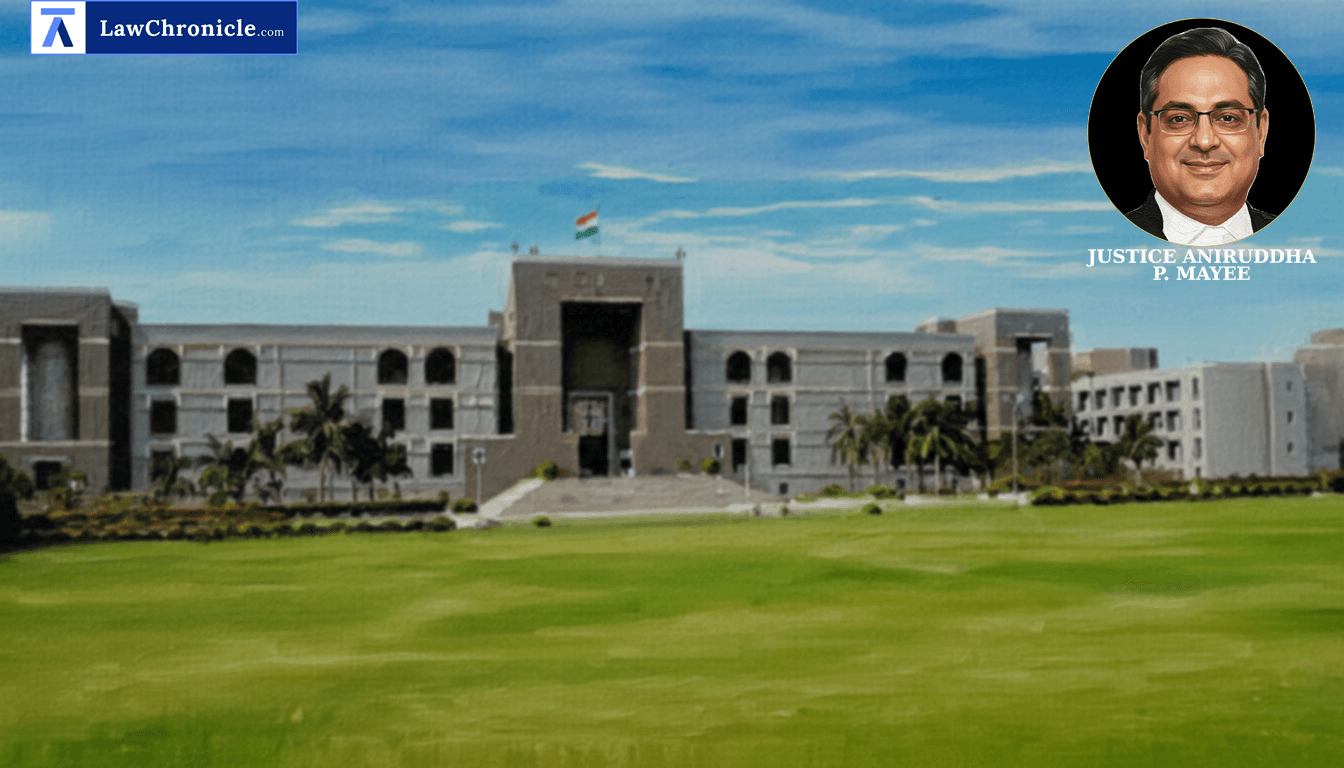
The Gujarat High Court has reinforced the strict eligibility criteria for medical admissions, ruling that employees of the National Technical Research Organisation (NTRO) cannot be equated with defense personnel to claim residency exemptions. The judgment underscores that intelligence agencies under the Ministry of Home Affairs do not fall within the specific categories of 'defense services' mandated for domicile relaxations in state medical quotas.
In a hearing presided over by Justice Aniruddha P. Mayee, the Court addressed a challenge by a Gujarat domicile candidate who was declared ineligible for the State Quota because she completed her 10th standard in New Delhi due to her father's posting with the NTRO. The petitioner sought to read down the state's admission rules to include wards of central intelligence officers within the same protective umbrella as defense and paramilitary personnel.
Key Takeaways
NTRO Not a Defense Service
Evidence confirms that NTRO operates under the Ministry of Home Affairs and is categorized alongside police and intelligence wings, rather than the armed forces.
Strict Rule 4 Interpretation
Candidates must satisfy the dual requirement of passing both 10th and 12th standards from schools within Gujarat unless they fall strictly within enumerated exceptions.
Judicial Restraint in Policy
Courts cannot expand the definition of 'defense service' to include intelligence agencies, as such an act would constitute judicial legislation and usurp the legislature's role.
Limited Applicability of Precedents
Rules applicable to other states like Maharashtra regarding central government employees cannot be imported into Gujarat's admission framework without specific statutory mirroring.
NTRO's Status Under Ministry of Home Affairs
The petitioner contended that the NTRO, being an intelligence organization working for national security, should be treated at par with defense services under Rule 4(6)(c) of the Gujarat Professional Medical Educational Courses (Regulation of Admission in Undergraduate Courses) Rules, 2017. However, the Court observed that the organization is under the Police Division-II (RW) of the Ministry of Home Affairs. The Court noted that even canteen facilities provided to NTRO personnel are those available to central police personnel, not defense staff.
The Court, in its reasoning, observed: "The material placed on record and relied upon by the learned Senior Counsel for the petitioner to show that the NTRO is a part of the defence services itself clearly reveals that the NTRO is an organization under the Ministry of Home Affairs, Government of India and is under authority of MHA Police Division II, R&W... Therefore, by no stretch of imagination, the NTRO can be treated to be a defence service."
Judicial Limitation on Reading Down Rules
Justice Aniruddha P. Mayee highlighted that the petitioner had not challenged the constitutional validity of Rule 4(3) or Rule 4(6). In the absence of such a challenge, the Court cannot modify the rules through a 'benevolent interpretation.' The Court referred to Vishakha D/o. Mahendra Ptel v. State of Gujarat & Anr., where a Division Bench held that whether benefits should be extended to other categories is a matter for the Legislature.
The Court noted that the petitioner failed to satisfy the requirements of Rule 4(3) of the Gujarat Professional Medical Educational Courses (Regulation of Admission in Undergraduate Courses) Rules, 2017, which mandates that the 10th and 12th qualifying examinations must be passed from a school located in Gujarat. The Court has following directions:
"For the aforesaid reasons and observations, the present Special Civil Application is devoid of merits. The prayers prayed for in the present Special Civil Application cannot be granted. The Special Civil Application is accordingly dismissed. No order as to costs."
Ratio
The High Court held that the definition of 'defense personnel' in state admission rules is exhaustive and cannot be judicially expanded to include employees of intelligence organizations under the Ministry of Home Affairs. In the absence of a challenge to the constitutionality of a rule, a writ court cannot 'read down' or modify statutory provisions to include categories not intended by the legislature, as doing so would amount to impermissible judicial legislation under Constitution of India.
Background
The petitioner, a native of Gujarat, was born in Gandhinagar but pursued her 10th standard in New Delhi while her father was posted there as a Scientist with the NTRO. She returned to Bhavnagar for her 11th and 12th standards and subsequently cleared NEET-UG 2026 with a high percentile. Upon applying for the State Quota, she was declared 'Not Eligible' because her 10th standard school was outside Gujarat.
She initially approached the Supreme Court under Constitution of India, which granted her liberty to approach the High Court. The petitioner relied on the Gauhati High Court's decision in Satish Kumar Mishra vs The Union of India and 3 Ors. and the Supreme Court's ruling in Vansh S/o. Prakash Dolas Versus Ministry Of Education & The Ministry Of Health & Family Welfare ( "2024 (20) SCC 306": 2024 CaseBase(SC) 451) regarding Maharashtra's admission rules. However, the Gujarat High Court distinguished these cases, noting that the Gujarat Professional Medical Educational Courses (Regulation of Admission in Undergraduate Courses) Rules, 2017 did not have an equivalent 'exception clause' for all Central Government employees, unlike the Maharashtra rules discussed in Vansh S/o. Prakash Dolas Versus Ministry Of Education & The Ministry Of Health & Family Welfare ( "2024 (20) SCC 306": 2024 CaseBase(SC) 451). Consequently, the petition was dismissed.
Case Details:
Case No.: R/SPECIAL CIVIL APPLICATION NO. 12059 of 2026
Neutral Citation: 2026:GUJHC:60211
Case Title: Yashvi Vipulkumar Patel Versus State Of Gujarat & Anr.
Appearances:
For the Petitioner(s): Mr Mitul Shelat, Sr. Counsel, With Mr Abhishek M Mehta With Ms Chaitali P Dave
For the Respondent(s): Ms Manisha Lavkumar Shah, Addl. Advocate General With Mr Km Antani Agp
Source: 2026 CaseBase(GUJ) 24146
Similar Articles
 Breaking News


