


High Court Directs Employer To Pay Minimum Wages Under Section 17B During Pendency Of Writ Petition
 Copy Link
 Share
 Save
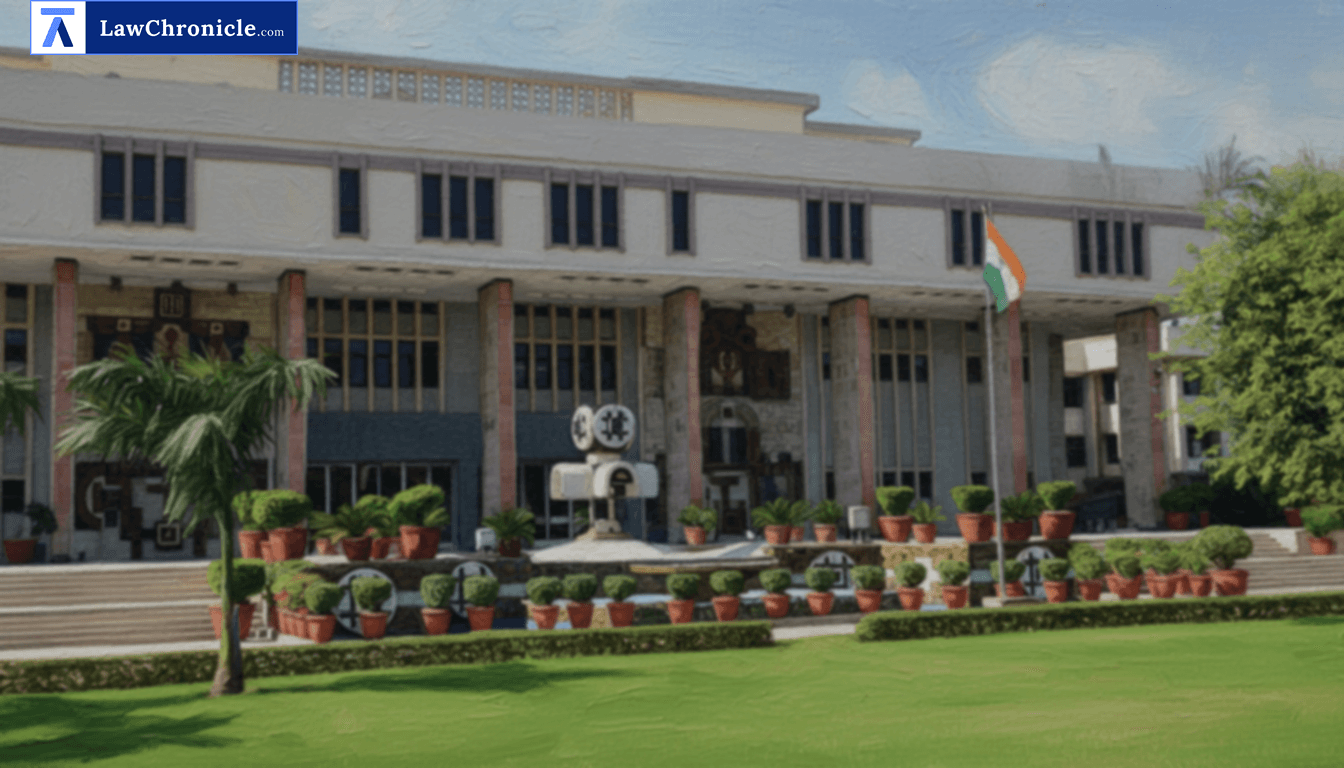
A single-judge bench of Justice Shail Jain heard an application under Section 17B of the Industrial Disputes Act, 1947 filed by the respondent-workman in C.M. Appl. No. 9378/2025 in W.P.(C) 5823/2012, seeking payment of wages during the pendency of a writ petition by the employer challenging a labour court award of reinstatement. The matter was reserved on February 18, 2026 and decided on February 26, 2026.
The High Court allowed the Section 17B application and directed the petitioner/management to pay the respondent monthly minimum wages from the date of the application until final disposal of the writ petition. The court observed that Section 17B was a "beneficial provision" enacted to protect a workman during prolonged litigation and reiterated that once the workman filed an affidavit of non-employment the burden shifted to the employer to rebut that claim with cogent material. The Court, in its reasoning, observed: "Additionally, while considering an application under Section 17B of the Act, the application has to be considered strictly in terms of Section 17B of the Act, irrespective of the merit of the case. This Court can only consider whether the requirements mentioned in Section 17B have been satisfied or not. If those requirements have been satisfied and if it has not been proved to the satisfaction of the Court that the workman has been employed and had been receiving adequate remuneration during the period of pendency of the writ petition, this Court has no option but to direct the employer to pay wages to the workman in terms of Section 17B irrespective of the merit of the writ petition." The court further quoted the statutory position that the employer "shall be liable to pay such workman, during the period of pendency of such proceedings ... full wages last drawn by him," and held that, in the present case, payment of minimum wages was appropriate rather than an amount higher than the last drawn wages.
Background The respondent, Joginder Singh, was appointed as a Safai Karamchari on June 1, 1990, confirmed and promoted as Peon from June 1, 1992, with last drawn wages of Rs. 2,323 per month. He was placed on leave for illness in October 1995, was not permitted to resume duty in January 1996 despite producing a medical certificate, and alleged termination effective April 26, 1996. He raised an industrial dispute; the Labour Court found the domestic enquiry vitiated and, by award dated February 7, 2012, directed reinstatement with 50% back wages. The employer challenged that award by filing the present writ in 2012; an interim stay was granted in September 2012 subject to deposit of 50% back wages and later made absolute in November 2013.
The respondent filed the Section 17B application in 2025, asserting continuous unemployment and financial hardship. The employer opposed the application as mala fide and relied on precedent to highlight the delay in seeking interim relief, arguing that a long delay could indicate absence of immediate hardship and could prejudice the employer. The High Court surveyed authorities including Food Craft Institute v. Rameshwar Sharma, Management of Centaur Hotel v. P.S. Mohan Nair, Surjeet Singh v. Dominant Systems and others, and explained the statutory scheme that an affidavit by the workman discharged the initial statutory burden while the onus shifted to the employer to prove gainful employment and adequate remuneration.
The court found that the respondent had filed an affidavit asserting non-employment and that the petitioner/management failed to produce cogent evidence to rebut that claim. Although the application was filed belatedly (about 13 years after the award), the court noted the respondent's age and the absence of plausible explanation for earlier delay and therefore limited relief to wages from the date of filing the application rather than from the date of the award. The court directed payment of monthly minimum wages (as per the Minimum Wages Act, 1948) from the date of the application until disposal of the writ petition, required deposit of arrears within three months (failing which interest at 6% per annum would accrue), ordered monthly payments by the 9th of each month, and conditioned the relief on the workman filing an affidavit within two weeks affirming his continuous unemployment. The writ petition was directed to proceed; parties were ordered to file written submissions within four weeks and the matter was listed for final arguments on April 20, 2026.
Case Details: Case No.: W.P.(C) 5823/2012 (C.M. Appl. No. 9378/2025) Case Title: JAMIA HAMDARD v. JOGINDER SINGH Appearances: For the Petitioner(s): Mr. M. Zubair Hanifi, Adv. For the Respondent(s): Mr. P.K. Jha and Ms. Kittu Bajaj, Adv.
Similar Articles
 Breaking News


