


High Court Is Right to Treat Notarised Photocopy of Power of Attorney as Inadmissible Secondary Evidence; Civil Appeal Dismissed
 Copy Link
 Share
 Save
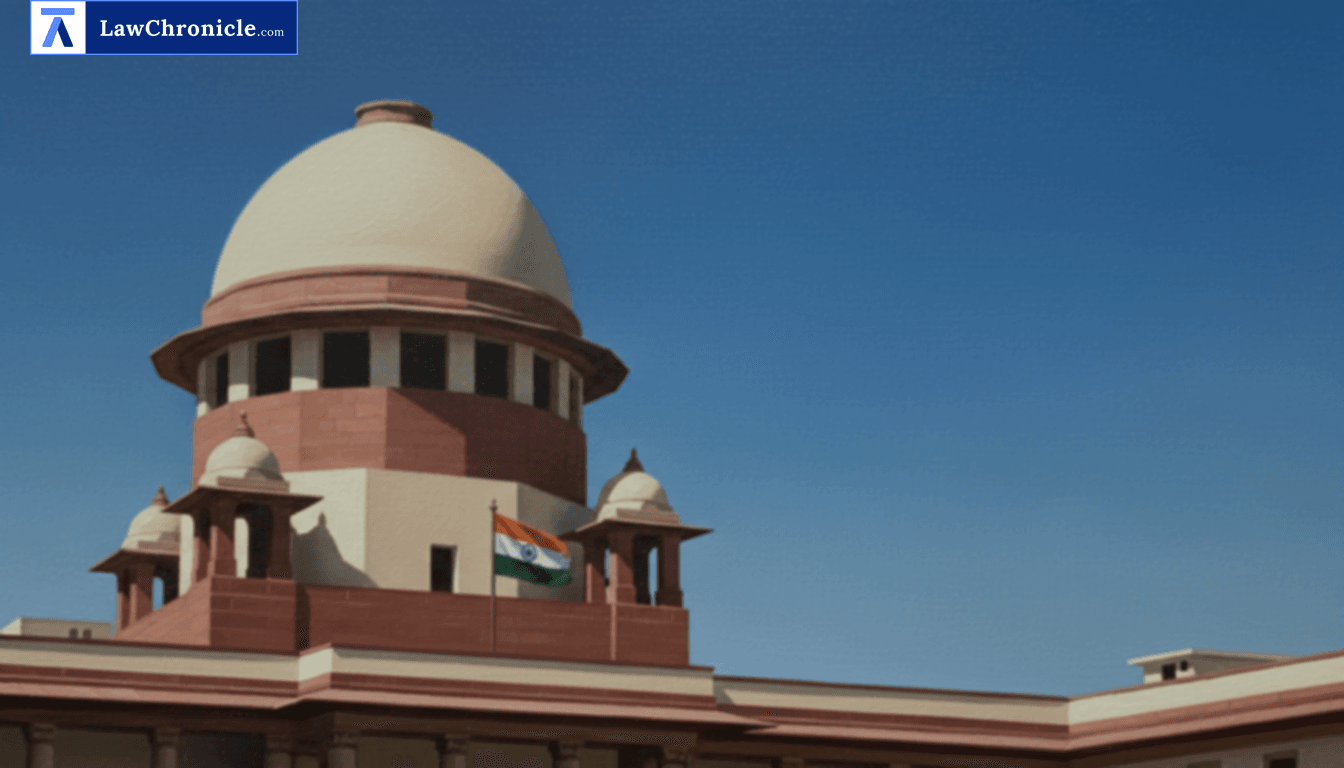
A bench of Justices Pankaj Mithal and S.V.N. Bhatti heard an appeal by the 1st and 2nd defendants challenging the High Court’s restoration of the trial court decree which had declared registered sale deeds executed in 2007 void for lack of a valid power of attorney (PoA).
The Supreme Court dismissed the civil appeal and upheld the High Court’s finding that the defendant’s case rested on a notarised photocopy of a PoA (Exh. B-2) that was not proved in accordance with the provisions governing secondary evidence. The Court held that secondary evidence was admissible only after the foundational requirements under Sections 63–66 and Section 65 of the Evidence Act were satisfied and that the First Appellate Court had erred in relying on Exh. B-2 without such proof. The Court, in its reasoning, observed: “Therefore, the introduction of secondary evidence is a two-step process, wherein, first, the party must establish the legal right to lead secondary evidence, and second, they must prove the contents of the documents through that evidence. The twin requirements are conjunctive.” The Court further recorded that “Exh. B-2/photocopy is no evidence, and the incorrect reliance on no evidence, has been rightly corrected by the High Court through the impugned judgment.”
Background
The dispute arose from O.S. No. 197 of 2013 (originally O.S. No. 597 of 2007) in Kozhikode, where the plaintiff (owner of three immovable properties in the plaint A-schedule) sued for declaration, perpetual injunction and damages after registered sale deeds dated 15.03.2007 were executed in favour of the 2nd and 3rd defendants. The plaintiff alleged that she had executed a limited PoA (Exh. A-4/ A-3 with sale and mortgage clauses struck out) in favour of the 1st defendant and denied executing any PoA that empowered alienation; she also denied receipt of certain consideration receipts or contended they were forged.
The trial court compared the draft PoA and the PoA relied upon by defendants, found indications of interpolation and noted that the defendants failed to produce the original PoA. It held the PoA unproved and the sale deeds invalid, granted injunctions and directed surrender of possession. The District Judge allowed the first appeal, accepting the defendants’ contention that Exh. B-2 (a notarised photocopy) carried a presumption of validity under the Notaries Act and the Evidence Act, and relied on receipts and other circumstances to hold the sales valid.
On second appeal, the High Court restored the trial court, finding that the original PoA was not produced and that the photocopy (Exh. B-2) had not been admitted in accordance with Sections 65–66 of the Evidence Act; it pointed to signs of interpolation and differences between the draft and the disputed PoA. The High Court concluded that the First Appellate Court had acted on inadmissible secondary evidence and misapplied the law.
The Supreme Court examined the scope of a High Court’s jurisdiction under Section 100 CPC and the rules on secondary evidence. Applying settled authorities, it held that the High Court legitimately re-examined the matter because the First Appellate Court’s findings depended on inadmissible evidence and were vitiated by reliance on documents that were not properly proved. The Court affirmed that without laying the requisite factual foundation for secondary evidence and proving contents thereafter, Section 85 and presumptions under the Evidence and Registration Acts could not be invoked. The appeal was dismissed; there was no order as to costs and pending applications stood disposed of.
Case Details:
Case No.: 2026 INSC 134 (Civil Appeal @ SLP (C) No. 11868 of 2024)
Case Title: THARAMMEL PEETHAMBARAN AND ANOTHER v. T. USHAKRISHNAN AND ANOTHER
Appearances:
For the Appellant(s): Mr. Pijush Kanti Roy, Senior Counsel
For the Respondent(s): Mr. Siddharth Bhatnagar, Advocate
Similar Articles
 Breaking News


