


High Court Rule 5 Yields to Natural Justice; Special Appeal Restored in Fair Price Shop License Dispute
 Copy Link
 Share
 Save
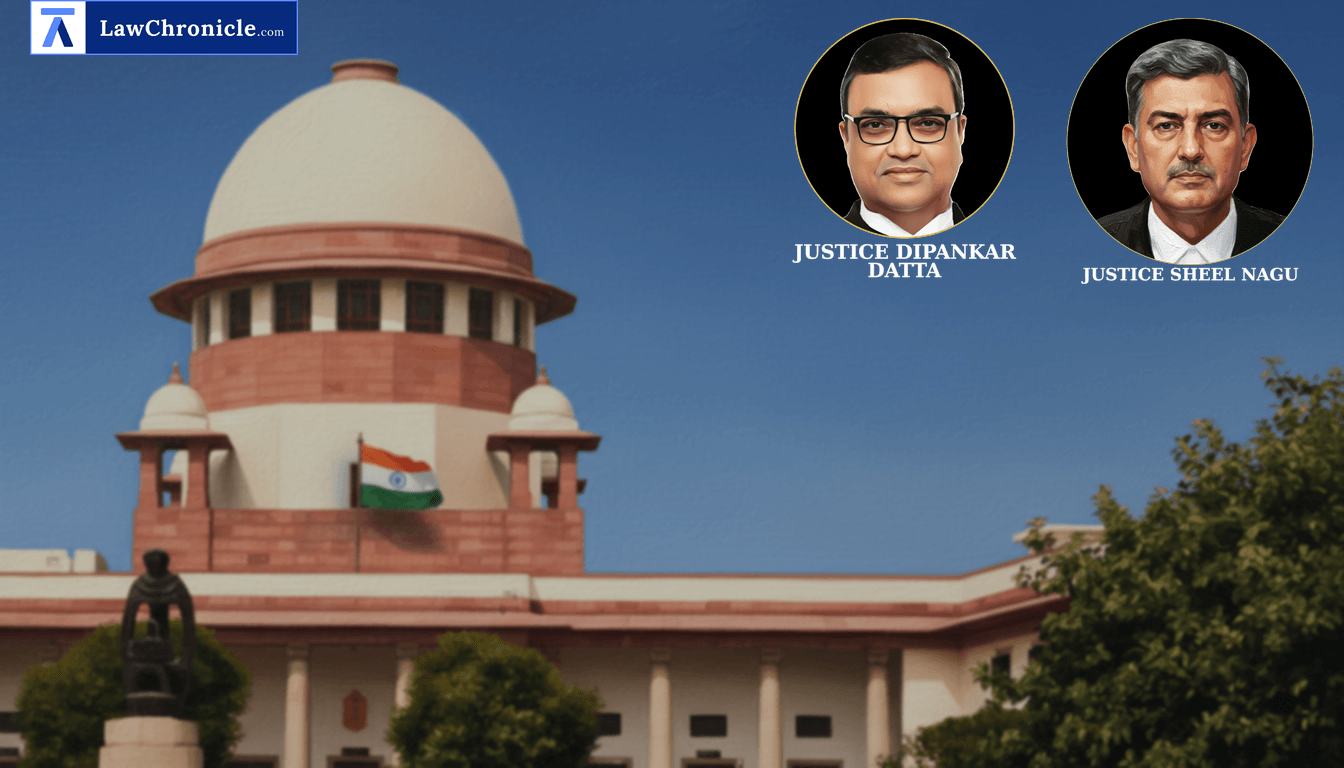
A bench of Justice Dipankar Datta and Justice Augustine George Masih heard appeals by Abhishek Gupta challenging an intra‑court dismissal by a Division Bench of the Allahabad High Court and the underlying Single Judge order that had set aside the revocation of a fair price shop licence in favour of respondent no.1. The principal question concerned the scope and interpretation of Chapter VIII Rule 5 of the Allahabad High Court Rules, 1952 and whether a non‑party affected by a writ order could invoke an intra‑court appeal or other remedy.
The Court set aside the Division Bench order that had held the appellant’s intra‑court appeal not maintainable and restored the Special Appeal to its original file and number for fresh hearing. The Supreme Court held that Rule 5 must be read so as to “advance the cause of ‘access to justice’” and that the bar created by Rule 5 would yield where foundational principles of natural justice, particularly non‑joinder, were engaged. The Court, in its reasoning, observed: “In the circumstances before us, the bar created by Rule 5 must yield to the foundational principles of natural justice, namely, the right to be heard and the right to a fair hearing. It is trite law that the principle of non‑joinder, though originating from the Code of Civil Procedure, 1908, applies with equal force to writ proceedings. An order passed in writ jurisdiction without impleading an affected or necessary party is liable to be invalidated on that ground alone. Since the courts exist to administer justice, the rigours of Rule 5 would not apply and stand relaxed in a case of the present nature where the order under challenge is one, passed by a Single Judge on a petition under Article 226 of the Constitution, adversely affecting the rights of a party who was not a party‑respondent before the Single Judge.” The Court also noted the availability of remedies under Articles 136 and review but emphasised that those remedies may not provide as effective a redress as an appeal where a non‑party’s rights were prejudicially affected.
Background The dispute arose when respondent no.1’s licence to operate a fair price shop was revoked on grounds of breach of lawful terms and conditions and the licence was subsequently granted to the present appellant. Respondent no.1 filed a writ petition under Article 226 before a Single Judge of the Allahabad High Court challenging the revocation and the appellate affirmation; the appellant was not impleaded in that writ petition. The Single Judge allowed the writ on 10 June 2025, set aside the revocation and the appellate affirmation, and directed reinstatement of respondent no.1 as licencee. The appellant filed an intra‑court Special Appeal, asserting that the Single Judge’s order “prejudicially affected his interest, without he being given an opportunity of hearing.” The Division Bench dismissed the intra‑court appeal as not maintainable relying on Rule 5 and the Allahabad Full Bench decision in Sheet Gupta v. State of U.P. (AIR 2010 All 46 (FB)), which construes limits on special appeals from Single Judge writ orders.
The Supreme Court reviewed Rule 5 and the Full Bench exposition, held that the Division Bench erred in treating Sheet Gupta as decisive in the present factual matrix, and emphasised the primacy of “access to justice” and natural justice over a strict mechanical application of procedural bar. The Court applied precedents permitting an appeal by a non‑party with leave where the impugned order prejudiced or bound the non‑party, and invoked the maxim “ubi jus, ibi remedium.” The Court restored the Special Appeal for expeditious hearing, left open the parties’ contentions on merits, and expressly declined to express any opinion on the merits. The Court further observed that, for the present, it was “not inclined to allow the appellant to run the fair price shop” and specified that the shop allotted to respondent no.1 in compliance with the Single Judge’s order shall abide the result of the Special Appeal. The appeals were disposed of on these terms and pending applications were also disposed.
Case Details: Case No.: Civil Appeal Nos. 14545‑14546/2025 (Special Leave Petition (C) Nos. 35171‑72/2025; Diary No.68082/2025; 2025 INSC 1406) Case Title: Abhishek Gupta v. Dinesh Kumar & Ors. Appearances: For the Petitioner(s): Names not indicated in the judgment For the Respondent(s): Names not indicated in the judgment
Similar Articles

 Breaking News


