


High Court’s Conversion of Acquittal into Conviction Is Unlawful; Supreme Court Sets Aside Conviction and Awards Compensation
 Copy Link
 Share
 Save
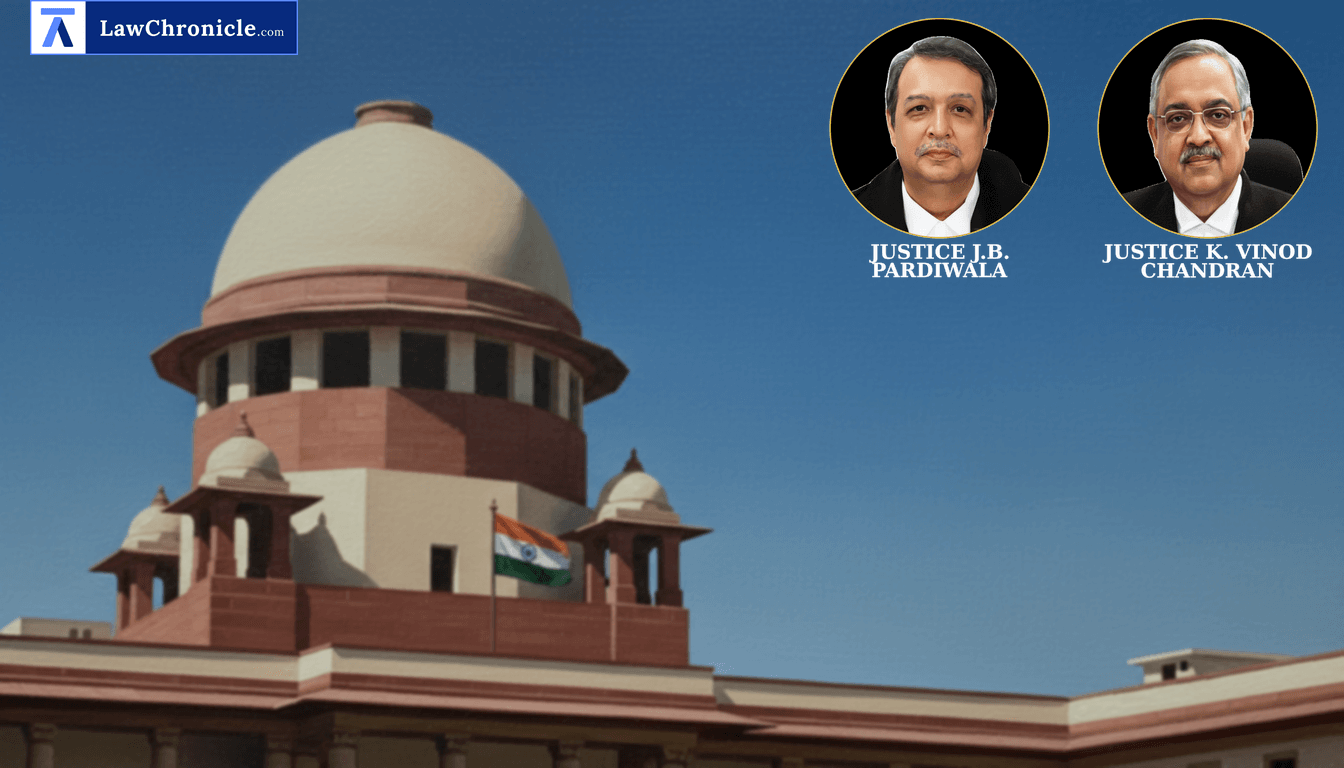
A Bench of Justices J.B. Pardiwala and R. Mahadevan heard appeals challenging the Punjab & Haryana High Court’s August 27, 2024 judgment which reversed the Sessions Court’s acquittal and convicted three men for murder. The appeals raised whether a High Court in revisional jurisdiction could convert a finding of acquittal into one of conviction under Section 401 Cr.P.C., whether the appellants were denied the right to be heard, and whether the proviso to Section 372 Cr.P.C. (giving victims a right to appeal) operated retrospectively.
The Court allowed the appeals, set aside the High Court’s conviction and sentence, and awarded compensation to the appellants. The Supreme Court held that the High Court committed “an egregious error in reversing the acquittal and passing an order of conviction in exercise of its revisional jurisdiction” and that it had acted without affording the appellants an opportunity of being heard. The Court noted guiding principles that judicial action must not harm a litigant, quoting that “There is no higher principle for the guidance of the court than the one that no act of courts should harm a litigant and it is the bounden duty of the courts to see that if a person is harmed by a mistake of the court he should be restored to the position he would have occupied, but for that mistake.” The Court, in its reasoning, observed: “Thus, it is as clear as a noonday that the High Court committed an egregious error in reversing the acquittal and passing an order of conviction in exercise of its revisional jurisdiction and that too without affording any opportunity of hearing to the appellants herein.” The Court further held that the proviso to Section 372 Cr.P.C., conferring a statutory right on victims to appeal against acquittal, was not retrospective and therefore could not validate the High Court’s action in this case.
Background
The dispute arose from an incident dated March 13, 1998, during Holi. The Sessions Court, on October 5, 2005, after trial, convicted one accused (Dharampal) and acquitted four others including the three present appellants (Mahabir, Raj Kumar, Dayanand and Krishan Kumar). The State did not appeal the acquittals. On January 19, 2006, the father of the deceased filed a Criminal Revision (CRR-194-2006) seeking to challenge the acquittals. Over ensuing years there were delays, non-service on the acquitted respondents and the death of the revisionist; nonetheless, on August 27, 2024 the High Court allowed the revision, convicted the three acquitted men, and sentenced them to life imprisonment and fines. The appellants were taken into custody after the High Court order and subsequently approached the Supreme Court.
The Supreme Court examined Sections 397 and 401 Cr.P.C., Section 372 Cr.P.C. and the proviso to Section 372 (inserted w.e.f. 31.12.2009), and relevant precedents including Bindeshwari Prasad Singh v. State of Bihar, Joseph Stephen v. Santhanasamy and Ganesha v. Sharanappa. The Court emphasised that Section 401(3) contains a categorical bar: a High Court in revision cannot convert an acquittal into a conviction, and in exceptional cases the proper course is limited to ordering a retrial or remitting the matter; the High Court must not reappreciate evidence to convict. The Court held that sub‑section (5) of Section 401 permitting treating a revision as an appeal could not be invoked here because the statutory right given to victims by the proviso to Section 372 post‑dates the 2006 revision and is not retrospective. The Court also criticised the High Court’s reliance upon unproved portions of a police statement (Section 162 Cr.P.C.) and its proceeding without ensuring service and a proper opportunity of hearing in breach of Section 401(2).
As relief, the Supreme Court set aside the High Court’s conviction and sentence, discharged the bail bonds, ordered the State Government to pay Rs. 5,00,000 to each of the three appellants within four weeks, and directed registry to place the matter before the Bench after four weeks to report compliance. The Court noted prior interim orders by which the appellants had been released on bail on December 13, 2024.
Case Details: Case No.: Criminal Appeal Nos. 5560-5561 of 2024 (reported as 2025 INSC 120) Case Title: Mahabir & Ors. v. State of Haryana Appearances: For the Petitioner(s): Indira Unninayar, Advocate For the Respondent(s): Counsel for the State of Haryana (as appearing in record)
Similar Articles
 Breaking News


