


Delhi High Court Sets Aside Arbitral Award Over Inordinate Delay in Pronouncement
 Copy Link
 Share
 Save
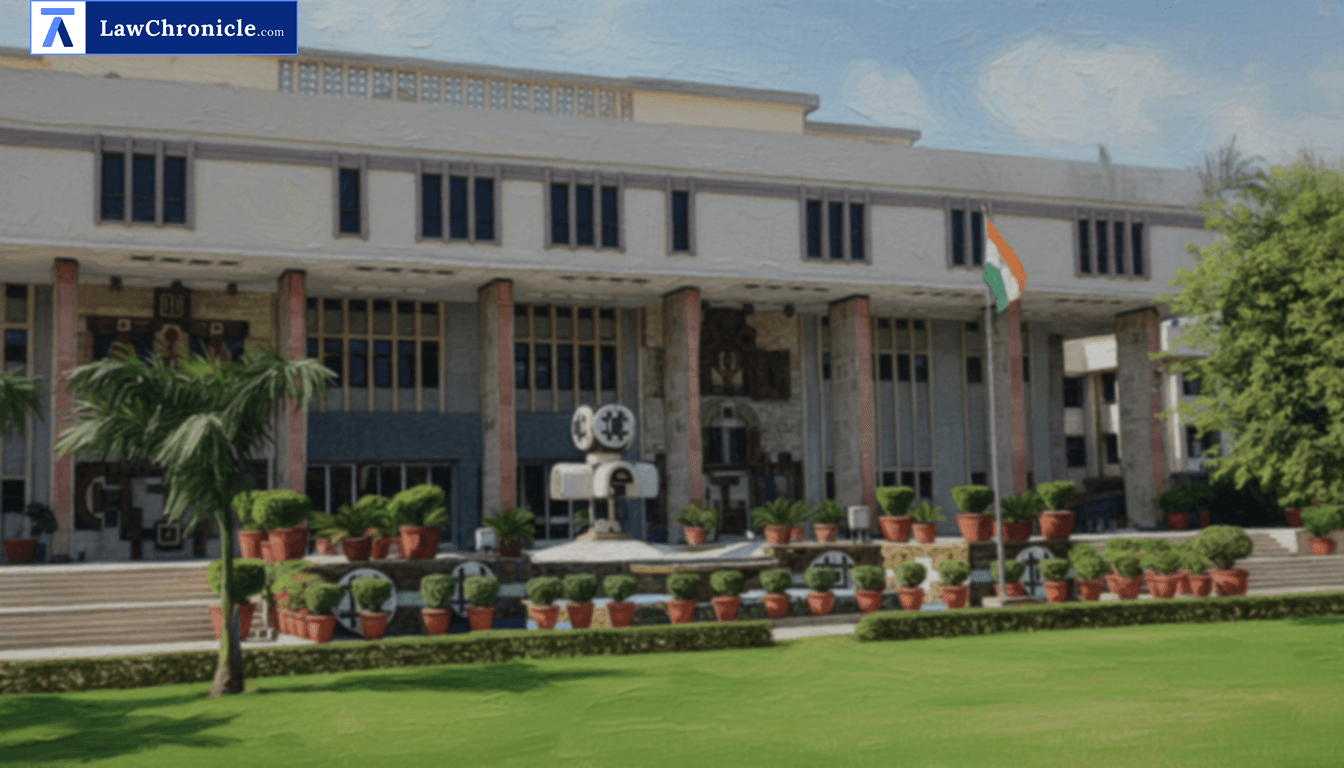
A Single‑Judge bench of Justice Avneesh Jhingan heard an application under Section 34 of the Arbitration and Conciliation Act, 1996 challenging a three‑member arbitral award dated 06.03.2023 in a dispute between an insurer and a hotel owner arising out of a large fire claim. The petitioner urged that the award suffered from inordinate and unexplained delay between reservation and pronouncement and that the tribunal lacked jurisdiction because there was no arbitrable dispute after a purported full and final settlement.
The court allowed the petition and set aside the award, holding that the delay in pronouncing the award had adversely affected the tribunal’s decision on a jurisdictional issue and was not satisfactorily explained. The Court emphasised that delay in delivery of an arbitral award was not, by itself, a ground to set it aside but observed that an unexplained or undue delay which “adversely reflects on the findings” could render the award in conflict with public policy. The Court, in its reasoning, observed: "63. To conclude, the questions framed for consideration in these appeals are answered as under: ... Delay in the delivery of an arbitral award, by itself, is not sufficient to set aside that award. However, each such case would have to be examined on its own individual facts to ascertain whether that delay had an adverse impact on the final decision of the arbitral tribunal, whereby that award would stand vitiated due to the lapses committed by the arbitral tribunal owing to such delay. It is only when the effect of the undue delay in the delivery of an arbitral award is explicit and adversely reflects on the findings therein, such delay and, more so, if it remains unexplained, can be construed to result in the award being in conflict with the public policy of India, thereby attracting Section 34(2)(b)(ii) of the Act of 1996 or Section 34(2A) thereof, as it may also be vitiated by patent illegality. Further, it would not be necessary for an aggrieved party to invoke the remedy under Section 14(2) of the Act of 1996 as a condition precedent to lay a challenge to that delayed and tainted award under Section 34 thereof." The court also cited that “justice should not only be done but should also appear to have been done” in assessing the impact of delay.
Background
The petitioner, a general insurance company, had issued two policies to the respondent hotel for the 2007–08 period — a Material Damage (MD) policy with an insured sum of Rs.186.44 crore and a Loss of Profit (LOP) policy with a liability limit of Rs.100 crore. A fire occurred on 26.01.2008. The respondent submitted claims of approximately Rs.68.64 crore under the MD policy and Rs.100 crore under the LOP policy; interim payments of Rs.20 crore and Rs.30 crore were made and a settlement was recorded on 30.01.2012. The respondent invoked the arbitration clause and a three‑member tribunal was constituted in April 2013. The statement of claim was filed in September 2012; hearings concluded and the award was reserved on 06.03.2021 but pronounced only on 06.03.2023.
Clause 13 of the MD policy confined arbitration to disputes as to quantum “if liability being otherwise admitted” and expressly excluded disputes where liability was disputed or not accepted. The petitioner argued that a full and final settlement extinguished any arbitrable dispute and that the tribunal therefore lacked jurisdiction; it also challenged the award for inordinate delay in pronouncement. The respondent contended the settlement was vitiated by coercion and undue influence and defended the merits, arguing the tribunal had recorded reasons for delay and had examined claims in detail.
Applying the Supreme Court’s guidance in M/s Lancor Holdings, the High Court examined whether the two‑year gap between reservation and pronouncement, and an overall decade‑long arbitration, had adversely affected the tribunal’s jurisdictional finding. The tribunal’s reasons — interruption by COVID‑19, late written submissions and inability of members to meet — did not sufficiently explain the more than eighteen months’ delay after excluding time attributable to parties, the court held. The court concluded that the delay “fortified that for a considerable time there was no deliberation” and that the award was vitiated by inordinate delay and patent illegality. The petition was allowed and the award set aside. No interim directions or further liberty were recorded in the judgment.
Case Details: Case No.: O.M.P. (COMM) 197/2023 Case Title: IFFCO TOKIO GENERAL INSURANCE COMPANY LTD. v. UNISON HOTELS PVT. LTD. Appearances: For the Petitioner(s): Mr. A. S. Chandhiok, Sr. Adv. with Ms. Bindu Saxena, Mr. Tanpreet Gulati & Ms. Aparajita Swarup, Advs. For the Respondent(s): Mr. Darpan Wadhwa, Sr. Adv. with Mr. Aseem Chaturvedi, Mr. Shivank, Mr. Arsh Alok & Ms. Divita Vyas, Advs.
Similar Articles
 Breaking News


