


Delayed Arbitral Award Impairs Evidence Appreciation; Bombay HC Sets Aside Award For Guarantor
 Copy Link
 Share
 Save
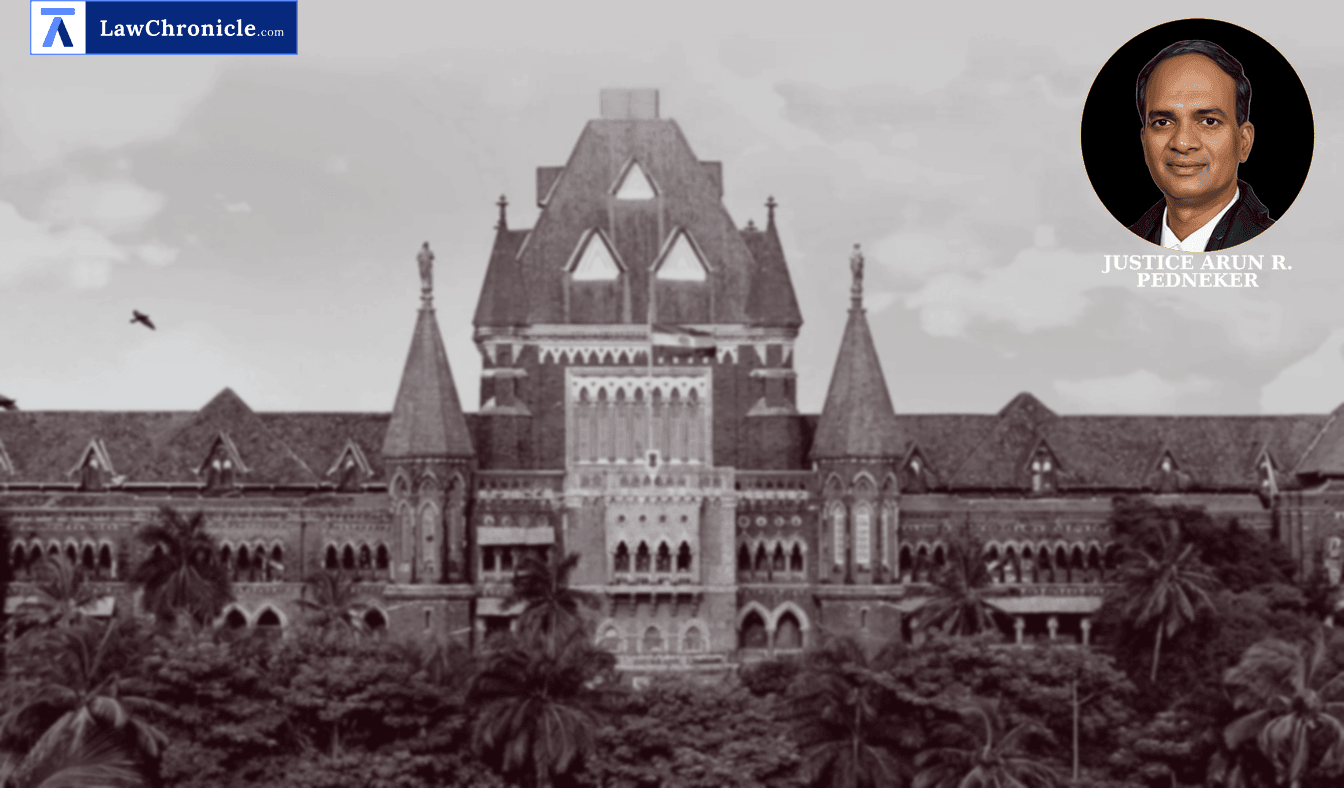
The Bombay High Court has set aside an arbitral award to the extent of a guarantor, ruling that a four-and-a-half-year delay between reserving the judgment and its delivery severely impaired the arbitrator's ability to appreciate crucial evidence and statutory defenses. The Bench emphasized that inordinate delays in pronouncing arbitral awards that result in the failure to consider specific legal defenses constitute a fatal blow to the validity of the award.
A single-judge bench of Justice Arun R. Pedneker heard the challenge filed by a guarantor against an award arising from a 1998 Hire Purchase Agreement. The Court scrutinized whether the protracted delay in the arbitral process violated the principles of reasonableness and whether the award qualified as 'unreasoned' under the Arbitration and Conciliation Act, 1996.
Key Takeaways
Delay Vitiates Reasoning
While delay alone may not always invalidate an award, it is fatal if it prevents the arbitrator from addressing specific evidence or legal contentions raised by the parties.
Severability of Awards
Courts possess the limited power to set aside an award specifically against a challenging party (like a guarantor) while leaving it intact for others who did not contest it.
Waiver of Appointment Objections
Failure to challenge the appointment of an arbitrator at the initial stage or before filing a statement of defense results in a deemed waiver of the right to object to the tribunal's composition.
The Impact of Inordinate Delay on Judicial Recall
The Bombay High Court observed that the matter was reserved for judgment on January 30, 2008, but the award was only passed on August 4, 2012. This gap of over four years went unexplained by the arbitrator. Relying on the principles in M/s. Lancor Holdings Limited vs. Prem Kumar Menon, the Bench noted that while Arbitration and Conciliation Act, 1996 does not explicitly list delay as a ground for setting aside, the passage of time debilitates human memory and makes it impossible to recall oral evidence and arguments.
The Bombay High Court, in its reasoning, observed that "The Award, per se, appears to have been affected by the inordinate delay of four and half years, which has impaired the Arbitrator’s examination of the matter qua the contentions raised specific to the guarantor. Thus, in the instant case... this Court finds that the delay in passing the Award has affected the Arbitrator’s examination of the material on record qua the material and defence raised by the Petitioner, guarantor."
Failure to Address Statutory Defenses Under Contract Law
The petitioner argued that they stood discharged as a surety under Section 133 and Section 139 of the Indian Contract Act, 1872 due to variances in the contract terms and the creditor's negligence. Specifically, it was alleged that the schedule of delivery was amended without the guarantor's consent and a one-time settlement offer was rejected after five years of inaction. The Bombay High Court found that the arbitrator's award was virtually unreasoned as it failed to address these specific defenses, merely dismissing them as “oral statements unsupported by evidence.”
Ratio
An arbitral award that is delivered after an inordinate and unexplained delay, which results in the arbitrator failing to consider and adjudicate upon the core legal defenses and evidence submitted by a party, is patently illegal and liable to be set aside to the extent of the prejudiced party under Section 34 of the Arbitration and Conciliation Act, 1996.
Background
The dispute originated from a Hire Purchase Agreement executed in 1998 between India Cements Capital & Finance Limited and M/s. Munis Forge Limited, for which the Petitioner stood as guarantor. Arbitration was invoked in 2003 following defaults in payment. The Petitioner challenged the award on grounds of patent illegality, citing a lack of reasons and an invalid invocation of arbitration under Section 21 of the Arbitration and Conciliation Act, 1996.
The Respondent contended that the delay did not render the award perverse and that the Petitioner had waived the right to challenge the arbitrator's appointment by not raising it within the timeframe prescribed by Section 13 and Section 16 of the Act. While the Bombay High Court agreed that the objection to the appointment was waived based on State of Maharashtra vs. Morya infrastructure Private Limited, it ultimately found the award unsustainable against the guarantor due to the arbitrator's failure to engage with the Indian Contract Act, 1872 defenses during the four-year delay. The Bench applied the doctrine of severability as discussed in Gayatri Balasamy Vs. ISG Novasoft Technologies Limited ( "(2025) 7 SCC 1": 2025 CaseBase(SC) 8690), Komal Narula Vs. DMI Finance Pvt. Ltd. and Another, and Lokmanya Multi Purpose Co-operative Society Ltd. v. Melwyn Anthony Vaz and Another ( "2026 BHC-GOA:160": 2026 CaseBase(BOM) 526) to set aside the award only for the petitioner.
Case Details:
Case No.: ARBITRATION PETITION NO. 1469 OF 2014
Neutral Citation: 2026:BHC-OS:23458
Case Title: Manish Mehta v. India Cements Capital & Finance Limited and Others
Appearances:
For the Petitioner(s): Adv. Nidhi Chauhan
For the Respondent(s): Adv. Saakshi Jha a/w. Adv. Manish M. Bohra i/b. M/s. A. S. Khan & Associates
Source: 2026 CaseBase(BOM) 7138
Similar Articles

 Breaking News


