


High Court Upholds Rejection Of Impleadment; Successor Company Not Necessary Party To Recovery Suit
 Copy Link
 Share
 Save
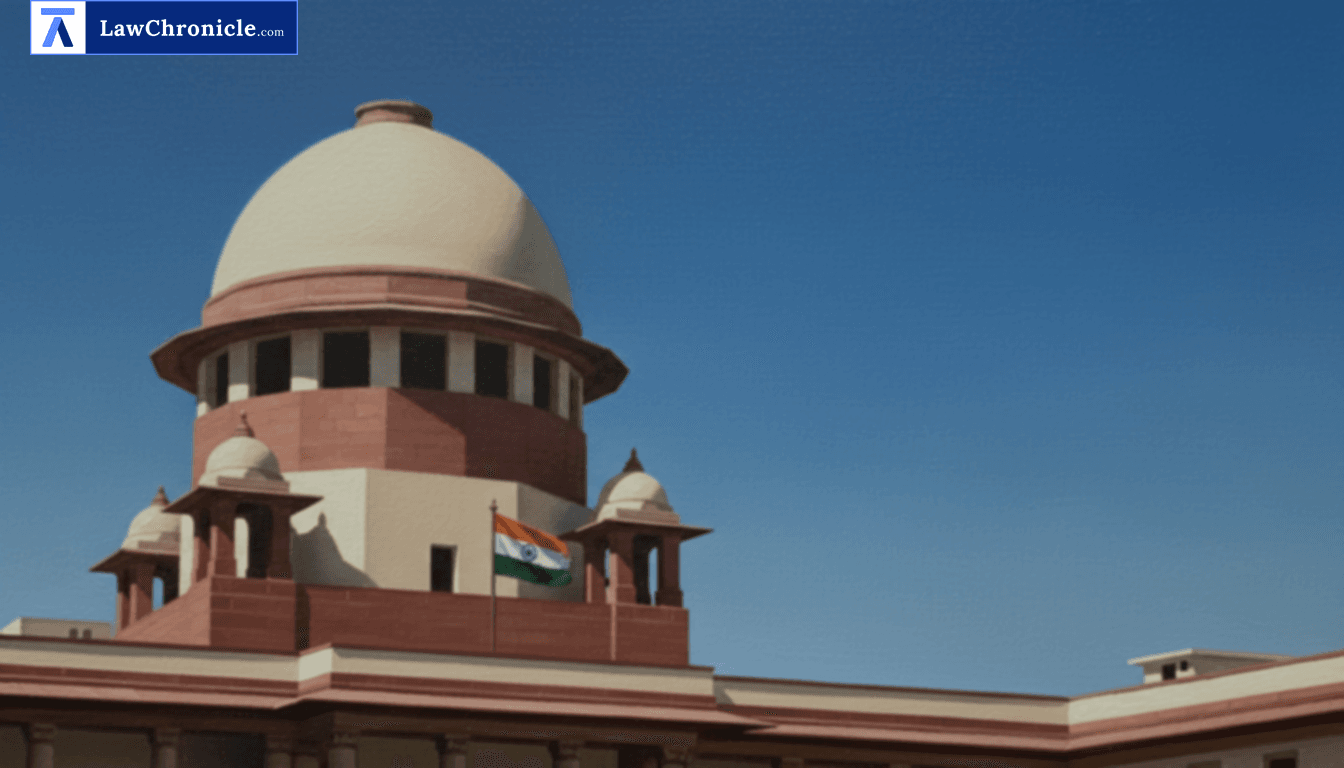
A bench of Justices Pankaj Mithal and Prasanna B. Varale heard civil appeals by NAK Engineering Company Pvt. Ltd. challenging a Bombay High Court order under Article 227 setting aside a trial court order that had permitted the appellant to be impleaded as a defendant in a suit for recovery of service charges. The appeals arose from proceedings in which the owners of commercial premises sought arrears of service charges allegedly payable by a sub-tenant and its purported successor.
The Court dismissed the appeals and upheld the High Court’s conclusion that the appellant was neither a necessary nor a proper party to the recovery suit. The bench held that the trial court had erred in permitting impleadment without satisfactory proof that the appellant had succeeded the original defendant and that its presence was essential for an effective decree. The Court emphasised established tests for impleadment and observed that the plaintiff, as dominus litis, could not be compelled to add a party against its wish where the proposed party failed to show a direct legal interest. The Court, in its reasoning, observed: “In Kasturi v. Iyyamperumal, this Court crystallized the twin tests for a necessary party:
‘…the question of jurisdiction of the court to invoke Order 1 Rule 10 CPC to add a party who is not made a party in the suit by the plaintiff shall not arise unless a party proposed to be added has direct and legal interest in the controversy involved in the suit. … two tests are to be satisfied for determining the question as to who is a necessary party. The tests are: (1) there must be a right to some relief against such party in respect of the controversies involved in the proceedings; (2) no effective decree can be passed in the absence of such party.’” The Court further directed that any decree in the suit would not be executed against the appellant.
Background The dispute arose from a suit originally filed by heirs of the owner of commercial premises for recovery of monthly service charges of Rs.2,100 relating to furniture and fixtures used by a licensed sub-tenant. The suit proceeded ex parte against the sole defendant, M/s Kishore Engineering Company (respondent No.3), after evidence closed and an ex-parte order was recorded in 2014. In 2018 the appellant sought impleadment as successor to respondent No.3, relying on a certificate of incorporation and asserting that it ran the business and occupied the premises. The trial court allowed impleadment in October 2018, accepting the incorporation certificate as prima facie evidence of succession but declined to adjudicate its validity.
On revision under Article 227, the High Court set aside the impleadment order, concluding that the appellant was an unauthorised occupant and that the relationship of landlord and tenant was not determinative in a suit for service charges. The High Court held that recovery of arrears could proceed against respondent No.3 without joining the appellant. The Supreme Court reviewed authorities distinguishing “necessary” and “proper” parties, including Ramesh Hirachand Kundanmal and Mumbai International Airport, and applied the twin tests in Kasturi v. Iyyamperumal. The Court found no material establishing that respondent No.3 had ceased to exist or that appellant had a direct legal interest in the controversy such that no effective decree could be passed without it. The Court also noted delay: summons acknowledgement bearing the appellant’s stamp suggested knowledge of the suit in 2008, while impleadment was sought only after evidence had closed. The appeals were dismissed as lacking merit, with the specific protection that any decree would not be used or executed against the appellant; no costs were awarded and pending applications were disposed of.
Case Details: Case No.: 2026 INSC 8; Civil Appeal Nos. of 2026 (Arising out of SLP (C) Nos. 6024-6025 of 2022) Case Title: NAK Engineering Company Pvt. Ltd. v. Tarun Keshrichand Shah and Ors. Appearances: For the Petitioner(s): Shri Chander Uday Singh, Senior Counsel; Shri Amarjit Singh Bedi, Advocate-on-Record For the Respondent(s): Dr. Abhinav Chandrachud, Counsel; Shri Surjendu Sankar Das, Advocate-on-Record
Similar Articles
 Breaking News


