


High Court upholds State notification allowing limited purchase of TDR by premium in Panvel; writ petitions dismissed
 Copy Link
 Share
 Save
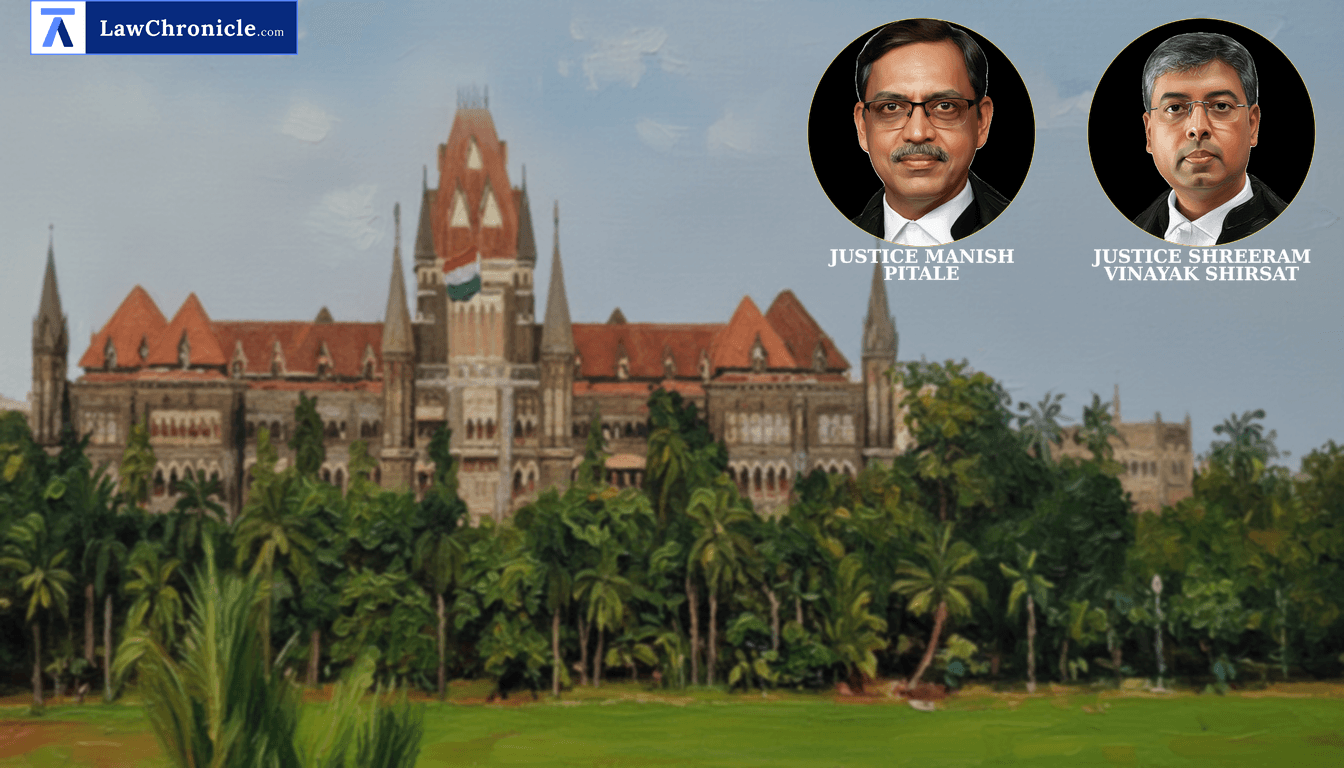
A division bench of Chief Justice Shree Chandrashekhar and Justice Gautam A. Ankhad heard multiple writ petitions challenging the State Government’s Notification dated 7 October 2024 under section 37(1AA)(c) of the Maharashtra Regional and Town Planning Act, 1966 and the insertion of clause 10.16 into the Unified Development Control and Promotion Regulations (UDCPR) permitting developers in Panvel Municipal Corporation to utilise up to 75% of the permissible TDR component on payment of a premium. The petitions raised issues of vires of the MRTP Act, procedural compliance, alleged arbitrariness, and infringement of property and equality rights.
The Court summarised its principal holdings and directions. It found that the statutory procedure under Section 37(1AA) was followed, including publication of notice, consideration of objections, hearing and consultation with the Director of Town Planning, and that the impugned amendment did not alter base FSI or the character of the development plan. The bench held that the amendment merely provided an additional, transitory option to source part of the TDR from the municipal authority against payment of premium until sanction of the development plan and did not render TDR valueless or extinguish a landowner’s statutory choice under Section 126. The petitions were dismissed and interim applications were declared infructuous; there was no order as to costs. The Court, in its reasoning, observed: “Whether the rule is valid in its entirety?
There is a presumption in favour of constitutionality or validity of a subordinate legislation and the burden is upon him who attacks it to show that it is invalid. It is also well recognised that a subordinate legislation can be challenged under any of the following grounds:
(a) Lack of legislative competence to make the subordinate legislation. (b) Violation of fundamental rights guaranteed under the Constitution of India. (c) Violation of any provision of the Constitution of India. (d) Failure to conform to the statute under which it is made or exceeding the limits of authority conferred by the enabling Act. (e) Repugnancy to the laws of the land, that is, any enactment. (f) Manifest arbitrariness/unreasonableness (to an extent where the court might well say that the legislature never intended to give authority to make such rules).”
Background
The disputes arose after the State proposed and later issued an amendment to the UDCPR (clause 10.16) and a Notification under Section 37(1AA) to address perceived scarcity and cartelisation of Transferable Development Rights (TDR) in parts of Panvel where large areas lacked a sanctioned development plan. The amendment allowed developers to utilise up to 75% of the TDR component by paying premium at 60% of the Annual Statement of Rates, leaving 25% to be met by TDR only; the total permissible FSI remained unchanged.
Petitioners — landowners, residents and objectors represented by senior counsel — argued that the amendment diluted the statutory scheme of Section 126 (compensation by TDR), rendered TDR commercially valueless, violated Article 300A and Article 14, transgressed delegated-legislation limits, and was introduced without proper procedure and consultation. They sought quashing of the draft notice and the final notification.
The State and developer-respondents contended that the measure was a permissible policy decision to correct an acute supply-demand imbalance in TDR, that the option was not compulsory, and that the impugned Notification fell within powers under Section 22(m) read with Section 37(1AA). The Court examined the statutory scheme, precedent on delegated legislation and development control regulations, and the administrative record of notices, objections, hearings and the Director of Town Planning’s recommendations.
The bench concluded that due process under Section 37(1AA) was complied with, the amendment did not alter base FSI or the essential TDR framework, and the regulation fell within the enabling statutory powers. The Court rejected contentions of manifest arbitrariness and infringement of constitutional provisions, held that market valuation of TDR was not guaranteed by statute, and dismissed Writ Petition No. 6746 of 2024, Writ Petition (Stamp) No. 17210 of 2024, Writ Petition No. 12870 of 2025 and Writ Petition (Stamp) No. 31132 of 2025. Interim Application No.14169 of 2024 and Interim Application No.10964 of 2025 stood disposed as infructuous.
Case Details: Case No.: Writ Petition No. 6746 of 2024 (along with connected petitions) Case Title: Pawan Rajaramrao Kadam v. The State of Maharashtra & Ors. Appearances: For the Petitioner(s): Dr. Milind Sathe, Senior Advocate with Mr. Mayur Khandeparkar, Mr. Chinmay Acharya and Mr. Kevin Pereira, instructed by Mr. Balkrishna G. Tangsali, Advocates; Mr. Anil Y. Sakhare, Senior Advocate (in related petitions); Mr. Anil V. Anturkar, Senior Advocate (in related petitions). For the Respondent(s): Mr. Ashutosh A. Kumbhakoni, Senior Advocate, Special Counsel, with Ms. Neha Bhide, Ms. Shruti D. Vyas and Mr. Vaibhav Charalwar for State of Maharashtra; Mr. Prasad S. Dani, Senior Advocate for Panvel Municipal Corporation; Mr. Girish Godbole, Senior Advocate for CREDAI BANM–Raigad; Mr. Pravin Samdani, Senior Advocate for Okay Developers Pvt. Ltd.; Mr. Bharat R. Zaveri for Respondent No.7.
Similar Articles
 Breaking News


