


Parties Bound by Concluded Contracts for FSI/TDR in Land Acquisition: Bombay HC
 Copy Link
 Share
 Save
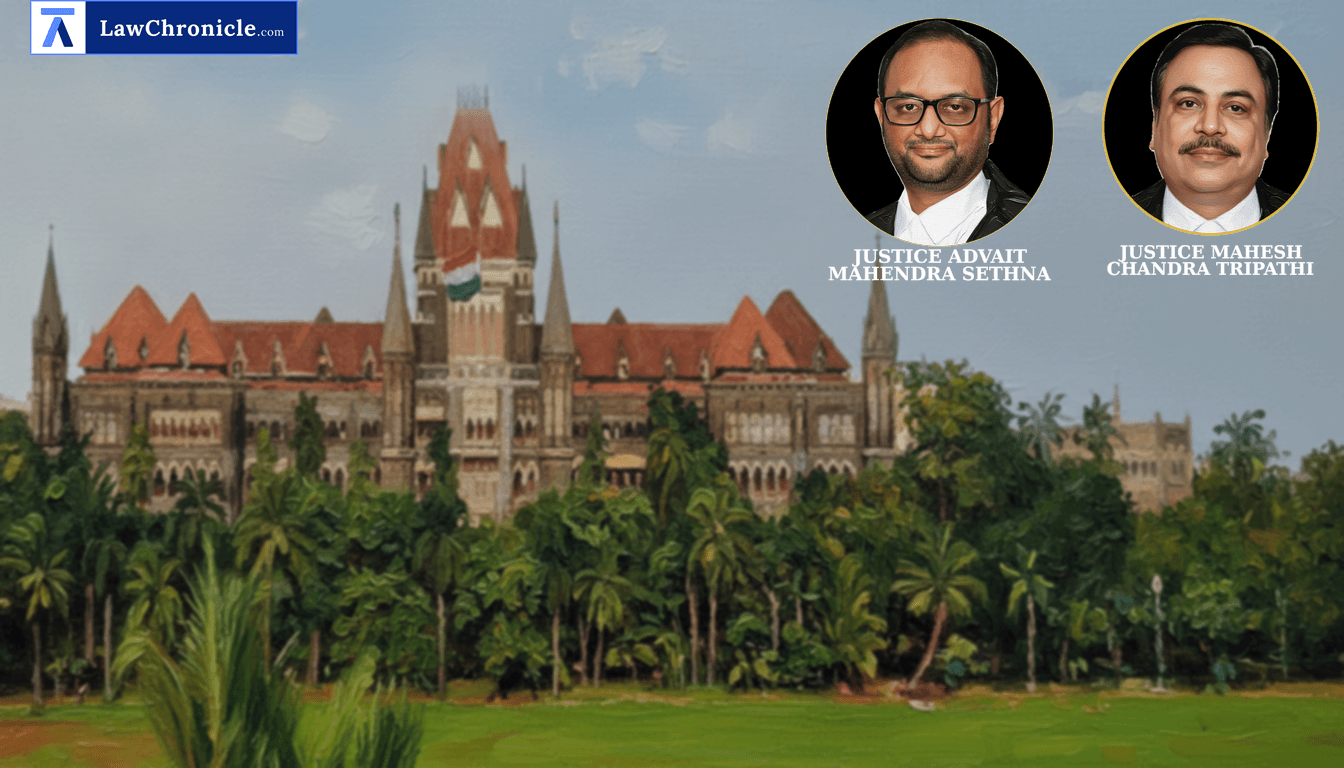
The Bombay High Court has restricted landowners seeking to resile from concluded contracts for compensation, ruling that once a party voluntarily accepts FSI or TDR in exchange for land, they cannot later demand monetary payment.
A Division Bench comprising Chief Justice Mahesh Chandra Tripathi and Justice Advait M. Sethna heard a writ petition challenging the Pune Municipal Corporation's (PMC) refusal to grant monetary compensation for land surrendered for road widening. The petitioners had initially agreed to accept compensation in the form of Floor Space Index (FSI) or Transferable Development Rights (TDR) through a possession receipt executed in 2016 but sought to reverse this choice nearly a decade later.
Key Takeaways
Contractual Finality in Land Acquisition
Landowners who voluntarily surrender property based on specific compensation modes like TDR are legally bound by that choice once the contract is concluded.
Judicial Restraint in Rewriting Contracts
Courts exercising writ jurisdiction under Constitution of India will not intervene to rewrite commercial or statutory agreements to substitute agreed terms with more favorable ones.
Statutory Compliance under MRTP Act
Acquisitions conducted by mutual consensus under Section 126(1)(b) of the Maharashtra Regional and Town Planning Act, 1966 are valid and do not constitute a violation of property rights if the agreed compensation mode is provided.
Impact of Delay and Laches
While property rights involve a continuing cause of action, such principles cannot be used to bypass binding contractual obligations entered into with free consent.
Court's Rationale on Concluded Contracts
The Bombay High Court observed that the interaction between the land acquisition department and the petitioners constituted a complete offer and acceptance. The PMC’s communication in 2013 was an offer, which the petitioners accepted in 2016 by signing a possession receipt, thereby forming a binding contract under the Indian Contract Act, 1872. The bench emphasized that the petitioners elected FSI/TDR at prevailing rates and cannot now claim that such terms are not binding.
The Bench discussed that “In the event we accept the claim of the Petitioners for monetary compensation made for the first time in the year 2026 despite a concluded contract taking place on 9th June 2016, we are not stopping short of re-writing such legally binding concluded contract between the parties. Such recourse is held to be impermissible in law... the function of the Courts is to interpret and enforce the terms as has been agreed between the parties. The Courts will not re-write the terms howsoever reasonable the substituted term may appear to be.”
Ratio
When a landowner voluntarily surrenders land for public purposes under the Maharashtra Regional and Town Planning Act, 1966 and signs a possession receipt agreeing to compensation via FSI/TDR, it constitutes a concluded contract. Under the Indian Contract Act, 1872, parties are bound by such unambiguous terms, and the High Court, in its writ jurisdiction, cannot rewrite the contract to grant monetary compensation in place of the agreed mode.
Background
The dispute originated when the petitioners, owners of land in Kharadi, Pune, were asked by the PMC to hand over land for an 18-meter wide Development Plan (DP) road. In 2016, a possession receipt was executed where the petitioners agreed to part with 1721.03 sq. mtrs. on the condition of receiving FSI/TDR. However, in 2026, the petitioners requested monetary compensation, citing Right to Fair Compensation and Transparency in Land Acquisition, Rehabilitation and Resettlement Act, 2013 and arguing that FSI/TDR offers are not unilaterally binding.
The petitioners relied on the Full Bench decision in Shree Vinayak Builders and Developers, Nagpur v. State of Maharashtra and Others to argue that landowners cannot be compelled to accept TDR. However, the Court distinguished this, noting that Shree Vinayak Builders and Developers, Nagpur v. State of Maharashtra and Others allows for withdrawal only when no concluded contract exists. In this instance, the Court found a clear consensus ad idem. The Court also referred to State of Haryana & Ors. Vs M/s. Jai Durgaa Finvest P. Ltd. ( "2026 SCC OnLine SC 1323": 2026 CaseBase(SC) 637), General Assurance Society Ltd. vs. Chandumull Jain and another ( "AIR 1966 SC 1644": 1966 CaseBase(SC) 296), Rajasthan State Industrial Development & Investment Corporation vs. Diamond & Gem Development Corporation Ltd. ( "(2013) 5 SCC 470": 2013 CaseBase(SC) 197), Shree Ambica Medical Stores vs. Surat People's Coop. Bank Ltd., GMR Warora Energy Ltd. vs. Central Electricity Regulatory Commission ( "(2023) 10 SCC 401": 2023 CaseBase(SC) 564), and Venkataraman Krishnamurthy And Another v. Lodha Crown Buildmart Private Limited ( "(2024) 4 SCC 230": 2024 CaseBase(SC) 488) to establish that explicit terms of a contract represent the final word on the intention of the parties. Finding no merit in the attempt to resile from the 2016 agreement, the Bombay High Court dismissed the petition.
Case Details:
Case No.: WRIT PETITION NO. 5159 OF 2026
Case Title: M/s. L.B. Kunjir Thr. Its Partner Shri. Amit L.Kunjir and Ors. Versus The State of Maharashtra and Ors.
Appearances:
For the Petitioner(s): Dr. Ramdas P. Sabban, Mr. Pravin Sabban, Mr. Shrikant Kompali, Mr. Rohit Chitiken, Advocates.
For the Respondent(s): Mrs. Neha S. Bhide, GP; Mrs. Shruti D. Vyas, Addl. GP; Mrs. P.J. Gavhane, AGP; Mr. Rishikesh M. Pethe, Advocate.
Source: 2026 CaseBase(BOM) 6495
Similar Articles

 Breaking News


