


Himachal Pradesh HC: Drunk Drivers Are Not Emperors of the Road, Upholds Conviction
 Copy Link
 Share
 Save
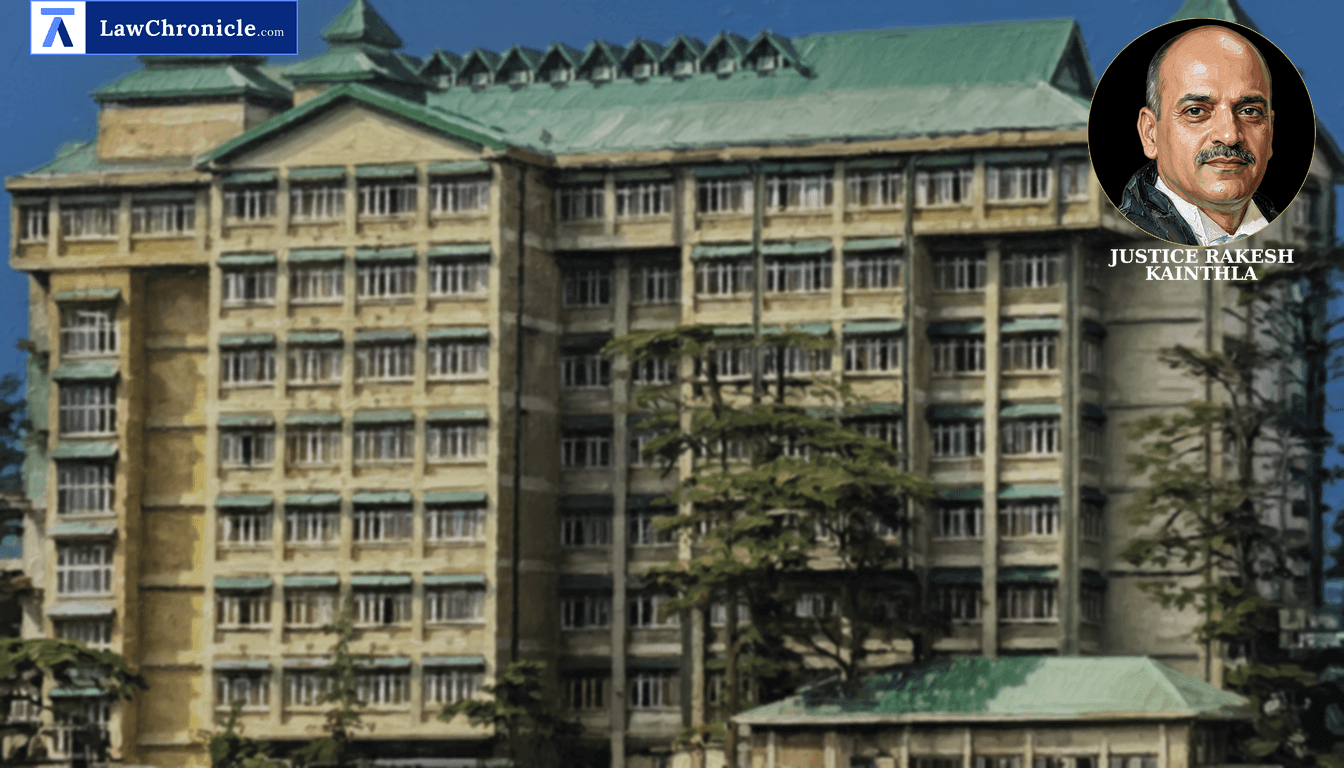
Drunkenness contributes to careless driving where innocent pedestrians become prey, the Himachal Pradesh High Court ruled, while dismissing a revision petition by a truck driver who hit a pedestrian while being severely intoxicated. The Court underscored that professional drivers cannot afford even a single moment of laxity and refused to grant the benefit of probation for offences involving rash and negligent driving.
Justice Rakesh Kainthla presided over the matter, determining the correctness of a conviction affirmed by the Additional Sessions Judge, Mandi. The case involved a truck driver who hit a pedestrian walking on the 'kaccha' (unpaved) portion of a national highway, leading to grievous injuries, while the driver's blood alcohol level was found to be nearly six times the legal limit.
Key Takeaways
No Leniency for Drunk Driving
The Court reaffirmed that the Probation of Offenders Act, 1958 cannot be extended to those convicted of rash or negligent driving, especially under the influence of alcohol.
Inferences from Accident Site
Driving a heavy vehicle onto the extreme left 'kaccha' portion of the road where pedestrians walk constitutes prima facie evidence of negligence that the driver must explain.
Witness Credibility Standards
Reiterated the distinction between 'related' and 'interested' witnesses, clarifying that proximity to a victim does not automatically render a witness's testimony biased.
Limited Revisional Scope
The High Court maintained that a revisional court should not act as a second appellate court to re-appreciate evidence unless there is a glaring perversity in the lower court's findings.
Court Observations on Negligence and Intoxication
The Court noted that the eyewitnesses consistently identified the accused as the sole occupant of the truck trapped in the drain after hitting the victim. The medical reports, specifically the FSL analysis, showed the petitioner had 181.5 mg% alcohol in his blood, far exceeding the 30 mg% limit prescribed under Section 185 of the Motor Vehicles Act.
The Court, in its reasoning, observed: "A professional driver pedals the accelerator of the automobile almost throughout his working hours. He must constantly inform himself that he cannot afford to have a single moment of laxity or inattentiveness when his leg is on the pedal of a vehicle in locomotion. He cannot and should not take a chance thinking that rash driving need not necessarily cause an accident... He must always keep in mind the fear psyche that if he is convicted of the offence of causing the death of a human being due to his callous driving of a vehicle, he cannot escape from a jail sentence."
Addressing the social menace of road accidents, the Court further quoted the sentiment expressed in State of Punjab v. Saurabh Bakshi ( "(2015) 5 SCC 182": 2015 CaseBase(SC) 266), noting that there is a "nonchalant attitude among the drivers" who feel they are the "Emperors of all they survey."
The Court issued the following directions:
"A copy of this judgment, along with the records of the learned Trial Court, be sent back forthwith. Pending miscellaneous application(s), if any, also stand(s) disposed of."
Ratio
In road accident cases involving rash and negligent driving under the Indian Penal Code and Motor Vehicles Act, the principle of deterrence must outweigh benevolence; therefore, the beneficial provisions of the Probation of Offenders Act, 1958 are generally inapplicable. Furthermore, a revisional court under Section 397 of the Code of Criminal Procedure (now Section 438 of BNSS) is restricted to examining the legality and propriety of findings and cannot substitute its own factual conclusions for concurrent findings of lower courts unless they are perverse.
Background
The incident occurred on February 13, 2005, when a truck driven by the petitioner hit a pedestrian, Balkrishan, who was carrying a newspaper on the side of the road. The victim sustained a fracture and multiple injuries. The trial court convicted the driver under Sections 279, 337, and 338 of the Indian Penal Code and Section 185 of the Motor Vehicles Act. The Appellate Court subsequently affirmed this conviction.
In revision, the petitioner argued that "high speed" does not automatically imply negligence and challenged the identification of the driver. However, the High Court, relying on Kuntegowda v. Thurubaiah ( "2026 SCC OnLine SC 1485": 2026 CaseBase(SC) 721) regarding revisional limits and Sadayappan v. State regarding witness reliability, found no merit in the appeal. The Court noted that since the truck hit the victim on the 'kaccha' portion of the road, the negligence was clearly established. Citing Dalbir Singh Versus State of Haryana ( "(2000) 5 SCC 82": 2000 CaseBase(SC) 1363) and State of Punjab v. Balwinder Singh ( "(2012) 2 SCC 182": 2012 CaseBase(SC) 110), the Court upheld the jail sentence, emphasizing the need for corrective sentencing in motor accident cases.
Case Details:
Case No.: Cr. Revision No. 205 of 2015
Neutral Citation: 2026:HHC:38477
Case Title: Suresh Kumar Versus State of HP
Appearances:
For the Petitioner(s): Mr R.K. Bawa, Senior Advocate, with Mr. Abhinav Thakur, Advocate
For the Respondent(s): Mr Ajit Sharma, Deputy Advocate General
Source: 2026 CaseBase(HP) 8000
Similar Articles



 Breaking News


