


No Probation For Reckless Drivers In Fatal Road Accidents: Himachal Pradesh HC
 Copy Link
 Share
 Save
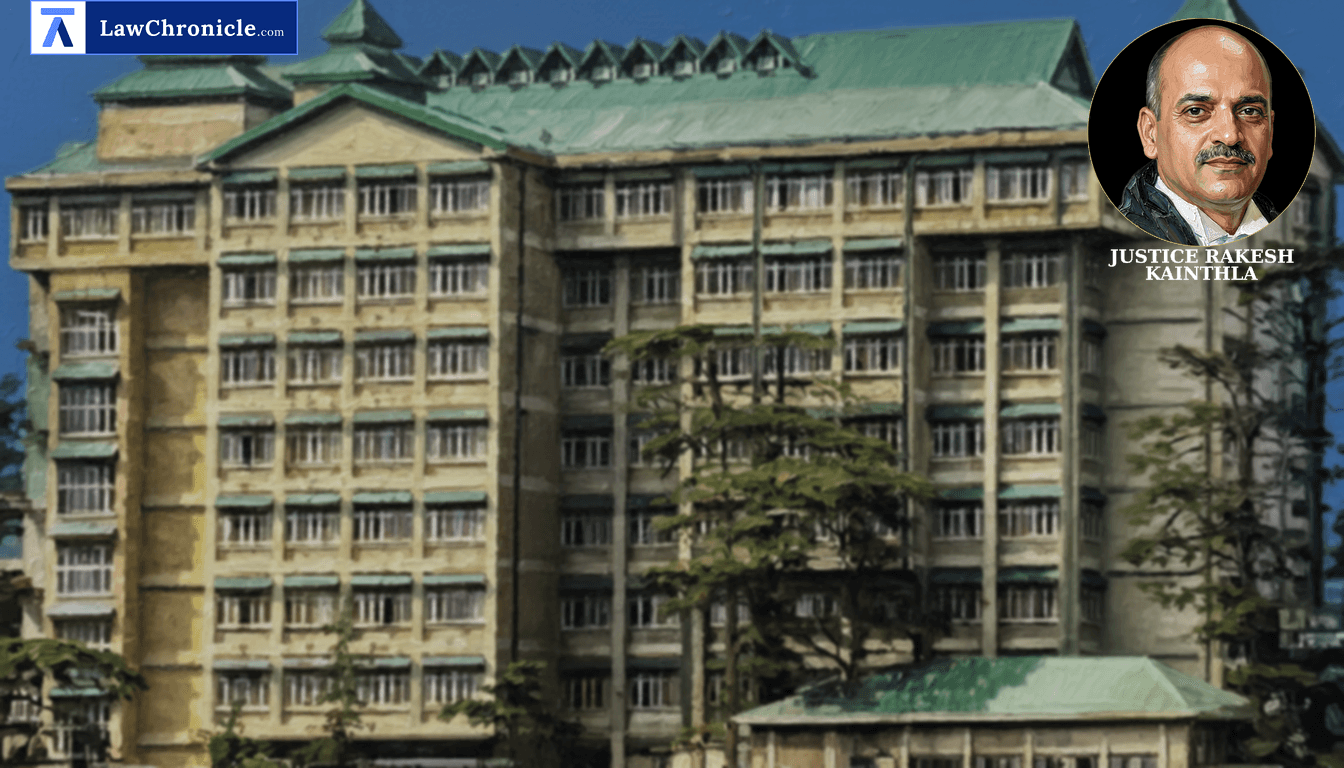
The High Court of Himachal Pradesh has slammed the brakes on leniency for reckless drivers, ruling that those responsible for fatal road accidents through callousness cannot seek the protection of restorative laws to avoid incarceration. Justice Rakesh Kainthla, while dismissing a criminal revision petition, affirmed that the escalating menace of road fatalities demands a deterrent sentencing policy that prioritizes public safety over individual rehabilitation.
In a detailed judgment, Justice Rakesh Kainthla upheld the concurrent findings of the lower courts, emphasizing that when a vehicle leaves the road under the control of a driver, the doctrine of res ipsa loquitur (the thing speaks for itself) shifts the burden of proof to the accused to explain the absence of negligence. The Court refused to grant the benefit of the Probation of Offenders Act, noting that professional drivers must maintain constant vigilance, as any laxity on the road translates into a fatal threat to human life.
Key Takeaways
Res Ipsa Loquitur in Road Accidents
When a vehicle deviates from its path or hits a roadside object without external obstruction, negligence is presumed, requiring the driver to provide a valid explanation to avoid conviction.
Deterrence Over Probation
Courts are directed to avoid the benevolent provisions of the Probation of Offenders Act for offences under Section 304A of the Indian Penal Code to address the 'galloping trend' of road accidents in India.
Right-Side Driving as Negligence
Driving on the right side of the road in violation of the Rules of the Road Regulations, 1989 constitutes *prima facie* negligence and criminal culpability.
Limited Revisional Jurisdiction
High Courts cannot act as second appellate courts to re-appreciate evidence unless the lower court's findings are perverse or suffer from a patent jurisdictional error.
Court Observations and Directions
The Court scrutinized the evidence and the site plan, noting that the vehicle had fallen off the right side of the road. It observed that the driver failed to negotiate a curve, resulting in the death of one passenger and injuries to others.
The Court, in its reasoning, observed: "A professional driver pedals the accelerator of the automobile almost throughout his working hours. He must constantly inform himself that he cannot afford to have a single moment of laxity or inattentiveness when his leg is on the pedal of a vehicle in locomotion. He cannot and should not take a chance thinking that rash driving need not necessarily cause an accident... he must always keep in mind the fear psyche that if he is convicted of the offence of causing the death of a human being due to his callous driving of a vehicle, he cannot escape from a jail sentence."
The Court has following directions:
"In view of the above, the present revision fails and is dismissed. A copy of this judgment, along with the records of the learned Trial Court, be sent back forthwith."
Ratio
In cases of motor vehicle accidents causing death or grievous injury, where the accident speaks for itself (res ipsa loquitur), the burden shifts to the driver to establish that the event occurred due to circumstances other than their negligence. Furthermore, the benefit of probation under the Probation of Offenders Act is generally inapplicable to convictions for causing death by rash or negligent driving under Section 304A of the Indian Penal Code, as deterrence is the primary objective of sentencing in such matters.
Background
The case originated from an accident on June 30, 2004, when a Jeep being driven by the petitioner fell off the road near Salogra. One occupant, Rajiv Thakur, succumbed to his injuries, while the informant and the petitioner sustained injuries. The prosecution alleged high speed and loss of control, supported by a mechanical report that ruled out any vehicle defects.
The Trial Court convicted the petitioner under Sections 279, 337, 338, and 304A of the Indian Penal Code and Section 181 of the Motor Vehicles Act, sentencing him to six months of simple imprisonment. This was upheld by the Appellate Court. In revision, the petitioner argued he was not the driver and that high speed alone did not constitute negligence.
Dismissing the revision, the High Court relied on Kuntegowda v. Thurubaiah ( "2026 SCC OnLine SC 1485": 2026 CaseBase(SC) 721) regarding the limits of revisional powers. It further applied Keshav Murti vs. State, Thakur Singh Vs. State of Punjab, and Ravi Kapur v. State of Rajasthan ( "(2012) 9 SCC 284: 2012 SCC OnLine SC 607": 2012 CaseBase(SC) 662) to emphasize the shifting burden of proof under the doctrine of res ipsa loquitur. The Court also cited B. Nagabhushanam v. State of Karnataka ( "(2008) 5 SCC 730: (2008) 3 SCC (Cri) 61: 2008 SCC OnLine SC 866": 2008 CaseBase(SC) 1929), State of H.P. v. Mast Ram, Fagu Moharana vs. State, State of H.P. Vs. Dinesh Kumar, and State of H.P. vs. Niti Raj to underscore that driving on the wrong side of the road violates traffic regulations. Finally, the Court followed Dalbir Singh Versus State of Haryana ( "(2000) 5 SCC 82": 2000 CaseBase(SC) 1363), State of Punjab v. Balwinder Singh ( "(2012) 2 SCC 182": 2012 CaseBase(SC) 110), and State of Punjab v. Saurabh Bakshi ( "(2015) 5 SCC 182: 2015 SCC OnLine SC 278": 2015 CaseBase(SC) 266) to deny the plea for probation, maintaining that India’s alarming road accident record necessitates strict jail sentences.
Case Details:
Case No.: Cr. Revision No. 348 of 2014
Neutral Citation: 2026:HHC:38476
Case Title: Surjeet Singh v. State of HP
Appearances:
For the Petitioner(s): Mr Amir Khan, Advocate, vice Mr Vasu Sood, Advocate.
For the Respondent(s): Mr Ajit Sharma, Deputy Advocate General.
Source: 2026 CaseBase(HP) 7999
Similar Articles



 Breaking News


