


Himachal Pradesh HC Grants Bail In SC/ST Act Case Citing Lack of Specific Allegations
 Copy Link
 Share
 Save
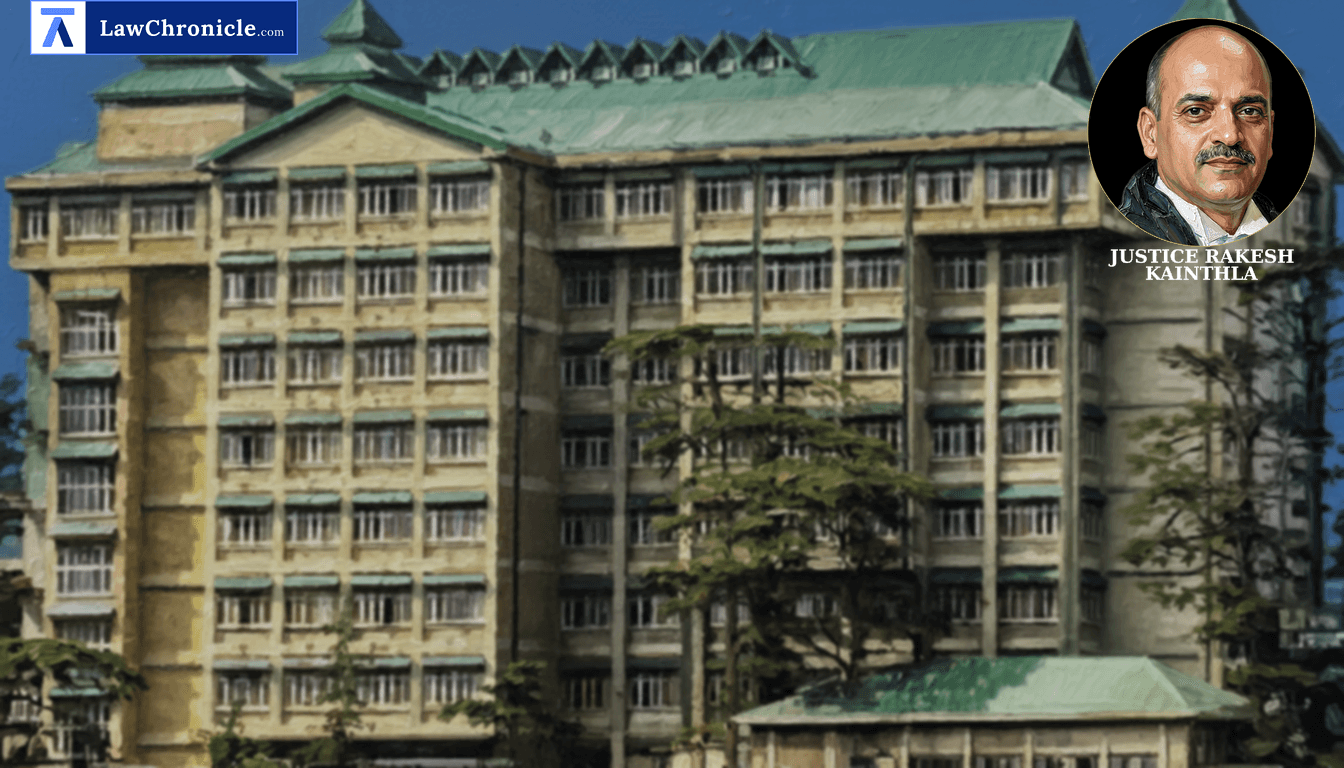
The High Court of Himachal Pradesh has underscored that the absence of a petitioner's name in the initial First Information Report (FIR) and subsequent statements, coupled with medical evidence contradicting the gravity of alleged injuries, forms a strong basis for the grant of regular bail.
In a case involving serious charges under the Bharatiya Nyaya Sanhita and the Scheduled Castes and the Scheduled Tribes (Prevention of Atrocities) Act, Justice Rakesh Kainthla observed that where the prima facie connection between the accused and the crime is doubtful, the basic rule of 'bail, not jail' must prevail to protect personal liberty.
Key Takeaways
Identity and FIR Omissions
Omission of an accused's name in the FIR and early witness statements significantly weakens the prosecution's case for custodial detention.
Medical Corroboration Essential
Discrepancies between the alleged heinous nature of the attack (such as being pushed into a 120 ft. gorge) and the actual minor injuries found (simple abrasions) create reasonable doubt at the bail stage.
Individualized Caste Allegations
Generic allegations under the SC/ST Act must be supported by specific naming of the individual who uttered the caste-based abuses to establish a prima facie case against that particular accused.
Bail as the Norm
The Court reaffirmed that bail remains the rule and jail the exception, even in cases involving social ramifications, provided there is no immediate risk of the accused fleeing justice.
Evaluation of Bail Jurisprudence
The Court evaluated the petition through the lens of established precedents, specifically referencing the principles laid down by the Hon’ble Supreme Court in Pinki v. State of U.P. regarding the judicious exercise of discretion. The Bench noted that while the nature of the charge is vital, the court must satisfy itself whether there is a genuine case against the accused. The Court also relied on the landmark ruling in State of Rajasthan v. Balchand, which emphasizes that bail should not be denied unless there are circumstances suggestive of fleeing from justice or tampering with evidence.
The Court, in its reasoning, observed: "The absence of the petitioner’s name in the FIR and subsequent statement and the nature of the injuries make it difficult to prima facie connect the petitioner with the commission of the crime. The police have completed the investigation, and only some of the accused are to be arrested. Therefore, no fruitful purpose would be served by detaining the petitioner in custody."
The Court has following directions:
"(i) The petitioner will not intimidate the witnesses, nor will he influence any evidence in any manner whatsoever.
(ii) The petitioner shall attend the trial on each and every hearing and will not seek unnecessary adjournments.
(iii) The petitioner will not leave the present address for a continuous period of seven days without furnishing the address of the intended visit to the SHO concerned, the Police Station concerned and the Trial Court.
(iv) The petitioner will surrender his passport, if any, to the Court; and
(v) The petitioner will furnish his mobile number and social media contact to the Police and the Court and will abide by the summons/notices received from the Police/Court through SMS/WhatsApp/Social Media Account. In case of any change in the mobile number or social media accounts, the same will be intimated to the Police/Court within five days from the date of the change."
Ratio
The core legal principle established is that when an accused is not named in the FIR and the medical evidence does not support the high-gravity narrative provided by the prosecution, the accused is entitled to bail, as the prima facie connection to the heinous offence remains unestablished.
Background
The dispute originated from an incident on June 7, 2026, where the informant and others were allegedly restrained and assaulted by a group while traveling in two vehicles. It was alleged that victims were beaten with sticks, forced to bow before a deity in a temple, and subjected to caste-based slurs. A specific allegation was made that the petitioner and co-accused pushed one Ramesh Chand into a 120-foot gorge.
However, the petitioner's counsel argued that his name was an afterthought, not appearing in the initial FIR. The State opposed the bail, citing the heinous nature of the crime and the social impact of offences against the Scheduled Caste community. The Court, upon examining the status report, found that the victim only sustained simple abrasions on the head, which contradicted the claim of being pushed into a deep gorge. Consequently, noting that the investigation was complete and the petitioner had roots in society, the High Court allowed the petition.
Case Details:
Case No.: Cr. MP(M) No. 1552 of 2026
Neutral Citation: 2026:HHC:37618
Case Title: Radhe Shyam v. State of HP & ors.
Appearances:
For the Petitioner(s): Mr Pawanish Kumar Shukla, Advocate.
For the Respondent(s): Mr Tarun Pathak, Deputy Advocate General.
Source: 2026 CaseBase(HP) 7985
Similar Articles

 Breaking News


