


Himachal Pradesh HC Reaffirms Primacy of Injured Witness Testimony Over Alternative Medical Possibilities
 Copy Link
 Share
 Save
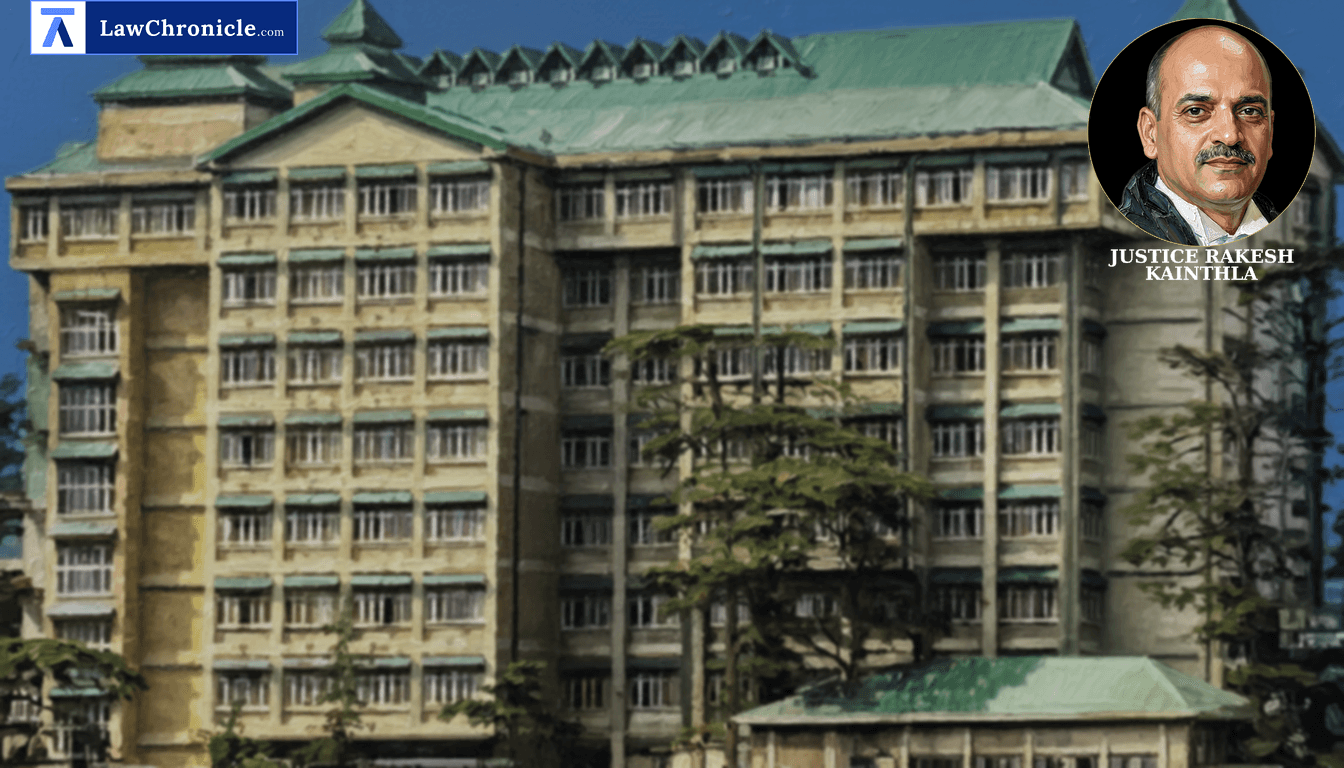
The High Court of Himachal Pradesh has reinforced the settled legal principle that credible ocular testimony of an injured witness cannot be discarded simply because a medical officer suggests alternative possibilities for the cause of injuries. Ruling on a criminal revision petition, the Court emphasized that medical evidence is a corroborative tool and not a 'constant' against which the veracity of an eyewitness must be invariably tested.
Justice Rakesh Kainthla, sitting as a single judge bench, heard the revision petition challenging the concurrent findings of conviction by the trial court and the first appellate court. The petitioners had been convicted for causing hurt and wrongful restraint under the Indian Penal Code, following an incident at a roadside eatery where the informant was brutally assaulted.
Key Takeaways
Ocular Evidence Supremacy
Credible testimonies of injured witnesses take precedence over hypothetical medical opinions regarding alternative causes of injury like accidental falls.
Limited Revisional Scope
Revisional courts must refrain from re-evaluating evidence as an appellate body unless there is a glaring perversity or jurisdictional error in the lower court's findings.
Prompt FIR Reliability
An FIR lodged immediately after a crime (within 2 hours for a 10km distance) significantly rules out the possibility of deliberation or concoction.
Mandatory Victim Compensation
Courts have a statutory duty under the Probation of Offenders Act, 1958 to apply their mind to the question of awarding compensation to victims in every criminal case.
Primacy of Injured Eyewitness and Medical Corroboration
The Court noted that the informant's version was consistent with the injuries found, specifically a broken incisor and forehead lacerations. Rejecting the defense argument that the doctor admitted the injuries could result from a fall, the Court cited Ramakant Rai v. Madan Rai ( "(2003) 12 SCC 395": 2003 CaseBase(SC) 1145) and Krishnan v. State to hold that medical opinion pointing to alternative possibilities is not conclusive when eyewitness accounts are trustworthy.
The Court, in its reasoning, observed: "The importance of an injured witness in a criminal trial cannot be overstated. Unless there are compelling circumstances or evidence placed by the defence to doubt such a witness, this has to be accepted as extremely valuable evidence in a criminal trial... The presence of an injured eyewitness at the time and place of the occurrence cannot be doubted unless there are material contradictions in his deposition."
Regarding the discrepancy in the number of teeth broken, the Court relied on Achchar Singh vs. State of H.P. ( "AIR 2021 SC 3426": 2021 CaseBase(SC) 1601) to state that "exaggeration" is distinct from "falsity." It held that the core of the truth can be extracted even if a witness enlarges some facts.
The Court has following directions:
"In view of the above, the present revision petition fails, and it is dismissed. The present revision petition stands disposed of in the aforesaid terms, so also the pending application(s), if any. A copy of this judgment, along with the records of the learned Courts below, be sent back forthwith."
Ratio
In criminal jurisprudence, the testimony of an injured witness is accorded high evidentiary value and cannot be discarded due to minor exaggerations or hypothetical medical opinions suggesting alternative injury mechanisms. Furthermore, revisional jurisdiction under Section 397 of the Code of Criminal Procedure (now Section 438 of BNSS) is supervisory and does not permit the re-appreciation of evidence to substitute the findings of lower courts in the absence of perversity.
Background
The dispute originated in June 2008 when the informant was assaulted near a Dhaba by the accused persons following an argument. The trial court convicted the accused under Sections 341, 323, and 325 read with Section 34 of the Indian Penal Code. However, instead of an immediate jail term, the court invoked the Probation of Offenders Act, 1958, releasing them on a bond of good conduct while ordering ₹40,000 as compensation to the victim. This was upheld by the Additional Sessions Judge, Bilaspur.
In revision, the petitioners argued that independent witnesses had turned hostile and that the enmity between the parties motivated a false implication. The High Court, however, noted that the hostility of some witnesses does not automatically collapse the prosecution’s case if the injured witness remains credible. Citing Kuntegowda v. Thurubaiah ( "2026 SCC OnLine SC 1485": 2026 CaseBase(SC) 721), the Court reiterated that it should not dwell upon facts like an appellate court. Finding no legal infirmity, the High Court dismissed the revision.
Case Details:
Case No.: Cr. Revision No. 393 of 2015
Neutral Citation: 2026:HHC:39867
Case Title: Jagdish & others Versus State of H.P.
Appearances:
For the Petitioner(s): Mr Ashish Jamalta, Advocate, Legal Aid Counsel.
For the Respondent(s): Mr Tarun Pathak, Deputy Advocate General.
Source: 2026 CaseBase(HP) 8032
Similar Articles
 Breaking News


