


Holder of Cheque for Consideration Entitled to Prosecute Even if Debt Initially Due to Company: Kerala High Court
 Copy Link
 Share
 Save
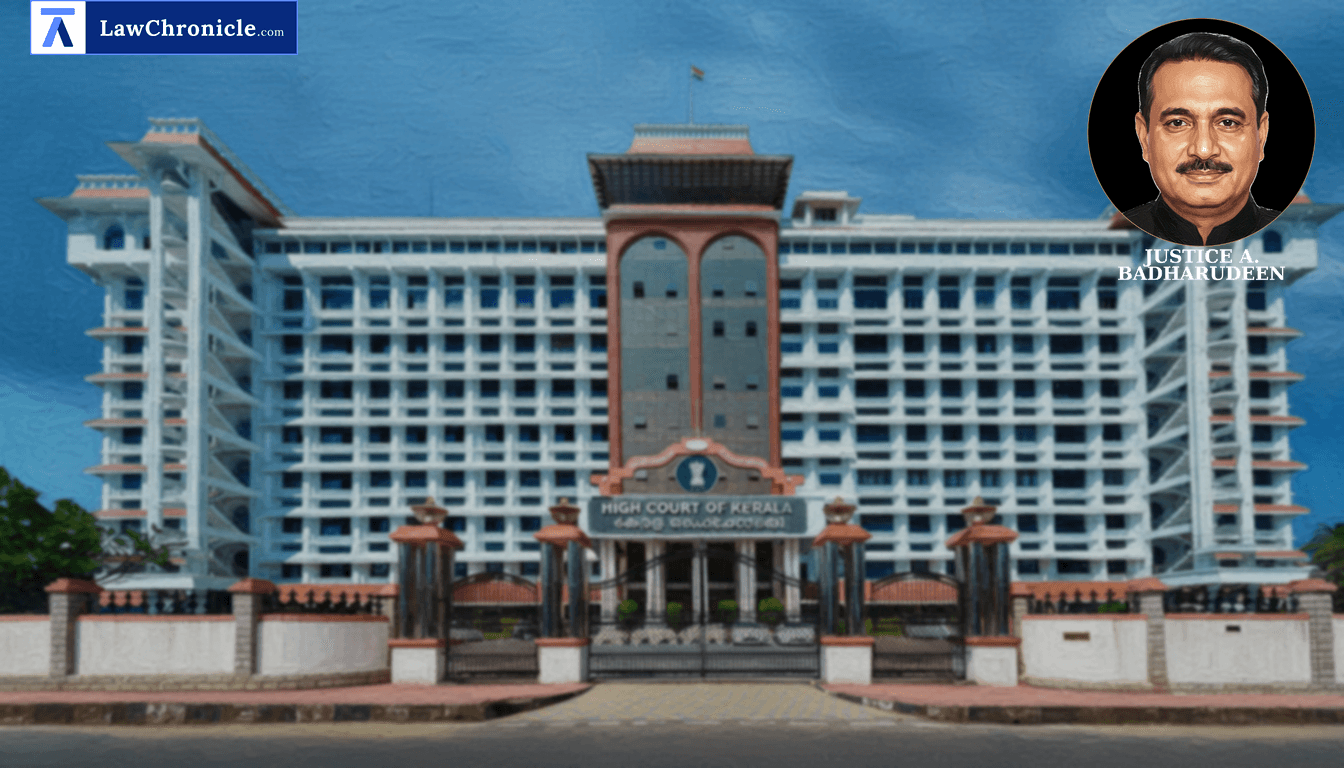
The Kerala High Court has overturned an acquittal in a cheque bounce case, ruling that a complainant who discharges a company's liability and receives a cheque in their personal name qualifies as a 'holder for consideration' entitled to prosecute under Section 138 of the Negotiable Instrument Act. This judgment clarifies that the technicality of a debt originating toward a corporate entity does not bar a personal complaint if the individual has personally settled the dues and holds a valid instrument.
A Single Bench of Justice A. Badharudeen heard the appeal challenging the acquittal of an accused who allegedly failed to repay dues amounting to Rs. 6,61,741/-. The Court found that the trial magistrate erred by ignoring specific pleadings regarding the complainant's personal discharge of the corporate debt, thereby misapplying the principles of legally enforceable liability.
Key Takeaways
Holder for Consideration Status
An individual who settles a company's debt and receives a personal cheque from the debtor is a legal holder entitled to seek remedy under the Negotiable Instrument Act.
Erroneous Fact Assumption by Trial Courts
Trial courts must strictly adhere to the pleadings; ignoring a complainant’s specific averment of personal payment towards a debt constitutes a reversible error.
Personal Liability Enforceability
Cheques issued in a personal name for a debt originally due to a third party (company) are valid if the holder has provided consideration by discharging the original liability.
Magistrate’s Findings Termed 'Erroneous'
The High Court scrutinized the judgment of the Judicial First Class Magistrate Court-III, Kanjirappally, which had acquitted the accused on the grounds that the debt was owed to M/s. High Range Foods (P) Limited rather than the complainant. The Magistrate had incorrectly observed that the complainant never claimed to have paid the amount to the company.
Reversing this, Justice Badharudeen noted that the complainant had categorically pleaded in the complaint that he repaid the amount to preserve his job. The Court, in its reasoning, observed: "In this context, it is pertinent to note further that here Ext.P1 cheque was issued in the personal name of the complainant and the complainant, in fact, discharged the liability to the company. If so, the complainant is the holder of Ext.P1 cheque for consideration. Therefore, the complainant is the person entitled to encash Ext.P1 cheque, since Ext.P1 was issued in the name of the complainant and either in Ext.P1 or anywhere it is stated that, the issuance of Ext.P1 cheque was for the company."
The Court has following directions:
"The verdict impugned is set aside. As a consequence thereof, it is held that the accused committed offence punishable under Section 138 of the N.I. Act. Accordingly, he is sentenced to undergo simple imprisonment for a day till the rising of the court and to pay a fine of Rs. 7,50,000/-, for the offence punishable under Section 138 of the N.I. Act. In default of payment of fine, he shall undergo simple imprisonment for a period of six months. It is specifically ordered that if the fine amount is either paid or realised, Rs. 7,30,000/- shall be given to the complainant as compensation and the remaining amount shall go to the State Exchequer towards the cost of the State. The accused is directed to appear before the trial court to undergo the modified sentence on or before 12.10.2026, failing which the learned Magistrate shall execute the modified sentence, in accordance with law."
Ratio
When a complainant discharges a liability owed by an accused to a company and subsequently receives a cheque in their personal name for that amount, the complainant becomes a 'holder for consideration.' Such an instrument represents a legally enforceable debt in favor of the individual holder, satisfying the requirements of Section 138 of the Negotiable Instrument Act regardless of the debt's corporate origins.
Background
The complainant, a Factory Manager, authorized the accused to supply ice cream and collect payments. The accused allegedly failed to remit the collections, resulting in a deficit of Rs. 6,61,741/-. An agreement was executed where the accused agreed to pay. The complainant alleged he paid this amount to the company himself to save his job, and in return, the accused issued a personal cheque. When the cheque was dishonored for insufficient funds, the complainant initiated proceedings. The trial court acquitted the accused, holding there was no legally existing debt towards the complainant. The High Court set aside the acquittal, finding the Magistrate's assumption of facts to be factually incorrect based on the evidence of PW1 and PW2 and the exhibits provided.
Case Details:
Case No.: CRL.A NO. 1084 OF 2024
Neutral Citation: 2026:KER:76252
Case Title: Cyriac Jose v. State of Kerala and Anr.
Appearances:
For the Petitioner(s): Sri. Prasun.S, Sri. N.A. Retheesh, Advocates
For the Respondent(s): Sri. Sajeev P K, Senior Public Prosecutor; Sri. Adithya Narayanan K.G., State Brief
Source: 2026 CaseBase(KER) 24377
Similar Articles

 Breaking News


