


Honourable Acquittal Entitles Employee To Full Pay Arrears And Pension: Kerala HC
 Copy Link
 Share
 Save
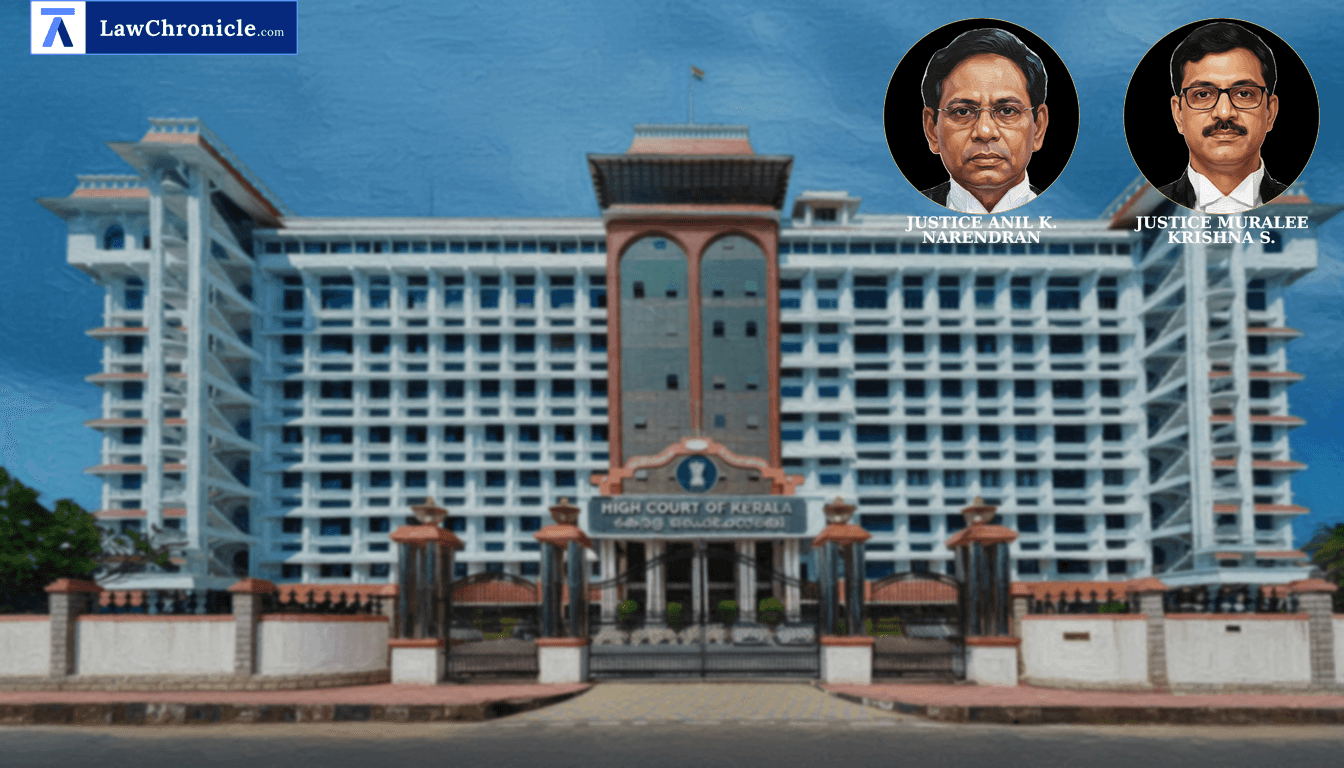
In a significant ruling for public servants, the Kerala High Court has affirmed that an employee who secures an 'honourable' or 'clean' acquittal in a criminal case is entitled to full service benefits, including pay arrears and pensionary entitlements, even if the acquittal occurs post-superannuation.
A division bench of Justice Anil K. Narendran and Justice Muralee Krishna S. delivered the judgment while dismissing an original petition filed by the State of Kerala. The Court was hearing a challenge against an order passed by the Kerala Administrative Tribunal, which had directed the state to disburse all service benefits to a retired Head Warden who was previously dismissed due to a conviction that was later overturned.
Legal Implications of 'Clean Acquittal' on Service Benefits
The Court emphasized that once a conviction is set aside by a superior court, the original order of dismissal loses its legal footing. Drawing upon Rule 18(iii)(b) of the Kerala Civil Services (Classification, Control & Appeal) Rules, 1960, the Court noted that an acquittal entitles a government servant to be reinstated with all benefits as if they had remained in service. The bench observed that since the Supreme Court of India confirmed the acquittal was a "clean acquittal," the state could not deny the respondent his legitimate dues.
The Court, in its reasoning, observed: "While appreciating the reasons for acquittal stated in Annexure A3 order and the aforesaid observations of the Apex Court in Annexure A6 order, it can only be said that the acquittal of the respondent in the criminal case is an honourable acquittal. In such circumstances, we find no illegality or impropriety in the impugned order of the Tribunal."
Scope of Supervisory Jurisdiction Under Article 227
Limits of Interference with Tribunal Orders
Addressing the state's challenge, the High Court reiterated the limited scope of its supervisory power under Article 227 of the Constitution of India, 1950. Referring to Estralla Rubber v. Dass Estate (Pvt.) Ltd, the bench noted that this power is intended to keep inferior courts and tribunals within the bounds of their authority and is not an appellate power. The court also relied on Shalini Shyam Shetty v. Rajendra Shankar Patil ( "(2010) 8 SCC 329": 2010 CaseBase(SC) 817) and Jai Singh v. Municipal Corporation of Delhi to highlight that interference is only warranted in cases of patent perversity, grave dereliction of duty, or flagrant violation of law.
Standard of Proof and Judicial Restraint
Following the principles in K.V.S. Ram v. Bangalore Metropolitan Transport Corporation and Sobhana Nair K.N. v. Shaji S.G. Nair, the court held that it cannot substitute its own judgment for that of the Tribunal unless the findings are so perverse that no reasonable person could reach them. The bench concluded that the Tribunal’s decision to follow State of Kerala v. N.G. Joseph was legally sound.
Background:
The respondent was working as a Head Warden at Sub Jail, Vadakara, when he was dismissed on August 9, 2004, following a conviction for rape. Although he reached the age of superannuation in 2008 while his appeals were pending, the Kerala High Court eventually acquitted him in 2016. The State filed a Special Leave Petition (SLP) before the Supreme Court of India, which was dismissed in 2022. The Supreme Court of India specifically characterized the acquittal as a "clean acquittal."
The State argued that the acquittal was merely based on the 'benefit of doubt' and thus did not entitle the respondent to full pay and allowances. However, the High Court rejected this contention, stating that the judicial record clearly indicated an honourable acquittal. Consequently, the court upheld the Tribunal’s order and dismissed the State's petition.
Case Details:
Case No.: OP(KAT) No. 50 of 2026
NeutralCitation: 2026:KER:32296
Case Title: State of Kerala & Ors. v. K Raghavan Nambiar
Appearances:
For the Petitioner(s): Smt. Princy Xavier, Senior Government Pleader
For the Respondent(s): Shri. Shaijan C. George, Smt. T.N. Sreekala, Shri. Vinai John, Shri. Ajay Ramesh
Source: 2026 CaseBase(KER) 258
Similar Articles

 Breaking News


