


No Work, No Pay For Absconding Employees: Allahabad HC
 Copy Link
 Share
 Save
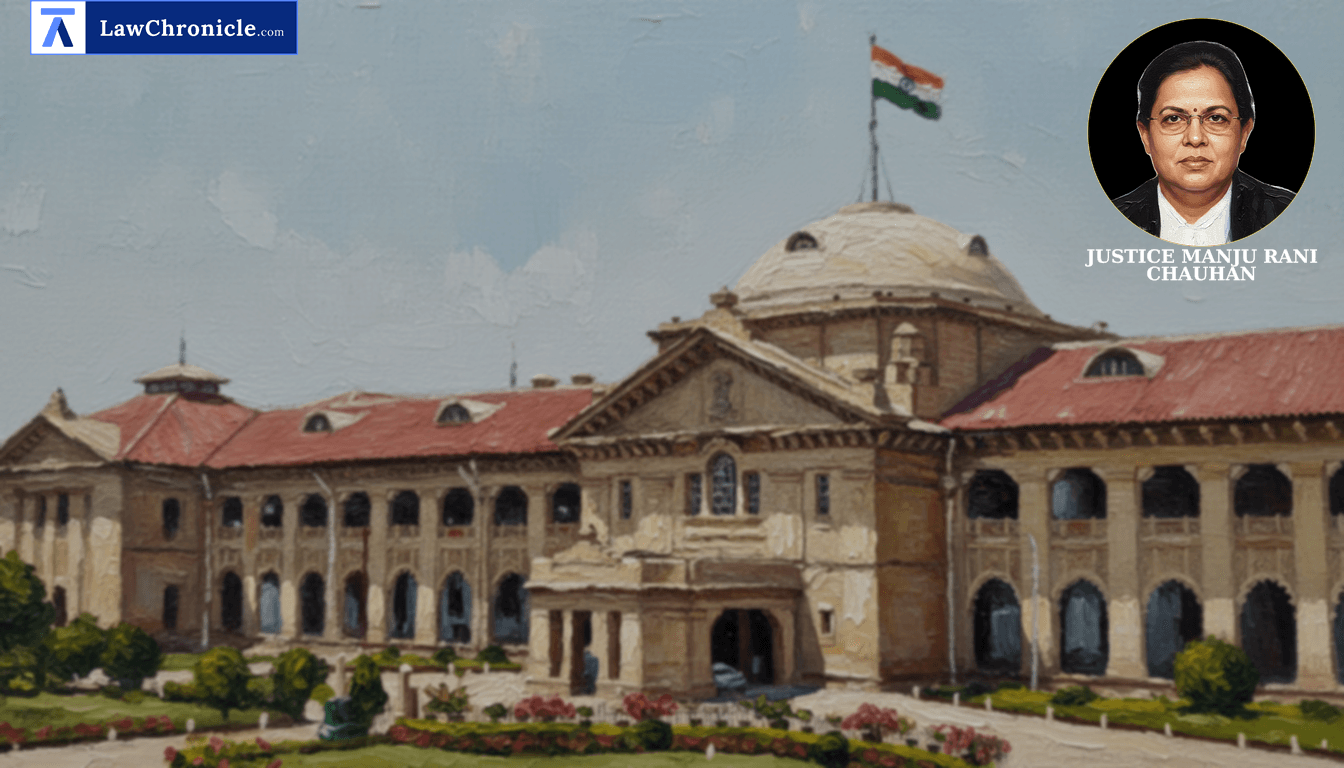
Refusing to reward administrative non-cooperation, the High Court has ruled that a delinquent employee who absconds from his assigned place of reporting during suspension and fails to participate in departmental proceedings cannot demand full salary or subsistence allowance as a matter of right. Denying relief to a septuagenarian former headmaster, the Court affirmed that prolonged suspension does not automatically translate into monetary compensation, especially where the employee himself contributed to the delay and failed to secure an honourable acquittal.
Justice Manju Rani Chauhan delivered the judgment while dealing with a writ petition challenging a prolonged suspension order that survived even after the employee's superannuation.
Key Takeaways
- Absconding During Suspension Forfeits Monetary Claims: Employees who fail to join the designated place of reporting or cooperate with departmental inquiries during suspension lose the right to demand full salary or back wages.
- Prolonged Suspension Not an Automatic Ground for Pay: The mere duration of suspension, even if unusually long, does not automatically entitle an employee to full financial benefits without proving complete exoneration or lack of fault.
- Acquittal vs Exoneration: A mere revisionary order or criminal acquittal does not automatically equate to honourable exoneration for service benefits.
- Service End Does Not Rewrite History: Superannuation during an active suspension period does not retroactively convert the suspension period into spent-on-duty time.
Court's Rationale on Prolonged Suspension and Retiral Benefits
The High Court held that the petitioner failed to show that his absence from duty was caused by any illegal act of the authorities or that he was unlawfully prevented from resuming duties. Instead, the record demonstrated clear non-cooperation.
The Court, in its reasoning, observed: "A delinquent employee cannot be permitted to remain away from the place where he has been directed to report, decline to participate in the disciplinary proceedings and thereafter turn around and contend that the prolonged pendency of the inquiry has conferred upon him a right to claim full salary for the entire period. Such a course would permit a person to take advantage of his own default. The law does not countenance such an approach."
Addressing the constitutional and legal landscape of suspension, the Court analyzed State of Maharashtra v. Chandrabhan Tale ( "(1983) 3 SCC 387": 1983 CaseBase(SC) 56) to clarify that while the constitutional significance of subsistence allowance during suspension is well-established, it cannot create an indefeasible right to full salary. Furthermore, drawing from J.K. Synthetics Ltd. v. K.P. Agrawal and another ( "(2007) 2 SCC 433": 2007 CaseBase(SC) 1091), the Court reiterated that reinstatement or conclusion of proceedings does not automatically carry the right to back wages, as monetary entitlement depends on the specific facts and governing rules. The Court also referred to Union of India v. T.P. Gopinath ( "2003 Supreme (Ker) 226; (2003) 2 ILR (Ker) 593": 2003 CaseBase(KER) 70) to highlight the distinction between criminal acquittal and complete departmental exoneration.
Ratio
An employee under suspension who refuses to join at the designated place of reporting, fails to participate in departmental proceedings, and fails to establish complete honourable exoneration cannot claim full salary, back wages, or subsistence allowance as an automatic legal right, even if the suspension period was prolonged or extended until superannuation.
Background
The petitioner was appointed as an Assistant Teacher in 1964 and later served as Headmaster of Primary School, Sarkhand Kheda, Mathura. On February 10, 1992, he was placed under suspension on serious charges of insubordination, indiscipline, locking school premises, remaining absent without justification, and failing to hand over complete charge including the cash book, passbook, and official records. Criminal proceedings were also initiated under Section 409 of the Indian Penal Code, 1860.
The trial court convicted the petitioner on June 3, 1997, sentencing him to one year of rigorous imprisonment with a fine of Rs. 2,000/-. His appeal was dismissed in 1998. Subsequently, he approached the High Court in Criminal Revision No. 681 of 1998, which was ultimately dismissed on March 31, 2018. During this entire period, the petitioner never reported to the transferred post, did not cooperate in the inquiry, and attained the age of superannuation on June 30, 2000 while remaining under suspension.
Following representation rejections and administrative proceedings, the departmental committee rejected his claims for suspension allowance and pension benefits on July 1, 2020, citing his conviction and non-reporting during suspension, though his General Provident Fund (GPF) and Group Insurance Scheme amounts were released. Challenging this under Article 226 of the Constitution of India, 1950, the petitioner approached the High Court seeking quashing of the 1992 suspension order and release of all retiral dues, salary arrears, and pension.
Finding no illegality or jurisdictional infirmity in the decision of the authorities, the High Court dismissed the writ petition.
Case Details:
Case No.: WRIT - A No. - 27444 of 2018
Case Title: Kanta Prasad v. State of U.P. 3 others
Appearances:
For the Petitioner(s): Santosh Kumar Tiwari, Vinod Kumar
For the Respondent(s): Ashok Kumar Yadav, C.S.C., Abhishek Srivastava (Chief Standing Counsel-VII), Shailendra Singh
Source: 2026 CaseBase(ALL) 634
Similar Articles

 Breaking News


