


Illegitimate Children Entitled To Share In Father's Property Despite Void Marriage: Chhattisgarh HC
 Copy Link
 Share
 Save
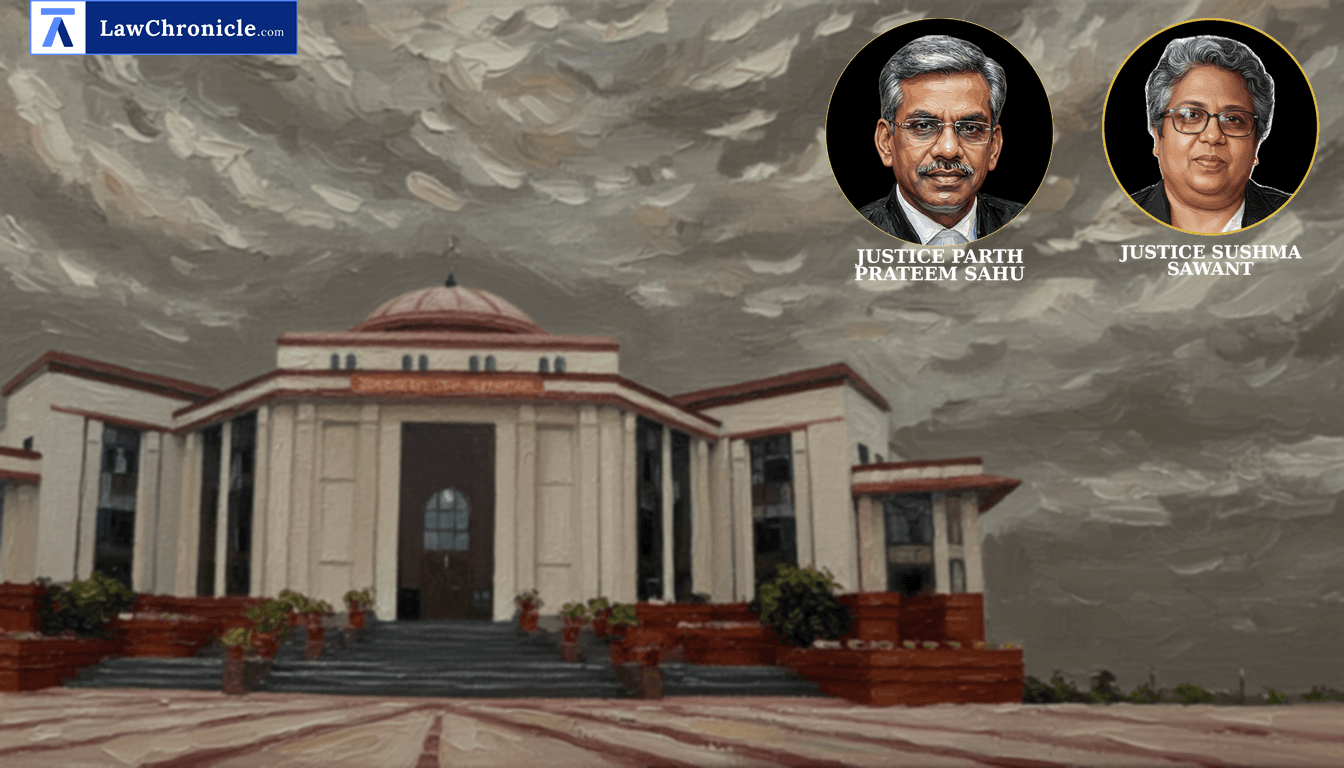
The Chhattisgarh High Court has reinforced the protective shield for children born of void marriages, ruling that while a second wife or a customary divorcee may lose her status as a 'legally wedded wife', the biological children remain entitled to an equal share in the father's immovable property.
A division bench comprising Justice Parth Prateem Sahu and Justice Sushma Sawant adjudicated upon the appeals arising from a title dispute involving two sets of families claiming the estate of a deceased government servant. The Bench was tasked with determining the marital status of two women and the subsequent inheritance rights of their children.
Key Takeaways
Children’s Rights Decoupled from Marriage Validity
Even if a marriage is found to be void under the Hindu Marriage Act, 1955, the children born from such unions are legitimate for the purposes of inheritance in their parents' property.
Doctrine of Approbate and Reprobate
A party cannot accept a document (like a customary divorce deed) to enter a second marriage and later reject the same document to claim inheritance from the first husband.
Maintainability of Declaratory Suits
Suits seeking a mere declaration of rights in monetary dues without seeking the consequential relief of recovery are hit by Section 34 of the Specific Relief Act, 1963.
Preferential Remedy for Monetary Dues
Disputes regarding service-related terminal benefits of deceased employees are more appropriately resolved through Succession Certificates under the [Indian Succession Act, 1925 rather than civil suits for declaration.
Judicial Scrutiny of Marital Status and Customary Divorce
The Chhattisgarh High Court conducted a rigorous analysis of the marital status of both the first and second wives. It observed that the first wife had acted upon a customary divorce deed to remarry, as evidenced by her service records where another individual was named as her husband. Applying the principle that a party cannot "approbate and reprobate," the Bench held she could not claim to be the widow of the deceased for inheritance purposes.
Similarly, the second wife’s marriage was found to be void as she admitted to having a prior subsisting marriage that was never legally dissolved. The Chhattisgarh High Court observed that "A party cannot be permitted to approbate and reprobate according to the advantage sought to be derived from the same document. Having acted upon the document as effecting dissolution of her marriage with the deceased Sukhidas for the purpose of entering into the subsequent marriage, she cannot, for the purpose of claiming rights in the estate of the deceased Sukhidas, be permitted to contend to the contrary."
Directions on Inheritance and Monetary Benefits
Regarding the biological children from both marriages, the Chhattisgarh High Court held they were entitled to equal shares in the father's property. The Bench issued the following directions: "The decree of the learned Trial Court is modified to the extent that the three children of deceased Sukhidas shall have equal shares in the immovable property belonging to him. So far as the service-related monetary dues are concerned, the decree passed by the learned Trial Court granting declaratory relief in respect thereof is set aside. The parties shall be at liberty to avail the appropriate remedy under Part X of the Indian Succession Act, 1925, in respect of the said dues."
Ratio
The status of being a 'legally wedded wife' is a prerequisite for a spouse to inherit as a legal heir; however, under the Hindu Marriage Act, 1955, children of void or voidable marriages are deemed legitimate and possess an indefeasible right to a share in their parents' estate. Furthermore, a suit for a mere declaration regarding monetary dues is barred under the Specific Relief Act, 1963 if the plaintiff fails to seek the consequential relief of recovery and pay the requisite ad-valorem court fees.
Background
The dispute arose following the death of Sukhidas Kurre, an Assistant Veterinary Services Area Officer, in 2015. The first wife, Shobha Sahu, had separated via a customary consent deed in 2000 and allegedly remarried. The deceased subsequently lived with Ashok Lata Kurre (the second wife). Rival claims were filed regarding the deceased's house and service benefits worth ₹17 lakhs.
The Trial Court had partly allowed the claims, but the High Court modified the decree. The Chhattisgarh High Court relied on precedents like Sarla Mudgal v. Union of India and Vimala v. Veeraswamy regarding the validity of subsequent marriages during the subsistence of earlier ones, and Smt. Nirmala and Anothers Vs Mamta and Anothers and Maniyar Sai and Others v. Jangi Bai and Others regarding customary practices. Ultimately, the Bench set aside the declaration regarding monetary benefits, directing the parties to seek a succession certificate under the Indian Succession Act, 1925 while confirming the equal rights of all three biological children in the immovable property.
Case Details:
Case No.: FA-163-2023 & FA-209-2023
Neutral Citation: 2026:CGHC:44253-DB
Case Title: Smt. Ashok Lata Kurre and others v. State of Chhattisgarh and others
Appearances:
For the Petitioner(s): Mr. Manoj Paranjpe, Senior Advocate assisted by Ms. Shivangi Agrawal, Adv.
For the Respondent(s): Mr. Sumit Singh, Dy. Advocate General; Mr. Pranav Tiwari, Advocate
Source: 2026 CaseBase(CTH) 19895
Similar Articles
 Breaking News


