


Insider Trading Intent Irrelevant Under 2015 PIT Regulations: Supreme Court
 Copy Link
 Share
 Save
Closing the door on defenses rooted in end-use of funds, the Supreme Court has ruled that under the 2015 Insider Trading Regulations, the purpose or motive behind selling shares while in possession of Unpublished Price Sensitive Information is entirely irrelevant. Reversing a decision of the Securities Appellate Tribunal, the apex court restored disgorgement and penalty orders against promoters who averted massive losses by trading prior to adverse financial disclosures.
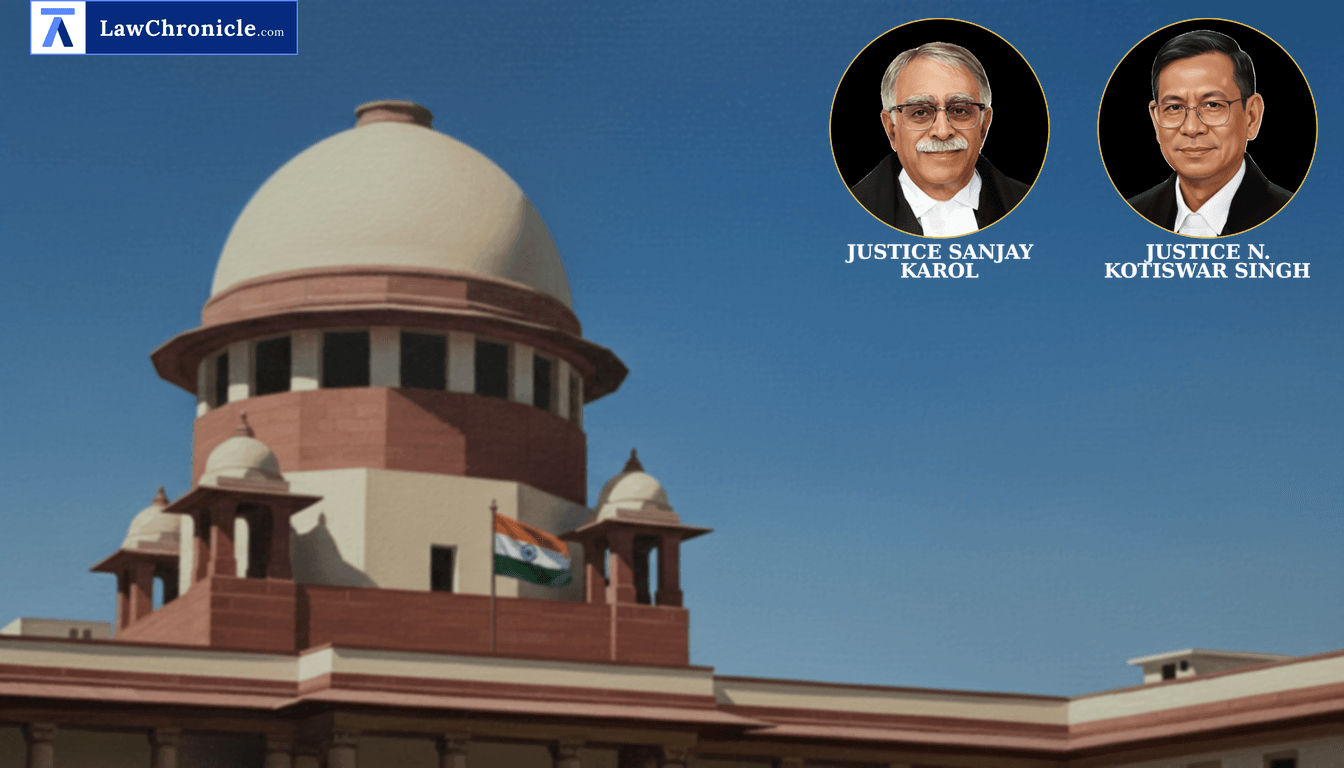
A bench comprising Justice Sanjay Karol and Justice Nongmeikapam Kotiswar Singh adjudicated the appeal filed by the regulatory body against the tribunal's order that had exonerated corporate insiders. The central issue pertained to whether promoters trading while possessing price-sensitive financial losses could claim immunity by citing business necessity or lack of speculative motive.
Key Takeaways
- Strict Liability Standard: Proving possession of price-sensitive information at the time of trade is sufficient to establish insider trading under the 2015 framework.
- End-Use of Proceeds Irrelevant: Insiders cannot escape liability by demonstrating that sale proceeds were utilized for corporate debt servicing or legitimate company obligations.
- Restoration of Disgorgement: Avoided losses must be disgorged irrespective of whether the insider generated actual profits or merely mitigated personal financial damage.
- Narrow Defense Scope: Statutory defenses listed under the regulations are restrictive, excluding broad claims of bona fide intent or corporate necessity.
Court's Analysis on 2015 PIT Regulations
The bench highlighted the fundamental statutory shift between the former 1992 regime and the 2015 regulatory framework governing insider trading. The Court observed that the note appended to Regulation 4(1) embeds a statutory presumption that trades executed while holding sensitive information are inherently motivated by such knowledge.
The Court has following directions:
"i. Noticee no. 1 i.e., Mr. Rajeev Vasant Sheth is restrained from accessing the securities market and further prohibited from buying, selling or otherwise dealing in securities (including units of mutual funds), directly or indirectly, or being associated with the securities market in any manner, whatsoever, for a period of 1 year from the date of this order.
ii. Noticees no. 2 & 3 i.e., Ms. Aarti Sheth and Ms. Divya Sheth are restrained from accessing the securities market and further prohibited from buying, selling or otherwise dealing in securities (including units of mutual funds), directly or indirectly, or being associated with the securities market in any manner, whatsoever, for a period of 6 months from the date of this order.
iii. Noticee no. 1 is directed to disgorge the amount to the extent of loss avoided by his insider trading, aș given in Table 6 of the present order within 45 days from the date of receipt of this order. The amount shall be remitted by the Noticee no. 1 along with interest at the rate of 12% per annum from November 30, 2017 till the date of actual payment.
iv. Noticees no. 2 and 3 are directed to disgorge the amount to the extent of loss avoided by their insider trading, as given in Table 6 of the present order within 45 days from the date of receipt of this order. The amount shall be remitted by the Noticees no. 2 and 3 along with interest at the rate of 12% per annum and for this purpose the interest shall be calculated from November 30, 2017 till the date of deposit of the said amount by these two Noticees in the respective escrow accounts, in compliance with impounding order cum SCN: While calculating and remitting the disgorgement amount along with interest for the period, the Noticees 2 & 3 are allowed to set-off the amount already paid/deposited by them In the escrow accounts in the name of SEBI.
In terms of the provisions of section 11(5) of SEBI Act, the amount so disgorged from the Noticees 1, 2 & 3 will be credited to Investor Education and Protection Fund (IEPF).
v. Further, I impose the following Monetary penalties on the Noticees under the provisions of Sections 15G and 15HB for their respective violations of the provisions of SEBI Act and the PIT Regulations"
The Court, in its reasoning, observed: "It is not in dispute that the respondents were in possession of UPSI. It is also not in dispute that the respondents had sold of large portions or the entirety of their shareholding while in possession of such UPSI. As such, in view of the note appended to Regulation 4 (1) reproduced supra, the purposes for which the proceeds are employed is an irrelevant consideration. The fact that the respondents had indulged in the trades at the relevant point in time is sufficient to conclude that they had conducted insider trading. In that view of the matter, less or no profit, is of no consequence."
Addressing earlier jurisprudence, the Court distinguished SEBI v. Abhijit Rajan, noting that it arose under the 1992 regulations which lacked the restrictive explicit note present in the 2015 rules. Evaluating statutory interpretation rules discussed in P. Mohanraj v. Shah Bros. Ispat (P) Ltd. ( "(2021) 6 SCC 258": 2021 CaseBase(SC) 891), Vikram Singh v. Union of India ( "(2015) 9 SCC 502": 2015 CaseBase(SC) 568), and Siddeshwari Cotton Mills (P) Ltd. v. Union of India, the bench held that the rule of ejusdem generis could not expand statutory defenses beyond those expressly enumerated.
Ratio
Under Regulation 4(1) of the Securities and Exchange Board of India (Prohibition of Insider Trading) Regulations, 2015, once a person is established to have traded in listed securities while in possession of Unpublished Price Sensitive Information, a mandatory legal presumption arises that the trade was motivated by such information. The end-use of transaction proceeds, absence of profit, or subjective corporate motivations do not constitute valid legal defenses against statutory liability.
Background
The dispute originated from transactions involving Tara Jewels Limited. During an Unpublished Price Sensitive Information period between October 2, 2017, and November 29, 2017 prior to the disclosure of massive quarterly financial losses of Rs. 166.80 Crores the company's Managing Director and promoter Vice-Presidents liquidated significant shareholdings. This transaction cumulatively avoided an estimated loss of Rs. 1.38 Crores.
The Whole Time Member of the regulatory authority passed an order imposing market prohibition, directing disgorgement of loss avoided under Section 11B of the Securities and Exchange Board of India Act, 1992, and imposing penalties under Section 15G and Section 15HB of the Securities and Exchange Board of India Act, 1992 for violating Regulation 3(1) and Regulation 4(1) of the Securities and Exchange Board of India (Prohibition of Insider Trading) Regulations, 2015, alongside Section 12A(d) and (e) of the Securities and Exchange Board of India Act, 1992.
On appeal, the Securities Appellate Tribunal set aside the regulatory order by relying on Rakesh Agrawal v. Securities Exchange Board of India, holding that mitigating corporate NPA risks constituted a valid defense. The appellate court was then moved under Section 15Z of the Securities and Exchange Board of India Act, 1992. The Supreme Court allowed the appeal, fully restoring the disgorgement directions and liability while modifying the individual monetary penalty under Section 15G for the first respondent to Rs. 10 Lakhs, aligning it with statutory minimums and the penalties of co-respondents.
Case Details:
Case No.: CIVIL APPEAL NO. 4905 OF 2022
Neutral Citation: 2026 INSC 826
Case Title: SECURITIES AND EXCHANGE BOARD OF INDIA v. RAJEEV VASANT SHETH & ORS.
Source: 2026 CaseBase(SC) 764
Similar Articles


 Breaking News


