


Is Right to Electricity a Fundamental Right under Article 21? Allahabad HC Answers
 Copy Link
 Share
 Save
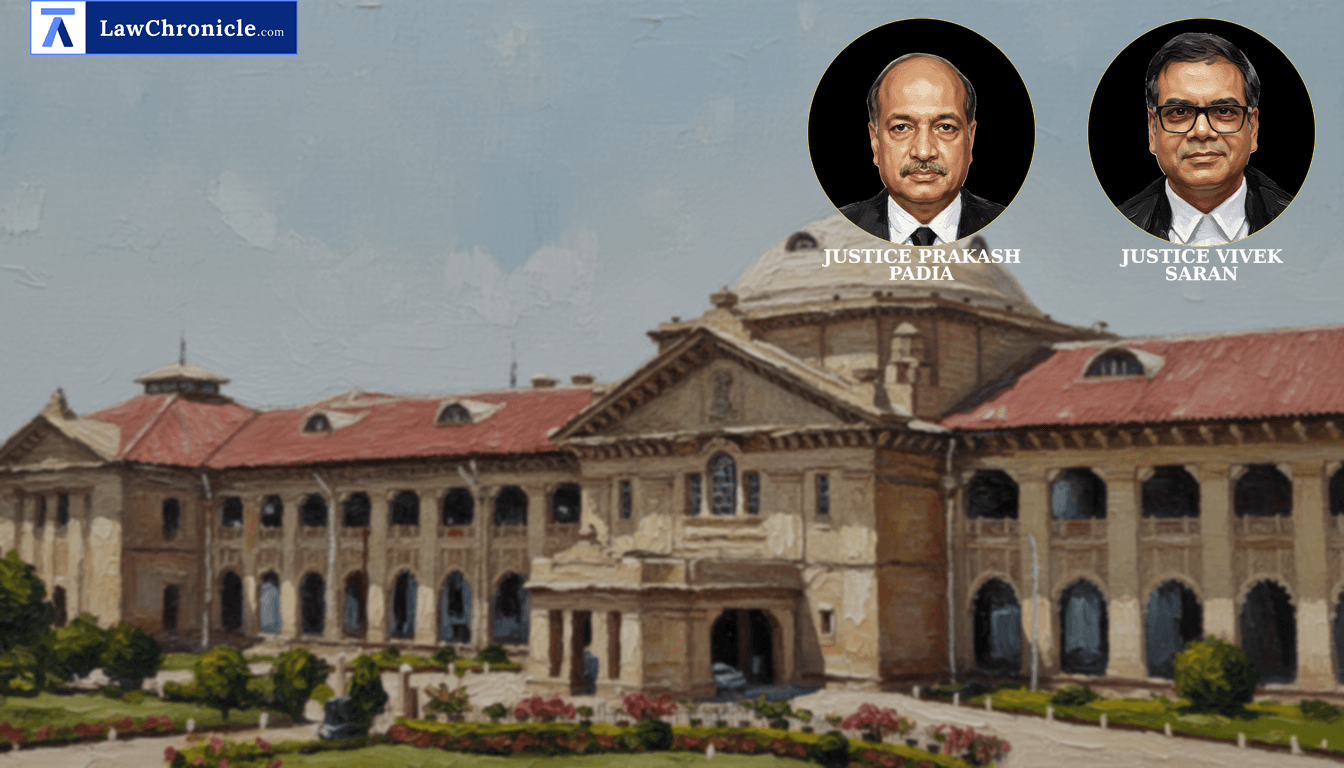
Is Right to Electricity a Fundamental Right under Article 21? Allahabad High Court has ruled that denying electricity connection to an individual for over a decade amounts to a violation of the constitutional guarantee to a dignified life, as access to power is now an indispensable human need. The Allahabad High Court has quashed orders by the Railway administration that refused an electricity connection to a temple priest, ruling that the state cannot force citizens to live in darkness by citing internal administrative circulars.
In a division bench comprising Justice Prakash Padia and Justice Vivek Saran, the Court adjudicated upon a writ petition challenging the rejection of an electricity connection request. The petitioner, a priest residing within a temple situated in a Railway Colony, was denied electricity by the Railway authorities following the death of his father, the former 'Mahant'. The bench observed that the right to shelter and basic amenities is not merely about physical structures but includes the infrastructure necessary for human development.
Key Takeaways
Fundamental Right to Electricity
Access to electricity is now recognized as an integral part of the Right to Life under Constitution of India, ensuring citizens can live with dignity rather than mere animal existence.
Occupational Rights Over Administrative Hurdles
Internal departmental letters or circulars, such as those from the Railway Board, cannot be used to deprive a resident of basic amenities if they are in settled occupation of a premises.
State's Obligation to Provide Infrastructure
In organized societies, the State is under a positive obligation to secure civic amenities like clean water, sanitation, and electricity for its citizens to facilitate their growth.
Electricity as a Basic Human Amenity
The Allahabad High Court emphasized that in the modern era, electricity is a necessity that cannot be withheld arbitrarily. The bench relied on the precedent set in Chameli Singh and others Vs. State of U.P. and another ( "(1996) 2 SCC 549": 1995 CaseBase(SC) 226), which established that the right to shelter includes all infrastructure necessary to enable a human being to develop physically, mentally, and intellectually. Furthermore, the Bench noted the decision in Dilip (Dead) Vs. Satish and others, which held that electricity is a basic amenity that cannot be declined even to a tenant on the grounds of a landlord's refusal to issue a 'No Objection Certificate'. The primary requirement for the supply authority is to verify the applicant's occupation of the premises.
Judicial Precedent on Fundamental Right to Electricity
The Allahabad High Court also referred to a recent coordinate bench ruling in Preeti Sharma Vs. State of U.P. and 7 others, which reiterated that access to an electricity connection is a fundamental right. The bench noted that the petitioner had been forced to live without electricity for more than ten years, despite the respondents not disputing his residence at the site. The Bench noted that "In an organised society, right to live as a human being would not be possible without adequate living space, safe and decent structure, clean and decent surroundings, sufficient light, pure air and water, electricity, sanitation and other civic amenities like roads etc. ... it is the abundant duty of the respondents to ensure that the petitioner have accessibility to basic human need and in modern times, electricity is an indispensable need to live."
The Allahabad High Court issued the following directions:
"The writ petition succeeds and is allowed, the impugned orders dated 26.7.2011 and 9.5.2012 passed by Respondent no.3 and Respondent no.1 are quashed and the respondent no.1/The General Manager, North Eastern Railway, Gorakhpur is directed to provide electricity connection to the petitioner within 30 days from the date of presentation of certified copy of this order unless there is statutory impediment."
Ratio
Access to electricity is a fundamental right guaranteed under Article 21 of the Constitution of India. In an organized society, the right to live with dignity includes the right to basic infrastructure and civic amenities. Consequently, authorities cannot deny electricity connections to occupants of a premises by citing administrative circulars if such denial frustrates the constitutional mandate of the right to life.
Background
The dispute arose when Fanindra Das, the petitioner, sought the transfer or installation of a new electricity connection for a temple located within the Railway Colony at Ballia. The connection had originally been granted to his father, the late Mahant Aniruddha Das, in 1978. Following the father's death, a dispute arose between the petitioner and his brother. The Railway Administration rejected the petitioner's application on July 26, 2011, and May 9, 2012, citing a Railway Board letter from 1986/1996 which restricted electricity connections on private land to parties connected with Railway working.
The petitioner argued that since the temple was surrounded by Railway property, the Railway authorities were the only viable source of power. The Allahabad High Court found that since the petitioner's residence was undisputed, the authorities were duty-bound to provide the connection. The petition was allowed, and the previous rejection orders were quashed.
Case Details:
Case No.: WRIT - C No. - 51747 of 2012
Case Title: Fanindra Das Versus The General Manager and another
Appearances:
For the Petitioner(s): B.K. Tripathi, Pramod Kumar
For the Respondent(s): Rakesh Kumar Mishra, SC
Source: 2026 CaseBase(ALL) 1175
Similar Articles
 Breaking News


