


Jammu & Kashmir and Ladakh HC Quashes Marital Discord Criminal Proceedings Following Rs 30 Lakh Alimony Settlement
 Copy Link
 Share
 Save
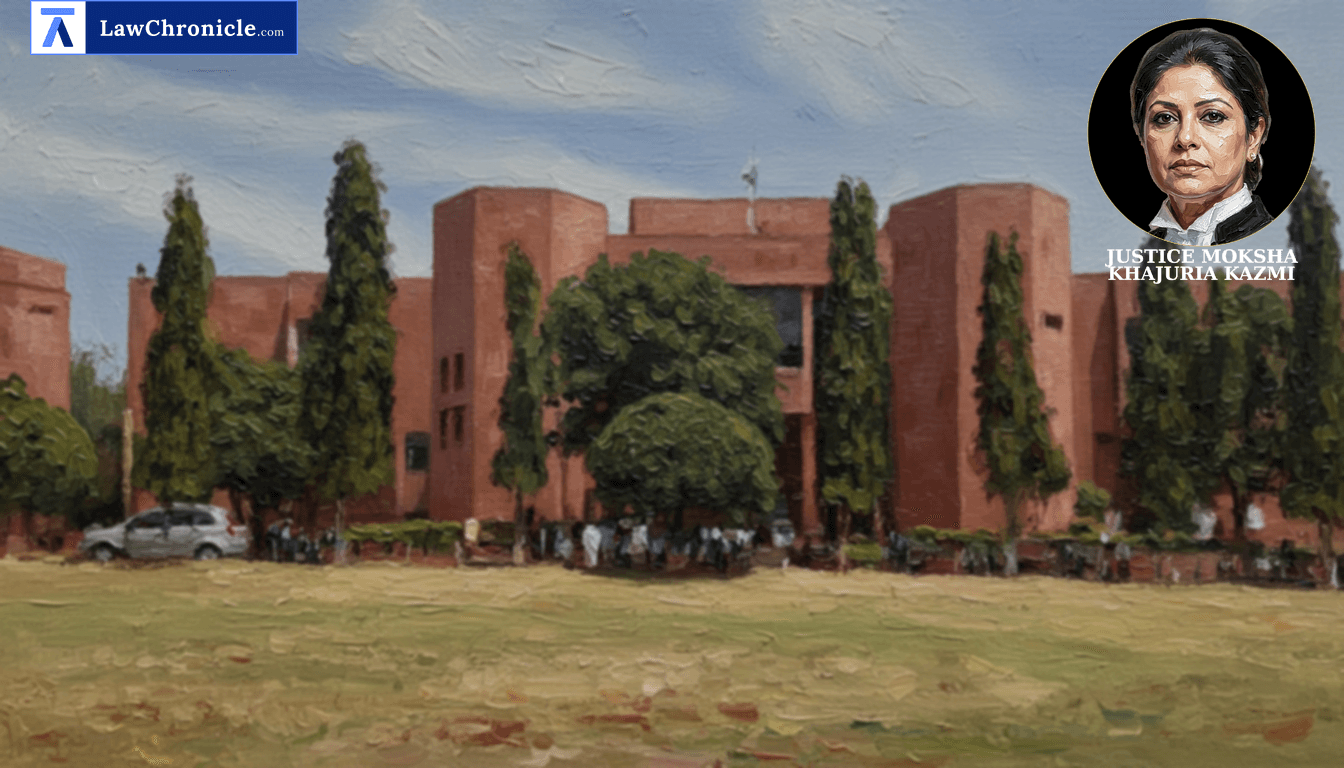
The Jammu & Kashmir and Ladakh High Court has reinforced the judicial policy of quashing criminal proceedings arising from matrimonial disputes where parties reach an amicable settlement, preventing the abuse of court process in personal litigations. Ruling that the continuation of a trial despite a successful mediation and dissolution of marriage would cause "extreme injustice," the Court set aside a charge-sheet involving allegations of assault and criminal intimidation after the husband agreed to a ₹30 lakh permanent alimony package.
Justice Moksha Khajuria Kazmi, sitting at the Jammu bench, presided over the petition seeking the invocation of inherent powers under Section 528 of the Bharatiya Nagarik Suraksha Sanhita, 2023. The Court scrutinized the impact of private settlements on criminal prosecutions, particularly when the underlying conflict stems from domestic discord rather than public harm.
Key Takeaways
Prioritizing Marital Harmony Post-Settlement
Criminal cases with a predominantly civil or matrimonial character should be quashed once parties resolve their disputes to ensure peace and finality.
Limits on Judicial Intervention
The Court reaffirmed that while heinous crimes cannot be settled, personal disputes like those under Section 354 of the Indian Penal Code are eligible for quashing if the possibility of conviction becomes remote due to compromise.
Mediation as a Tool for Judicial Efficiency
The successful mediation leading to a ₹30 lakh alimony payment and divorce was cited as a primary reason to terminate litigation, preventing unnecessary burden on the trial courts.
Judicial Scrutiny of Personal Disputes
The Court noted that the dispute was essentially rooted in marital circumstances and did not involve elements of public harm. The bench observed that the parties had already dissolved their marriage through divorce and were living separately. The Additional Assistant Advocate General (AAG) for the Union Territory also conceded that the offences were personal in nature and compoundable in the context of matrimonial discord.
The Court has following directions:
"In view of the compromise entered into between the parties, there are bleak chances of conviction, rather continuation of criminal proceedings will cause grave injustice to the parties and would amount to abuse of the process of Court, as the parties are no longer interested in pursuing the same. ... In view of the aforesaid discussion as well as law laid down by the Hon'ble Apex Court and to secure the ends of justice, this petition is allowed and Final Report/Charge-sheet No. 450/2022 dated 31.12.2022 titled “UT of J&K vs Shokat Ali Khan & Ors” arising out of FIR No.315/2022 dated 21.09.2022 registered against the petitioners at Police Station, Surankote, Poonch, for commission of offences under Sections 341, 323, 354, 504 & 506 IPC, which is pending before the Court of learned Sub-Judge, Surankote, District Poonch and all other consequential proceedings emanating therefrom, are quashed."
The Court, in its reasoning, observed: "...criminal cases having overwhelmingly and pre-dominantly civil character, particularly those arising out of commercial transactions or arising out of matrimonial relationship or family disputes should be quashed when the parties have resolved their entire disputes among themselves."
Ratio
When a criminal proceeding arises from a matrimonial dispute and the parties subsequently reach an amicable settlement resulting in divorce and financial restitution, the High Court must exercise its inherent powers to quash the proceedings if the continuation of such a case would lead to oppression of the accused and serve no useful purpose for society, provided the offences are not of a heinous nature.
Background
The case originated from FIR No. 315/2022 registered at Police Station Surankote, Poonch, at the instance of the respondent-wife against her husband and relatives for offences under Sections 341, 323, 354, 504, and 506 of the Indian Penal Code. During the pendency of the proceedings before the learned Sub-Judge, Surankote, the matter was referred to mediation.
The mediation resulted in a comprehensive settlement where the parties agreed to divorce. The husband agreed to pay ₹30 lakh as permanent alimony, with ₹10 lakh paid upfront and ₹20 lakh deposited via cheque in court. Following this, the parties appeared before the Registrar Judicial of the High Court to record their statements, confirming they had no objection to the quashing of the FIR. The Court relied on the guidelines established in Narinder Singh and others vs. State of Punjab and others ( "(2014) 6 SCC 466": 2014 CaseBase(SC) 101) to determine that quashing was appropriate given the private nature of the dispute.
Case Details:
Case No.: CRM(M) No. 699/2026
Neutral Citation: 2026:JKLHC-JMU:3126
Case Title: Shokat Ali Khan & Anr vs UT of J&K & Anr
Appearances:
For the Petitioner(s): Mr. Razat Sudan, Advocate
For the Respondent(s): Mr. Meharbaan Singh, AAG for R-1
Source: 2026 CaseBase(JK) 1052
Similar Articles
 Breaking News


