


Matrimonial Discord Extinguished Like A Straw Fire: Sikkim HC Quashes IPC 498A Case
 Copy Link
 Share
 Save
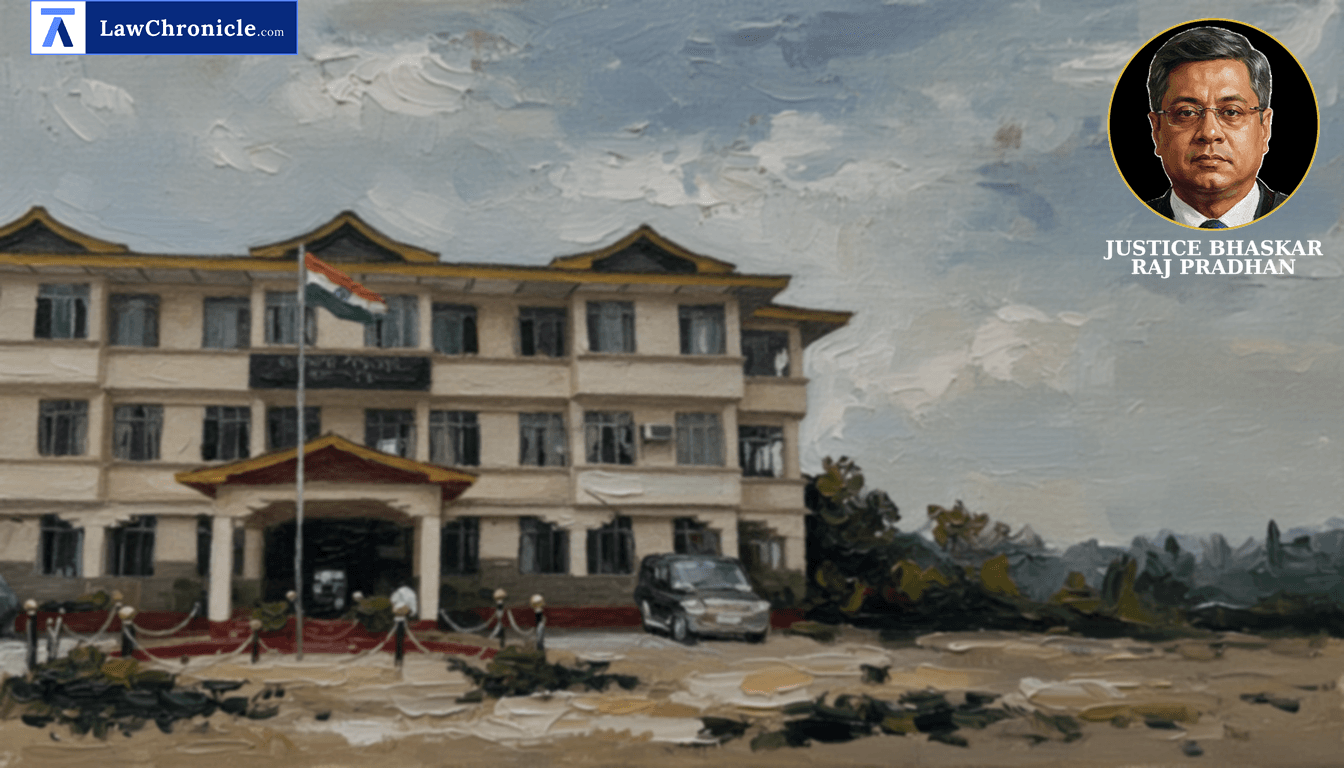
The Sikkim High Court has exercised its inherent powers to quash criminal proceedings for matrimonial cruelty, prioritizing family restoration over litigation where a couple has reconciled and sought a fresh start for their child's future. Justice Bhaskar Raj Pradhan quashed an FIR and subsequent trial under Section 498A of the Indian Penal Code, 1860, observing that matrimonial disputes are often like a "straw fire" that should be allowed to burn out rather than being fueled by the rigors of the criminal justice system.
Key Takeaways
1. Primacy of Family Welfare
The court emphasized that the stability of the family unit and the happiness of children outweigh the state's interest in prosecuting private matrimonial wrongs after reconciliation.
2. Broad Inherent Powers Under BNSS
Exercising jurisdiction under Section 528 of the Bharatiya Nagarik Suraksha Sanhita, 2023, the High Court reaffirmed that its power to quash proceedings is distinct from the compounding powers of trial courts.
3. Judicial Mediation in Camera
The use of personal interaction and in-camera proceedings by the High Court can be a pivotal tool in assessing the genuineness of a compromise in domestic disputes.
The Sikkim High Court noted that "The petitioner-husband regrets his conduct which led to the filing of the FIR, he repents his action and seeks forgiveness from respondent no.1-his wife. The respondent no.1 also submits that both of them have been living together for the last two years and he has now changed himself and he is a better man. Both of them state that they have a daughter who is 18 years old who is living with them and they want to ensure that her happiness remains paramount."
Application of Judicial Precedents on Quashing
The Sikkim High court relied on the established principles for quashing proceedings in non-compoundable matrimonial cases. It noted that when a dispute is predominately private and a settlement is reached, continuation of the case constitutes an abuse of the process of law.
Ratio
When parties to a matrimonial dispute involving Section 498A of the Indian Penal Code, 1860 resolve their personal differences and enter into a genuine compromise, the High Court may exercise its inherent jurisdiction to quash criminal proceedings to secure the ends of justice and prevent the oppression of the accused, especially where the possibility of conviction becomes remote due to the settlement.
Background
The petitioner and Respondent No. 1, married since 2005, were embroiled in legal proceedings following an FIR lodged in April 2022. The petitioner was facing trial for offences under Section 498A and Section 323 of the Indian Penal Code, 1860. During the pendency of the proceedings, the couple reconciled and began living together again.
Counsel for the petitioner relied on the precedent set in Phuchung Tshering Bhutia & Ors. vs. State of Sikkim ( "2014 Crl. Law Journal 3735": 2014 CaseBase(SIK) 40), which followed the landmark Supreme Court ruling in Gian Singh vs. State of Punjab & Anr. ( "(2012) 10 SCC 303": 2012 CaseBase(SC) 854) regarding the quashing of matrimonial criminal cases. A formal Deed of Compromise was executed on April 2, 2026, wherein the husband undertook to maintain a respectful relationship and both parties agreed to jointly seek the quashing of the FIR. The Sikkim High Court, satisfied with the voluntary nature of the settlement after an in-camera interaction, disposed of the petition and quashed the G.R. Case No. 100 of 2023.
Case Details:
Case No.: Crl. M.C. No. 06 of 2026
Case Title: Norbu Gurung vs. Poonam Rai & Anr.
Appearances:
For the Petitioner(s): Mr. Rahul Rathi and Ms. Khushboo Rathi, Advocates
For the Respondent(s): Mr. Safal Sharma, Advocate for Respondent No.1; Ms. Pema Bhutia, Assistant Public Prosecutor for Respondent No.2
Source: 2026 CaseBase(SIK) 90
Similar Articles
 Breaking News


