


Jharkhand High Court Acquits Convict as Eye-Witness Testimony Fails Reliability Test
 Copy Link
 Share
 Save
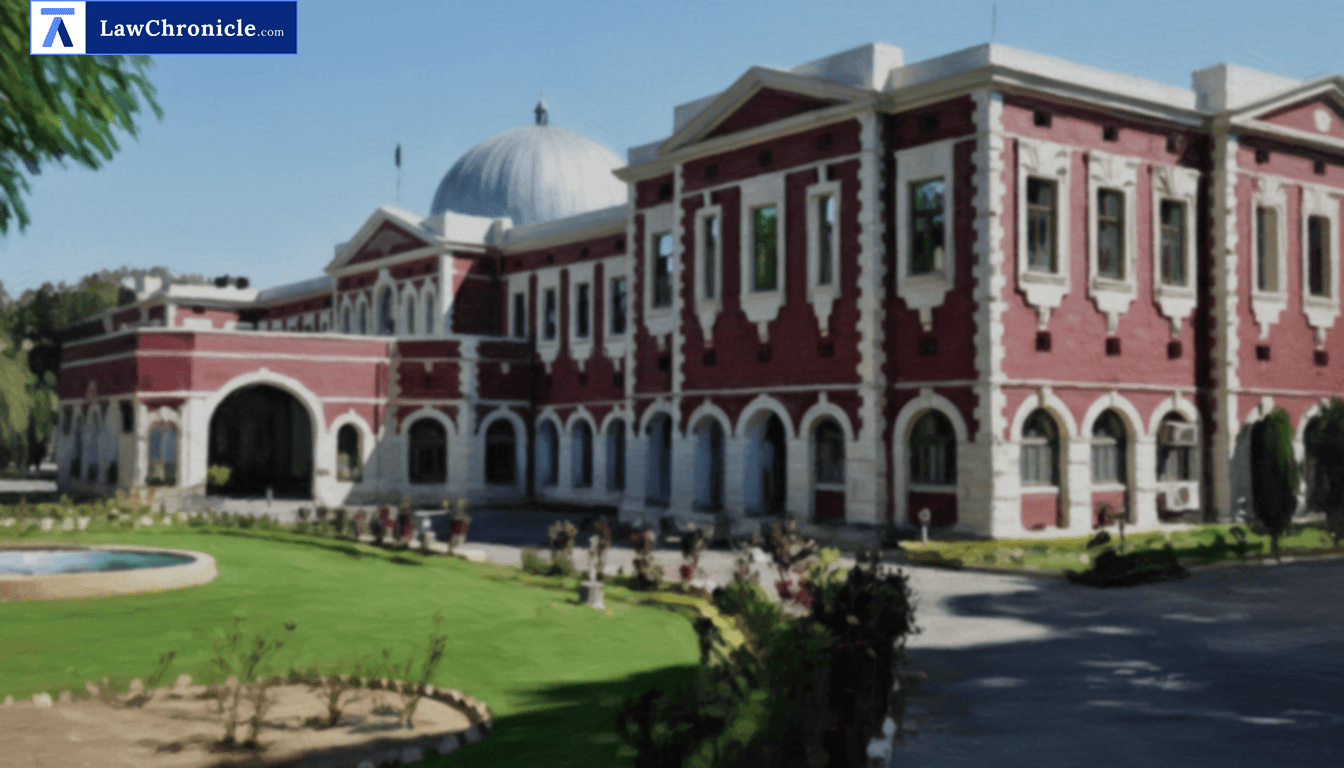
In a decisive intervention against wrongful conviction, the Jharkhand High Court has set aside a life sentence for murder, ruling that the testimony of alleged eye-witnesses cannot be sustained when it is riddled with material contradictions and lacks concrete forensic corroboration. The Bench emphasized that in cases carrying severe penal consequences, the quality of evidence must be exceptionally high, concrete, and cogent, rather than based on inconsistent and scanty circumstances.
A Division Bench comprising Justice Ananda Sen and Justice Pradeep Kumar Srivastava adjudicated the appeal challenging a trial court's conviction under Section 302 of the Indian Penal Code. The Court scrutinized the reliability of the informant and other witnesses who claimed to have seen the appellant inflict a fatal injury on the deceased.
Key Takeaways
Standard of Proof in Serious Offences
Where the offence is severely punishable, the evidence must meet a higher threshold of concrete and reliable quality rather than being based on suspicion.
Reliability of Eye-Witnesses
Testimony of witnesses who claim to be eye-witnesses but provide contradictory statements regarding their presence and the sequence of events must be discarded.
Impact of Forensic Lapses
Failure to conduct chemical analysis of blood-stained soil or weapons can significantly weaken the prosecution's case when oral testimony is already doubtful.
Acquittal on Reasonable Doubt
Inconsistent circumstances and the lack of a clear link between the weapon and the accused entitle the appellant to the benefit of reasonable doubt.
Analysis of Witness Credibility and Forensic Gaps
The Court conducted a meticulous review of the prosecution's evidence, specifically focusing on the testimonies of PW-4 (informant), PW-3, and other family members. It was observed that while the informant initially claimed enmity with the accused in the FIR, he retracted this during cross-examination, admitting no prior enmity existed. Furthermore, the testimony of PW-3, who claimed to have seen the incident from an electric pole, was found to be highly suspicious as he was not an electrician and his presence at the scene was not corroborated by other accounts.
The Court has following directions:
"The appellant is acquitted from the charge levelled against him. Accordingly, this appeal is allowed. Pending I.A.(s), if any, stands disposed of. The appellant is in custody, as such, he is directed to be released forthwith, if not required in any other case. Let a copy of this judgment along with trial court records be sent back immediately to the concerned Trial Court for information and needful."
The Court highlighted the Investigating Officer's failure to send seized materials, including the alleged murder weapon and blood-stained soil, for chemical examination. The Court, in its reasoning, observed: "The learned Trial Court has committed serious error of law while placing reliance upon inconsistent and scanty circumstances available on record for basing the conviction of the appellant. Therefore, the appellant is extended the benefit of reasonable doubt. Accordingly, the impugned judgement of conviction and sentence of the appellant is hereby set aside."
Ratio
The exact rule of law established is that a conviction under Section 302 of the Indian Penal Code cannot be sustained solely on the basis of testimonies from witnesses whose conduct is doubtful and whose statements contain material contradictions. In the absence of forensic validation (SFSL reports) or recovery of the weapon from the conscious possession of the accused, the prosecution fails to establish guilt beyond a reasonable doubt.
Background
The dispute originated from an incident on May 14, 2011, where the deceased, Suchan Mandal, was allegedly attacked with a sharp-edged weapon ('Jhorni') while going to call a neighbour. The informant (son of the deceased) alleged that the appellant, Billa Yadav, inflicted a fatal blow on the neck due to old enmity. Following the trial, the Additional Sessions Judge-I, Sahibganj, convicted the appellant and sentenced him to life imprisonment.
On appeal, the High Court found that the prosecution's narrative was inconsistent. The weapon was not recovered based on a confession or from the appellant's direct possession. The Court noted that the trial court ignored material contradictions regarding the presence of witnesses at the crime scene. Consequently, the High Court allowed the appeal, setting aside the conviction and ordering the immediate release of the appellant.
Case Details:
Case No.: Cr. Appeal (DB) No. 638 of 2017
Neutral Citation: 2026:JHHC:30925-DB
Case Title: Billa Yadav @ Jaidular Yadav vs. The State of Jharkhand
Appearances:
For the Petitioner(s): Mr. Gautam Kumar, Advocate; Mr. Ashutosh Kr. Sinha, Advocate; Mr. Manoj Kumar, Advocate
For the Respondent(s): Mr. Saket Kumar, A.P.P.
Source: 2026 CaseBase(JHKD) 3203
Similar Articles
 Breaking News


