


Jharkhand High Court Affirms Conviction in 1995 Railway Bribery Case
 Copy Link
 Share
 Save
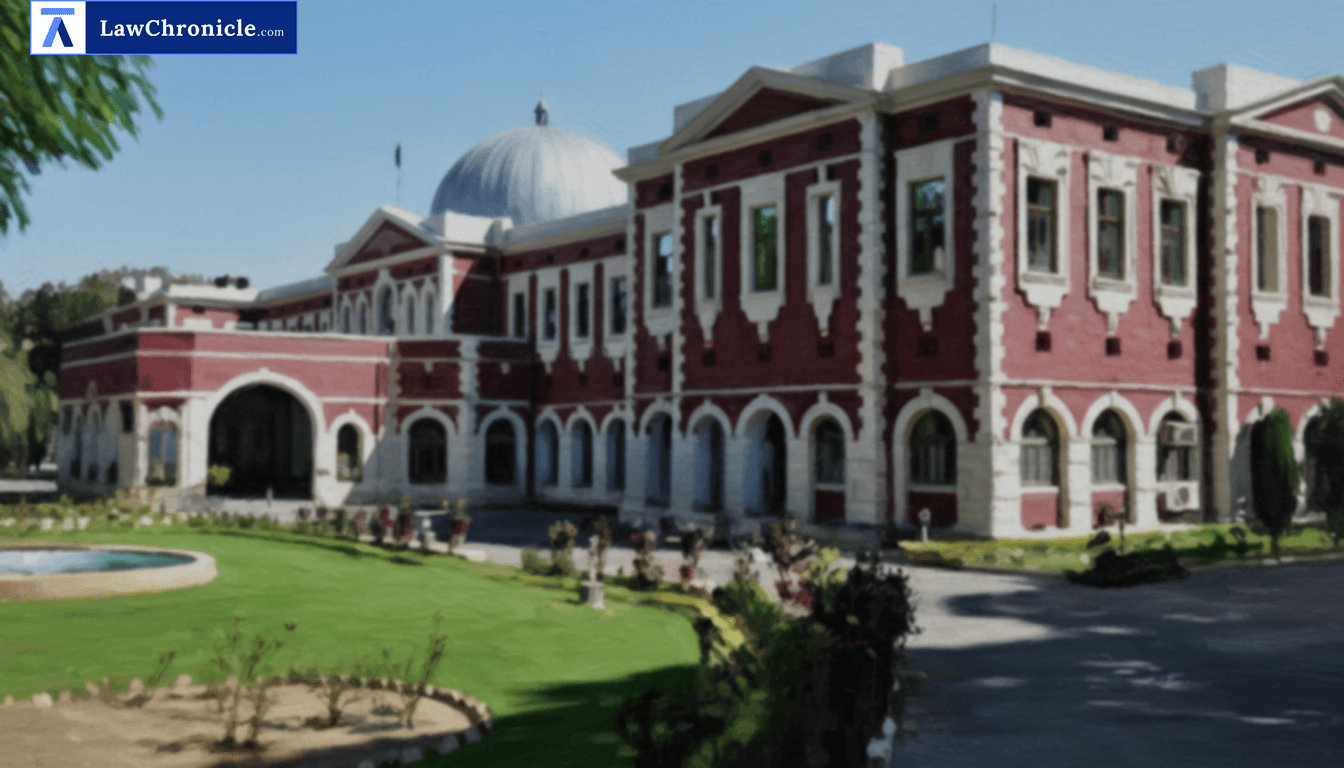
The Jharkhand High Court has reinforced the accountability of public servants by upholding the conviction of a railway parcel clerk caught in a 1995 bribery trap, affirming that any demand for 'extra charges' beyond legal fees constitutes illegal gratification. In a balanced exercise of judicial discretion, the Court sustained the guilt under anti-corruption laws while significantly reducing the sentence in light of the appellant’s advanced age and the three-decade-long pendency of the proceedings.
In a judgment delivered by Hon’ble Justice Pradeep Kumar Srivastava, the Court dismissed a criminal appeal filed by a former parcel clerk against his conviction by the Special Judge, CBI. The bench scrutinized the legality of the trap proceedings and the statutory presumptions arising under the Prevention of Corruption Act, 1988, ultimately finding that the prosecution had successfully established the foundational facts of demand and acceptance.
Key Takeaways
'Extra Charges' Equivalent to Bribe
Public servants cannot evade liability under Section 7 of the Prevention of Corruption Act, 1988 by labeling illegal demands as 'extra charges' rather than 'bribes'.
Statutory Presumption Invoked
Once the prosecution proves physical contact with tainted currency and the demand for money, the burden shifts to the accused to provide a lawful explanation under Section 20.
Age as a Mitigating Factor
While the conviction was upheld, the Court exercised leniency in sentencing, reducing the term to the statutory minimum due to the appellant being 75 years old and the case being 31 years old.
Procedural Technicalities Rejected
Minor issues like the lack of a registration transfer for the motorcycle or the non-seizure of a journey ticket do not vitiate the core evidence of a corruption trap.
Court Observations and Directions
The Court observed that the prosecution had conclusively proved the demand, acceptance, and recovery of Rs. 100/- from the appellant. The Court noted that the appellant’s face 'turned pale' upon being challenged by the CBI, a conduct relevant under Section 8 of the Evidence Act. Regarding the nature of the demand, the Court, in its reasoning, observed: "The appellant cannot escape from his liability merely because he has used the word ‘Extra’ not the word ‘Bribe’ directly. Any money, which is other than a legal charges demanded by any public servant for doing his lawful duty shall amount to demand of bribe or illegal gratification furnishing motive or reward for doing such official work."
The Court has following directions:
"The impugned judgment of conviction of the appellant requires no interference, which is hereby upheld and confirmed. ... Sentence of imprisonment awarded by learned trial court to the appellant for the offence under section 7 of P.C. Act, R.I. of 1 year is reduced to S.I. of 6 months and for the offence under section 13(1)(d), R.I. of 1 ½ years is reduced to S.I. of 1 year. ... Both the sentences are directed to run concurrently. ... The appellant is on bail, thus his bail bond is cancelled and the appellant is directed to surrender before the concerned trial court within two months from the date of the judgment to suffer the sentence awarded to him, failing which, learned trial court shall take all coercive steps for taking him into custody."
Ratio
Under the Prevention of Corruption Act, 1988, the demand for any gratification other than legal remuneration regardless of the nomenclature used by the public servant triggers a mandatory legal presumption under Section 20. Once the foundational facts of demand and receipt of tainted currency are proved, the court must presume a corrupt motive unless the accused rebuts it by a preponderance of probability.
Background
The dispute originated on April 27, 1995, when the complainant approached the Hatia Railway Station to book a motorcycle for Samstipur. The appellant, a parcel clerk, allegedly demanded Rs. 100/- as a bribe over and above the legal booking charge of Rs. 203/-. Following a complaint to the CBI, a trap was laid involving phenolphthalein-treated currency notes. The appellant was caught red-handed, and a solution of sodium carbonate turned pink when his fingers were dipped in it.
The appellant argued that the complainant was not the registered owner of the vehicle and that the mandatory procedure for booking had not been followed. However, the Court relied on Neeraj Dutta vs. State (Govt. of N.C.T. of Delhi) ( "(2023) SCC OnLine SC 731": 2023 CaseBase(SC) 1031) and Rajesh Gupta Vs. State through Central Bureau of Investigation ( "(2022) 20 SCC 793": 2022 CaseBase(SC) 1262) to affirm that the testimony of shadow witnesses and the results of the chemical test were sufficient to establish guilt. The Court also cited V.Sejappa vs State By Police Insp. Lokayukta ( "(2016) 12 SCC 150": 2016 CaseBase(SC) 436) regarding the necessity of independent corroboration in trap cases, which was present here through the testimony of two shadow witnesses from CCL. Ultimately, the Court upheld the conviction but modified the sentence.
Case Details:
Case No.: Cr. Appeal (S.J.) No. 885 of 2004
Neutral Citation: 2026:JHHC:27298
Case Title: Kali Shankar Dhobi vs The State of Jharkhand through CBI
Appearances:
For the Petitioner(s): Mr. Sameer Saurabh, Advocate; Ms. Divya, Advocate; Ms. Isha Kaushik, Advocate
For the Respondent(s): Mr. Prashant Pallav, A.S.G.I.; Mr. Aryan Anurag, A.C. to A.S.G.I.
Source: 2026 CaseBase(JHKD) 2746
Similar Articles
 Breaking News


