


Jharkhand High Court Rejects Husband's Understated Income In Alimony Dispute
 Copy Link
 Share
 Save

The Jharkhand High Court has sent a stern warning to spouses attempting to evade maintenance obligations through income suppression, ruling that understated claims from cash-dominant businesses will not be accepted at face value where business scale suggests otherwise.
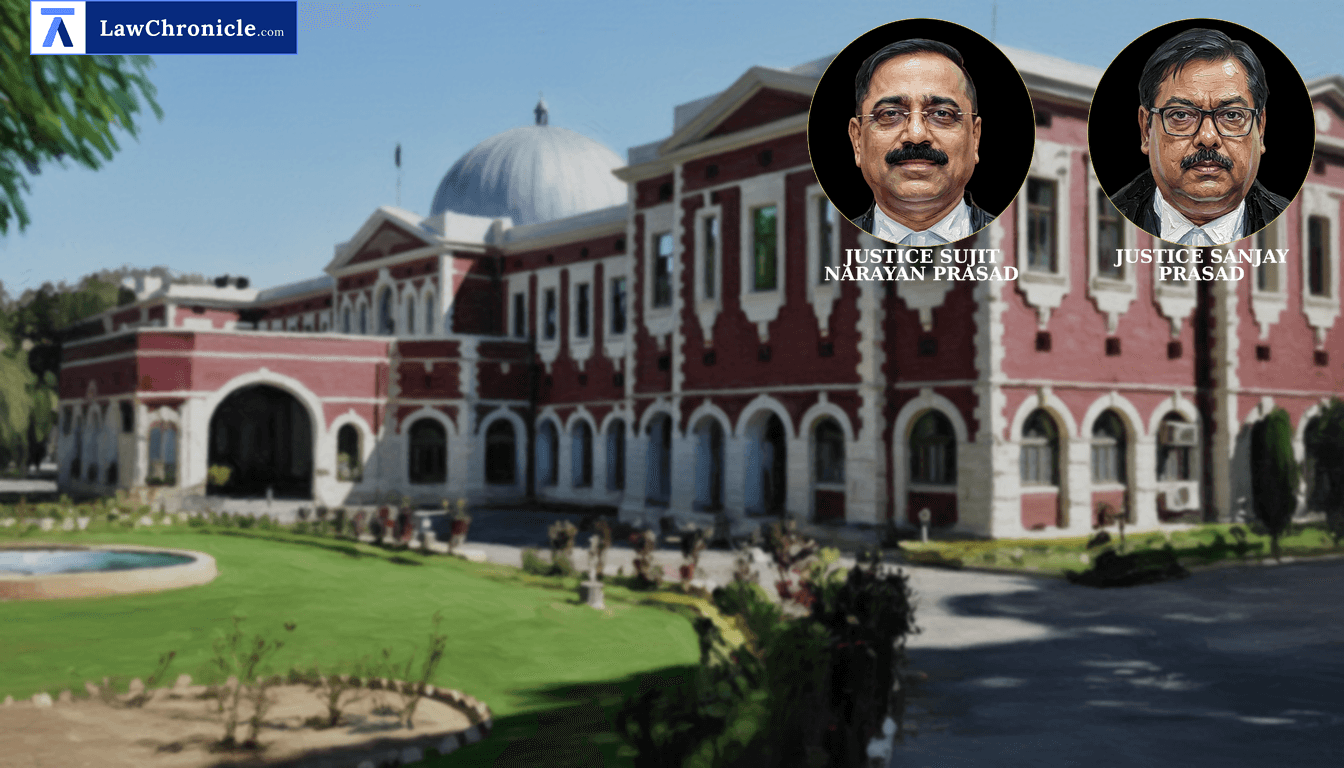
In a decisive intervention for matrimonial justice, a bench of Justice Sujit Narayan Prasad and Justice Pradeep Kumar Srivastava modified an ex-parte divorce decree to ensure financial security for a deserted wife and her minor daughter, awarding a substantial one-time alimony of ₹25 lakhs.
Key Takeaways
Curbing Income Suppression
Courts will look beyond formal declarations of income to the actual scale of business operations, including staff strength and location, to prevent spouses from evading maintenance duties.
Protection of Minor Children
The ruling reinforces the judicial duty to ensure that minor children born of a marriage are not reduced to penury due to the breakdown of the marital tie.
Standard of Living Parity
Alimony must be reflective of the standard of living a spouse would have enjoyed had the marriage subsisted, regardless of whether the divorce was granted ex-parte.
Rejection of Mathematical Formulas
The court reaffirmed that there is no straitjacket formula for alimony; it must be a realistic assessment based on the husband's capacity and the wife's reasonable needs.
The proceedings originated from an appeal filed under Section 19(1) of the Family Court Act, 1984 against a judgment from the Family Court, Bokaro, which had dissolved the marriage under Section 13(1) of the Hindu Marriage Act, 1955 without addressing permanent alimony.
Court's Observations on Financial Disclosures
The Court noted that while the respondent-husband admitted to owning a mobile service center, his claim of earning only ₹10,500 per month was "wholly incongruous" with the nature of the business. The Court highlighted that the shop was located in a posh area and employed multiple technicians, as evidenced by photographs.
The Court, in its reasoning, observed: "Under the family law jurisprudence, where a husband runs a cash-dominant business such as a mobile shop and deliberately suppresses his income, the Court cannot accept such understated claims at face value... Prima facie, it appears that the respondent-husband, in order to evade his responsibility to maintain his wife and minor daughter child commensurate with their standard of living, is deliberately concealing his actual income."
Addressing the mandate for financial disclosure, the Court relied heavily on the principles established in Rajnesh Vs. Neha & Anr. ( "(2021) 2 SCC 324": 2020 CaseBase(SC) 717), noting that both parties must file comprehensive affidavits to ensure a fair determination of maintenance.
Directions Issued by the Court
The Court has following directions:
"a sum of Rs. 25,00,000/- [twenty five lakhs] in total as one-time permanent alimony would be just, fair and reasonable, for sustenance of the respondent-wife and the female child aged about 12 years... The said amount shall be paid by the respondent-husband in four equal installments within a period of one year from the date of passing of the order and first installment shall be paid within a period of two month from today."
Ratio
In matrimonial disputes involving self-employed spouses, courts are empowered to draw adverse inferences regarding actual income based on the visible scale of business operations and lifestyle markers, rather than relying solely on suppressed income declarations. Permanent alimony under Section 25 of the Hindu Marriage Act, 1955 must be sufficient to prevent the dependent spouse and children from falling into destitution and must ensure a life of reasonable comfort commensurate with the husband's actual financial status.
Background
The marriage took place in 2011, and the couple had a daughter. The husband initially filed for restitution of conjugal rights under Section 9 of the Hindu Marriage Act, 1955, but later sought divorce alleging cruelty and desertion. The Family Court proceeded ex-parte, granting the divorce but failing to provide for the wife's maintenance.
Before the High Court, the husband expressed an unwillingness to reunite but offered a monetary settlement. However, the Court found his disclosed income to be unrealistically low compared to the mobile sales and service shop he operated in Bokaro. Citing Kalyan Dey Chowdhury v. Rita Dey Chowdhury Nee Nandy ( "(2017) 14 SCC 200": 2017 CaseBase(SC) 654) and Vinny Parmvir Parmar v. Parmvir Parmar ( "(2011) 13 SCC 112": 2011 CaseBase(SC) 251), the Court emphasized that maintenance should not be a punishment but a mechanism to ensure the wife and child are not reduced to vagrancy. The Court modified the lower court's decree to include the ₹25 lakh alimony, granting the wife liberty to approach the court if the payments are not credited as directed.
Case Details:
Case No.: F.A. No. 213 of 2024
Neutral Citation: 2026:JHHC:30288-DB
Case Title: Rajni Shukla Vs. Shashi Kant Shukla
Source: 2026 CaseBase(JHKD) 3189
Similar Articles
 Breaking News


