


Jharkhand High Court Upholds State's 50-Point Roster Shift, Rules Reservation Must Align With Cadre Strength Over Vacancy
 Copy Link
 Share
 Save
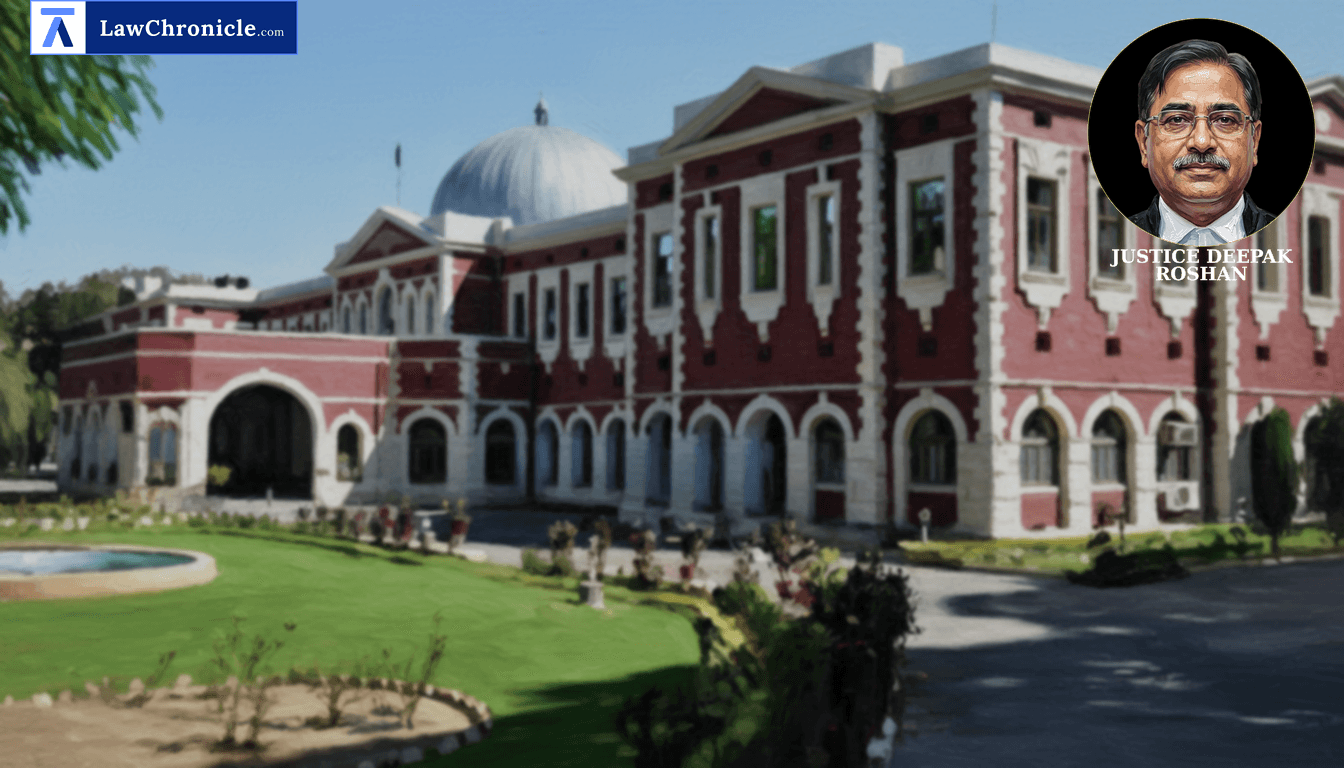
In a decisive validation of executive discretion in service matters, the Jharkhand High Court has upheld the state’s transition to a 50-point rotation roster for small cadres, ruling that the State possesses the inherent competency to alter promotional avenues to ensure reservation quotas meticulously align with statutory mandates. The Court held that the revised policy, which ensures 26% representation for Scheduled Tribes and 10% for Scheduled Castes, successfully rectifies historical imbalances of shortfall and excess inherent in previous models.
A Single Judge bench of Justice Deepak Roshan presided over the challenge brought by a Superintending Engineer seeking to quash the State's 12.03.2024 Resolution. The petitioner had argued that applying a fresh roster from Point No. 12 for the post of Chief Engineer was arbitrary and unconstitutional under the Constitution of India and Articles 14 and 16 of the Constitution of India.
Key Takeaways
- The State Government has the exclusive jurisdiction to change service rules and promotional avenues based on administrative exigencies.
- The 50-point roster system (replacing the previous 5-point model) is a valid mechanism to ensure reservation percentages are applied based on total cadre strength rather than shifting vacancy positions.
- Numerical adequacy of representation is satisfied once the prescribed percentage of posts in a cadre is filled; thereafter, the roster ceases to operate for that quota until a vacancy arises within that specific category.
Court's Rationale on Roster and Cadre Strength
The Court scrutinized the transition from a 'Five-point Model' to a '50-point Model' for cadres with fewer than 50 posts. It noted that the previous model led to a shortfall of four ST employees and an excess of three SC employees. By adopting the 1-to-50 point rotation, the State ensured that out of 50 posts, exactly 13 are allocated to ST (26%) and 5 to SC (10%) as mandated by the Jharkhand Reservation of Vacancies in Posts and Services (SC/ST and BC) Act, 2001.
The Court, in its reasoning, observed: "...the percentage of reservation has to be worked out in relation to the number of posts which form the cadre-strength. The concept of 'vacancy' has no relevance in operating the percentage of reservation... The 'running account' is to operate only till the quota provided under the impugned instructions is reached and not thereafter. Once the prescribed percentage of posts is filled the numerical test of adequacy is satisfied and thereafter the roster does not survive."
Refuting the petitioner's claim of 'legitimate expectation', the Bench emphasized that an employee has no vested right to claim that service rules must remain static throughout their career.
Ratio
The legality of a governmental policy, rather than its wisdom or soundness, is the sole subject of judicial review. The State is empowered to restructure cadres and modify reservation rosters to achieve the constitutional and statutory objective of adequate representation. Reservation in a cadre must be calculated on the basis of total number of posts (cadre strength) and not on individual vacancies, ensuring that the total representation does not exceed or fall below the fixed statutory percentage.
Background
The petitioner, Subodh Paswan, a member of the Scheduled Caste category, challenged Resolution No. 1977 dated 12.03.2024. He contended that the state's decision to mandate the application of a 50-point roster afresh from Point No. 12 for 14 posts of Chief Engineers would result in excessive representation of Scheduled Tribes (reaching 42.85% against a 26% limit) and was therefore in the teeth of the principles laid down in R. K. Sabharwal & Ors. Vs. State of Punjab & Ors. ( "(1995) 2 SCC 745": 1995 CaseBase(SC) 181). The State, represented by G.A.-IV Mr. Mithilesh Singh, countered that the change was necessary to fix the inaccuracies of the previous 5-point roster which failed to meet the statutory requirements of the Jharkhand Reservation of Vacancies in Posts and Services (SC/ST and BC) Act, 2001.
Directions Issued
In dismissing the writ application, the Court issued the following order:
"...this Court does not find any illegality or perversity in the impugned resolution No. 1977 dated 12.03.2024 issued by the Department of Personnel, Administrative Reforms & Rajbhasa, Govt. of Jharkhand. As a result, the instant writ application stands dismissed."
Case Details
Case No.: W.P.(S) No. 4885 of 2025
Neutral Citation: 2026:JHHC:26913
Court: High Court of Jharkhand at Ranchi
Appearances:
For the Petitioner: Mr. Ajit Kumar Sr. Advocate, Ms. Aprajita Bhardwaj, Advocate, Ms. Tanya Singh, Advocate
For the Respondent: Mr. Mithilesh Singh, G.A.-IV
Source: 2026 CaseBase(JHKD) 2740
Similar Articles

 Breaking News


