


Jurisdictional Failure: J&K High Court Quashes Revenue Orders for Ignoring Limitation
 Copy Link
 Share
 Save
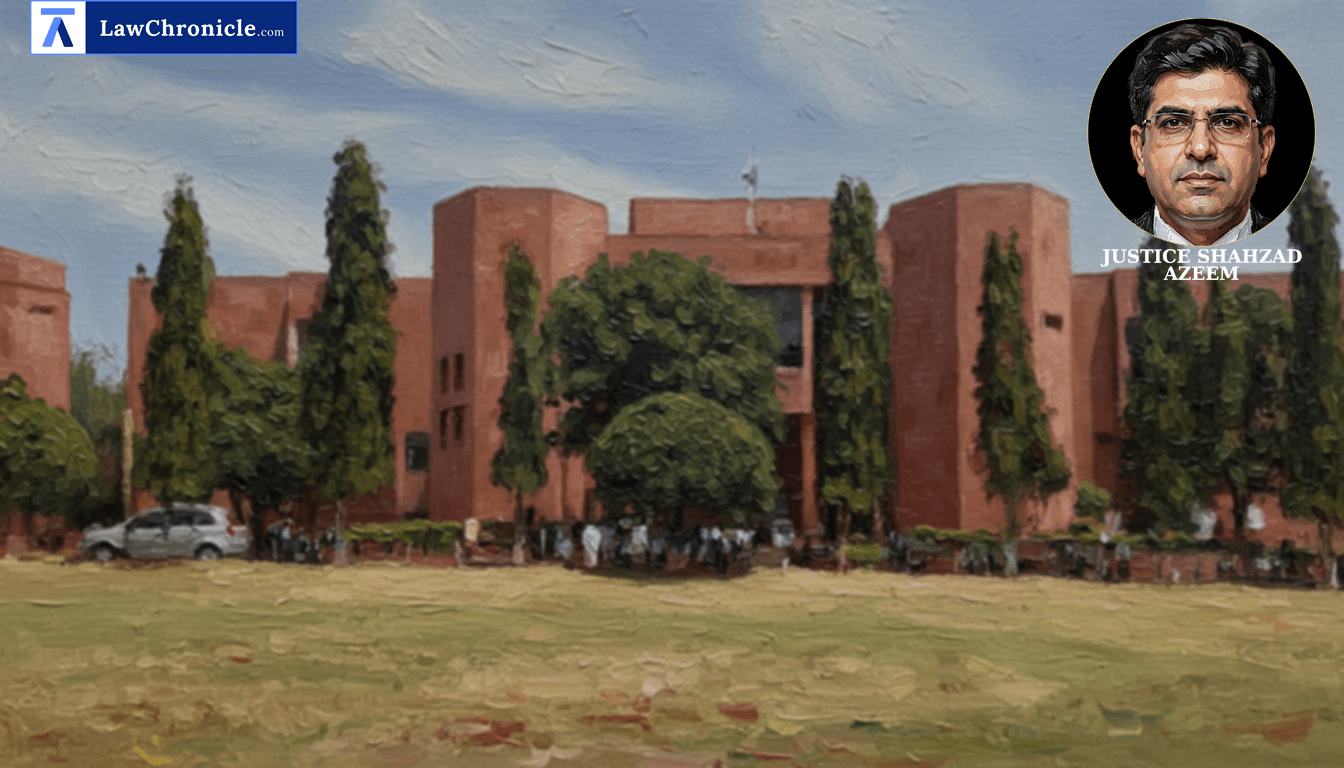
In a decisive affirmation of procedural sanctity, the High Court of Jammu & Kashmir and Ladakh has ruled that an appellate authority's failure to adjudicate the threshold issue of limitation before deciding a case on merits constitutes a fatal jurisdictional error. The court underscored that limitation is not a mere formality but a statutory mandate that goes to the very root of a forum's power to hear a dispute.
A Single Judge bench of Justice Shahzad Azeem heard the challenge against orders passed by revenue authorities that had set aside a land mutation based on a civil court decree without addressing an apparent two-year delay in filing the appeal. The court emphasized that the hierarchy of judicial and quasi-judicial authorities must strictly adhere to the timelines prescribed under the Agrarian Reforms Act, 1976.
Key Takeaways
Limitation as a Jurisdictional Prerequisite
The determination of whether a delay is condonable is a mandatory first step; deciding merits without this adjudication vitiates the entire proceeding.
Mandate for Quasi-Judicial Authorities
Revenue officers acting as appellate or revisional authorities under the Agrarian Reforms Act, 1976 are bound by the Limitation Act as per Section 22 of the state Act.
Nullity of Merit-Based Orders Post-Expiry
Any order passed on merits in an ex-facie time-barred appeal, without a formal order of condonation, is legally unsustainable and lacks jurisdiction.
Court Observations on Limitation and Procedure
The Court noted that Mutation No.137 was attested on 08.01.2011, while the appeal was only instituted on 02.02.2013, representing a delay of approximately two years against the statutory period of 60 days. The Court, in its reasoning, observed: "The law on the subject is well settled and has been consistently reiterated that the limitation goes to the root of the maintainability and it is not a mere procedural formality. It is a mandate to the forum. The question of limitation must be decided first, even more so, where the delay is apparent on the face of the record. When an appeal is ex facie time barred, the appellate authority is duty bound to first determine whether the delay is condonable. Only after the delay is condoned does the authority acquire the jurisdiction to examine the merits. Deciding the merits without first adjudicating the limitation constitutes a material irregularity and jurisdictional error."
The Court further clarified that reliance on the Roshni Act was previously rejected in the context of the judgment in Prof.S.K Bhalla vs. State of J&K, but maintained that the immediate issue was the procedural lapse by the Deputy Commissioner. The Court has the following directions:
"The Deputy Commissioner (Collector), Kathua, is directed to decide afresh the question of limitation and, only thereafter, if the delay is condoned, to proceed to deal with the matter on merits, in accordance with law."
Ratio
An appellate authority lacks the jurisdiction to examine the merits of a case if the appeal is filed beyond the prescribed statutory period of limitation unless the delay is first condoned upon showing sufficient cause. The omission to decide the threshold issue of limitation constitutes a patent jurisdictional error that renders subsequent findings on merits legally unsustainable.
Background
The petitioner, Prem Singh, claimed ownership of land in District Kathua via adverse possession. A Civil Court had previously decreed the suit in his favor, ruling that since the land was used for a brick kiln (Ghair Mumkin Patha), it escaped the definition of 'land' under the Agrarian Reforms Act, 1976 and was thus within the Civil Court's jurisdiction. Consequently, Mutation No.137 was attested in 2011.
Respondent No.4 challenged this mutation before the Deputy Commissioner (Collector) in 2013. The Collector set aside the mutation, holding the Civil Court decree was a nullity as the land fell under the Agrarian Reforms Act, 1976, a view later upheld by the Divisional Commissioner and the Financial Commissioner. The petitioner approached the High Court arguing that the revenue authorities could not set aside a Civil Court decree and, crucially, that the initial appeal was barred by Limitation Act. The High Court, without touching the merits, set aside the revenue orders due to the failure to address the limitation period.
Case Details:
Case No.: WP(C) No. 24/2023
Case Title: Prem Singh Vs UT of J&K and Others
Appearances:
For the Petitioner(s): Mr. Virender Bhat, Advocate.
For the Respondent(s): Ms. Monika Kohli, Sr. AAG with Ms. Sagira Jaffar, Advocate.
Source: 2026 CaseBase(JK) 1190
Similar Articles


 Breaking News


