


Kerala HC: No Absolute Right to Unhindered Access from Every Point on a National Highway
 Copy Link
 Share
 Save
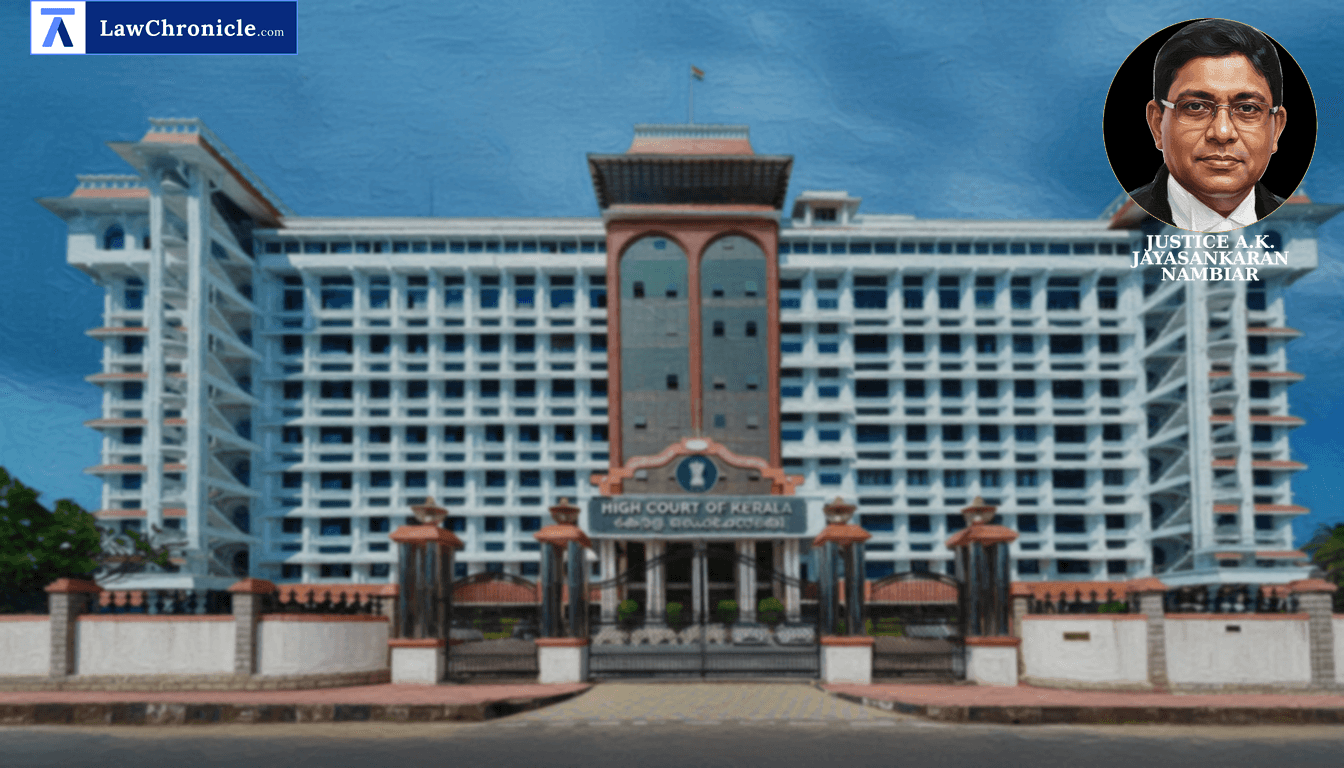
The Kerala High Court affirmed that property owners adjoining a National Highway do not possess an unhindered right of access from every point of their land, especially when the presence of a service road separates the private property from the main carriageway.
A division bench comprising Justice A.K. Jayasankaran Nambiar and Justice Preeta A.K heard a writ appeal challenging a construction project by the National Highway Authority of India (NHAI). The appellant had raised concerns regarding the installation of a static weigh bridge, claiming it obstructed the frontage of his commercial property and reduced its market value.
Court's Observations on Factual Disputes and Property Rights
The Court observed that the adjudication of the matter depended heavily on factual determinations regarding the exact lie of the land and the location of the weigh bridge. Upon reviewing the Commission Report, the Court found that a service road existed between the appellant's property and the weigh bridge site, which effectively neutralized the claim of direct unhindered access to the main Highway.
Rationale Behind Dismissal
The Court, in its reasoning, observed: "Therefore, as rightly held by the learned Single Judge, disputed questions of fact cannot be adjudicated under Article 226 of the Constitution of India. We fully agree with the view taken by the learned Single Judge. Even though the learned counsel for the appellant has raised a rights-based approach anchoring on constitutional principles, we have not addressed the said contentions, as in this case, the basic facts themselves are in dispute, and this Court would not be justified in interfering with disputed questions of fact."
The Court has following directions:
"In that view of the matter, the writ appeal fails and is accordingly dismissed."
Background:
The appellant, who owns 27.55 Ares of land in Kumbalam Village, intended to construct a commercial building. In September 2016, the NHAI (Respondent No. 1) initiated the construction of a static weigh bridge near the Kumbalam Toll Plaza. The appellant's mother originally filed a writ petition seeking to halt the construction, arguing that the project would infringe upon the right to carry on trade under Article 19(1)(g) of the Constitution of India and that an adjoining landowner is entitled to access the highway at any point.
The NHAI countered that the weigh bridge was a mandatory requirement by the Ministry of Road Transport and Highways to check vehicle weights. They further argued that under Section 29 of the Control of National Highways (Land and Traffic) Act, 2002, access to National Highways is regulated and not an absolute right.
The appellant further contended that the right to property under Article 300A of the Constitution of India includes protecting commercial interests and that the NHAI lacked the power of eminent domain under the National Highways Act for such activities without following natural justice. However, the High Court, concurring with the Single Judge, held that since the fundamental facts regarding the property's location and the alleged obstruction were disputed by the appellant despite the Commission Report, such matters could not be resolved in a writ jurisdiction.
Case Details:
Case No.: WA NO. 561 OF 2022
NeutralCitation: 2026:KER:46816
Case Title: JOHN MATHAI v. PROJECT DIRECTOR, NATIONAL HIGHWAY AUTHORITY OF INDIA AND OTHERS
Appearances:
For the Petitioner(s): SHRI.K.R.PRATHISH, SHRI.P.K.SREEVALSAKRISHNAN, SRI.R.LAKSHMI NARAYAN (SR.)
For the Respondent(s): SRI.S.SHANAVAS KHAN, SMT.I.SHEELA DEVI
Source: 2026 CaseBase(KER) 366
Similar Articles

 Breaking News


