


Contractual Disputes Involving Factual Complexities Unfit For Writ Jurisdiction: Allahabad HC
 Copy Link
 Share
 Save
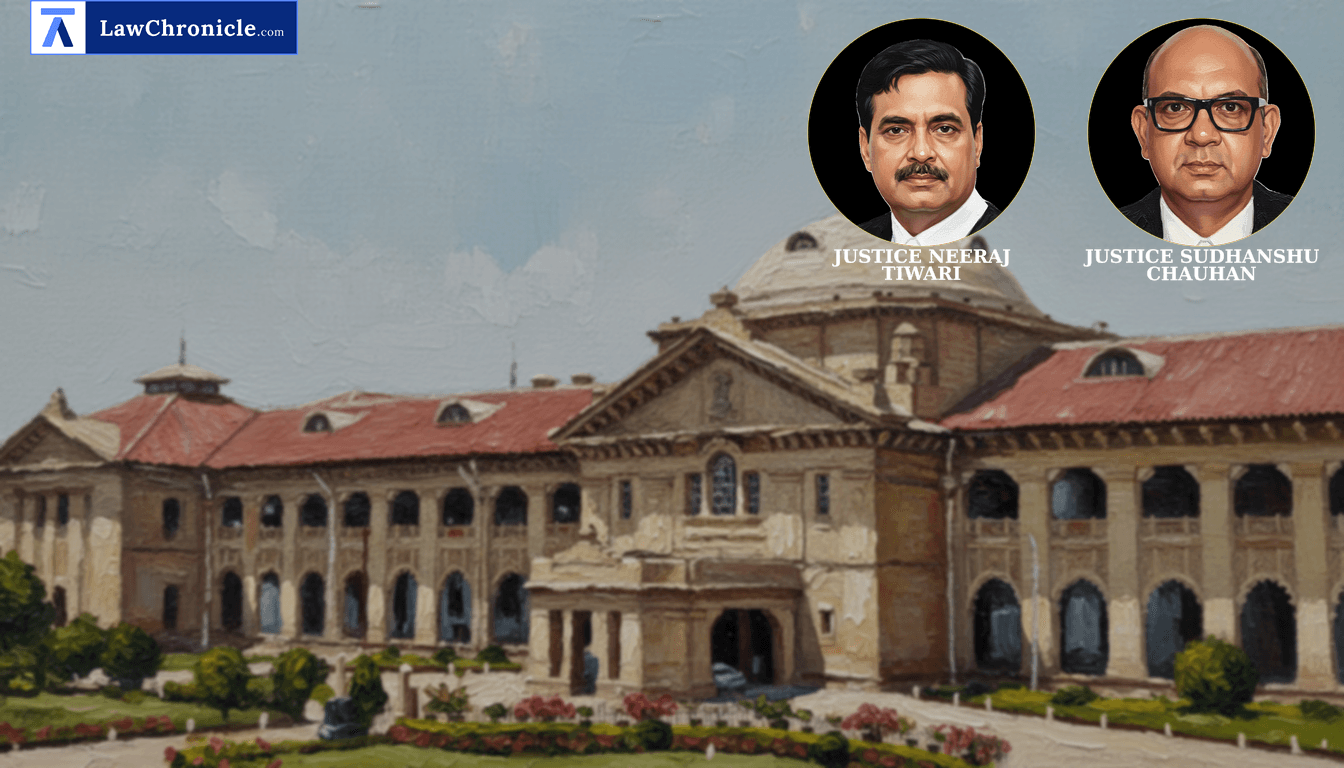
The Allahabad High Court has slammed the door on using writ jurisdiction to bypass arbitration in complex contractual disputes, ruling that Article 226 cannot be a substitute for evidentiary trials when fundamental facts regarding breach and performance are contested.
A bench of Justice Neeraj Tiwari and Justice Sudhanshu Chauhan refused to adjudicate a dispute involving a fisheries lease where the petitioner alleged a shortfall in the allotted reservoir area. The Court emphasized that while writ jurisdiction is expansive, it cannot be invoked to escape obligations voluntarily incurred under a contract, especially when an alternative mechanism like arbitration is explicitly provided.
Factual Discrepancies Require Evidentiary Trial
The Court noted that determining whether the respondent-Corporation committed a breach by providing a smaller area than advertised or whether the petitioner defaulted on installments requires a detailed examination of evidence. The Court, in its reasoning, observed: "...all the questions... are disputed questions of fact, which require the parties to adduce evidence in support of their respective case and the same cannot be adjudicated in proceedings under Article 226 of the Constitution of India. We make it clear that these are only a few questions that have crept in our minds, and there would be many such questions, which would require adjudication by the competent forum."
Precedential Bar on Contractual Writs
Drawing upon the principles settled in Joshi Technologies International Inc. vs Union of India ( "(2015) 7 SCC 728": 2015 CaseBase(SC) 525), the bench reiterated that the High Court should "normally" not exercise discretion under Article 226 when a specific mode of settlement, such as arbitration, is provided. The Court also relied on Union of India vs Puna Hinda ( "(2021) 10 SCC 690": 2021 CaseBase(SC) 1608) to underscore that the quantification of dues and the determination of which party is at fault are matters for the agreed-upon forum, not the writ court.
The Court has the following directions:
"The present petition is dismissed with the liberty to the petitioner to avail remedy under the Arbitration and Conciliation Act, 1996, within a period of six weeks from the date of this order and till then, the operation of the impugned order dated 28.09.2024 and the order dated 07.10.2024, morefully annexed as Annexure No. 1 and Annexure No. 2 to the present petition, shall remain stayed. It is also made clear that the interim protection so granted to the petitioner shall automatically stand vacated after a passage of six weeks from the date of this order."
Background:
The petitioner, Netra Pal Singh, was awarded a 10-year fisheries lease for the Sharda Sagar Reservoir, covering an advertised area of 6,880 hectares. After depositing over Rs. 1.2 crore in security and fees, the petitioner alleged that nearly 1,800 hectares were unavailable for fishing because parts of the reservoir fell within the Pilibhit Tiger Reserve core area or were under agricultural use by villagers.
Due to this alleged shortfall, the petitioner defaulted on installment payments. Consequently, the UP Fisheries Development Corporation cancelled the agreement, forfeited the security deposit of Rs. 67.70 Lakhs, and raised a recovery demand of Rs. 1.82 Crores. The petitioner challenged this termination as a fundamental breach of contract by the state. The respondents argued that the contract was on an "as-is-where-is" basis and that the petitioner had an alternative remedy through arbitration. The High Court ultimately agreed with the respondents, finding the matter too factually dense for summary writ proceedings.
Key Takeaways:
Arbitration Over Extraordinary Jurisdiction
Non-statutory contractual disputes must be resolved through the specific dispute resolution clauses (like arbitration) rather than Article 226 petitions.
Complexity Bars Writ Relief
Where a case requires the assessment of income earned, actual area occupied, and penal interest calculations, the High Court will relegate parties to a forum capable of handling cross-examinations.
Limited Exceptions for Writs
Writs in contractual matters are only maintainable if there is a gross violation of principles of natural justice, a challenge to the vires of an Act, or a clear enforcement of Fundamental Rights, none of which were found here.
Ratio Decidendi:
In matters arising purely out of contractual obligations with no public law element or statutory flavor, the High Court shall not exercise its discretionary jurisdiction under Article 226 if the dispute involves complex questions of fact and an alternative efficacious remedy like arbitration is available.
Case Details:
Case No.: WRIT - C No. - 35283 of 2024
Case Title: Netra Pal Singh vs. State of UP and 2 Others
Appearances:
For the Petitioner(s): Siddharth Khare, Anurag Kumar Ojha, Advocates
For the Respondent(s): Ajit Singh, Santosh Kumar Srivastava, C.S.C., Advocates
Source: 2026 CaseBase(ALL) 234
Similar Articles



 Breaking News


