Kerala HC: Oral Partition Conducted Decades Ago Validated As Binding On Joint Family Members
 Copy Link
 Share
 Save
An oral partition of immovable properties followed by separate possession and independent conduct for decades constitutes a valid and binding division of family assets, precluding subsequent claims for larger shares based on alleged common funds. This ruling clarifies that subsequent memorandums recording such oral agreements do not require compulsory registration if they merely document a previously concluded arrangement.
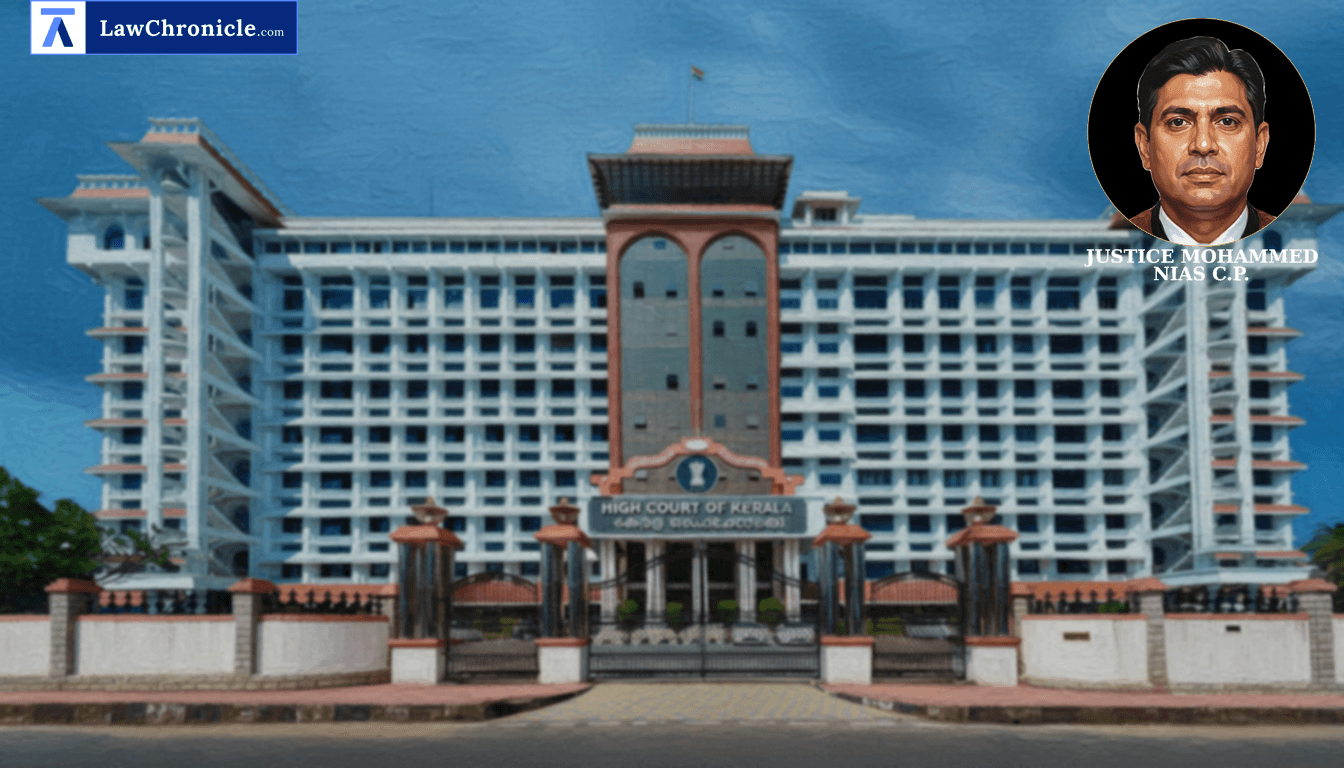
In a comprehensive appellate proceeding, a bench of Justice Mohammed Nias C.P. adjudicated upon the conflicting claims of brothers regarding the partition of family properties. The High Court was tasked with determining whether an oral partition allegedly conducted in 1973 was valid and whether property acquisitions made thereafter by specific members were personal or joint.
Validity of Oral Partition and Unregistered Memorandums
The Court scrutinized the legal status of an oral partition recorded in an unregistered document, Ext.B1. The Court observed that members of a coparcenary or co-owners can validly partition properties orally and hold them in severalty. The bench emphasized that if a subsequent document merely records or memorizes an already completed oral partition, such a document does not itself create or extinguish rights and thus escapes the compulsory registration mandate under Section 17(1)(b) of the Registration Act, 1908.
Evidentiary Value of Subsequent Conduct
The Court, in its reasoning, observed: "The evidence on record clearly establishes that Ext.B1 is only a memorandum of the oral partition effected on 01.04.1973 and not the instrument creating the partition. The subsequent conduct of the parties, including their separate possession, payment of land revenue, maintenance of separate ration cards, receipt of Government compensation in respect of their respective allotments, and independent dealings with the properties, unequivocally demonstrates that the oral partition had been acted upon for decades."
Presumption of Jointness Post-Abolition of Joint Family System
The Court addressed the impact of the Kerala Joint Hindu Family System (Abolition) Act, 1975. It noted that with the statutory extinguishment of the coparcenary, members become tenants-in-common. Consequently, the acquisition of a share by one tenant-in-common from another does not automatically benefit all co-owners unless common funds are explicitly proven to have been used.
On Acquisitions by Individual Members
Regarding the challenge to personal acquisitions under Exts. B2 to B4, the Court found that the plaintiff failed to prove the existence of a common fund. The Court has following directions:
"The judgment and preliminary decree passed by the trial court are set aside to the extent they declare the plaintiff entitled to one-half share in the plaint schedule properties and treat the acquisitions under Exts.B2 to B4 as acquisitions for the common benefit of all the parties. It is declared that the plaintiff is entitled only to an 11/46 share in the properties available for partition. The preliminary decree shall stand modified accordingly. Consequently, the decree in O.S.No.38 of 1998 granting the injunction shall also stand modified in accordance with the above declaration regarding the respective rights of the parties. The appellants are restrained from committing acts of waste in respect of the plaint schedule properties, except the properties allotted to them under Ext.B1 and the properties acquired by them under Exts.B2 to B4."
Key Takeaways:
Oral Partition Finality
Future litigants cannot easily reopen partitions where conduct like separate revenue payments and ration cards has existed for decades.
Registration Exemptions
Memorandums that merely record prior oral partitions do not need registration, providing a shield for informal family arrangements.
Burden of Proof for Common Funds
The onus lies heavily on the party claiming a share in newly acquired property to prove that consideration flowed from joint family income rather than personal earnings.
Statutory Shift to Tenants-in-Common
The ruling reinforces that the Kerala Joint Hindu Family System (Abolition) Act, 1975 fundamentally changed joint family dynamics, making individual acquisitions the norm rather than the exception.
Ratio Decidendi:
An oral partition among coparceners or co-owners, once acted upon through separate possession and enjoyment, is legally valid. A subsequent written memorandum recording such a partition is not compulsorily registrable. Furthermore, post the abolition of the joint family system, members hold property as tenants-in-common, and individual acquisitions do not enure to the benefit of other co-owners in the absence of proof of common funding.
Background:
The dispute arose between two brothers regarding ‘A’ schedule properties left after a 1961 family partition. The plaintiff claimed a half-share, alleging that acquisitions made by his brother (Defendant 1) from other siblings were funded by joint family income. The defendants argued that an oral partition occurred in April 1973, recorded in document Ext.B1, and that all subsequent acquisitions were made using personal salaries and pensions.
The Court relied on several precedents including Nani Bai v. Gita Bai Kom Rama Gunge ( "AIR 1958 SC 706, 1958 SCC Online SC 17": 1958 CaseBase(SC) 70) and K.B. Saha & Sons Private Limited. v. Development Consultant Limited ( "(2008) 8 SCC 564": 2008 CaseBase(SC) 134) to establish that the disruption of a coparcenary ends the presumption of jointness. The High Court found that the trial court erred in granting the plaintiff a half-share, as the evidence of separate ration cards and land revenue payments supported the defendants' claim of a prior partition. The Court modified the decree, reducing the plaintiff's share to 11/46 and validating the defendants' personal acquisitions.
Case Details:
Case No.: AS 549/2002 & RFA 270/2014
NeutralCitation: 2026:KER:50822
Case Title: K. Mahabaleshwara Bhat (Died) v. K. Ganapathi Bhat
Appearances:
For the Petitioner(s): Sri. S.V. Balakrishna Iyer (Sr.), Shri. P.B. Krishnan (Sr.), Sri. K. Jayakumar (Sr.), Sri. P.M. Neelakandan, Sri. P.B. Subramanyan, Sri. Sabu George, Sri. Manu Vyasan Peter
For the Respondent(s): Shri. K. Shrihari Rao, Smt. N. Shobha
Source: 2026 CaseBase(KER) 402
Similar Articles
 Breaking News