


Kerala High Court Restores Complaint Dismissed For Non-Appearance Subject To Costs
 Copy Link
 Share
 Save

Prioritizing the interest of justice over procedural lapses, the Kerala High Court has set aside an acquittal order passed due to the complainant's absence, ruling that a single additional opportunity to adduce evidence must be granted even when multiple prior defaults are alleged. The decision underscores the judiciary's preference for deciding matters on merits rather than technical dismissals, provided the opposing party is adequately compensated for the delay.
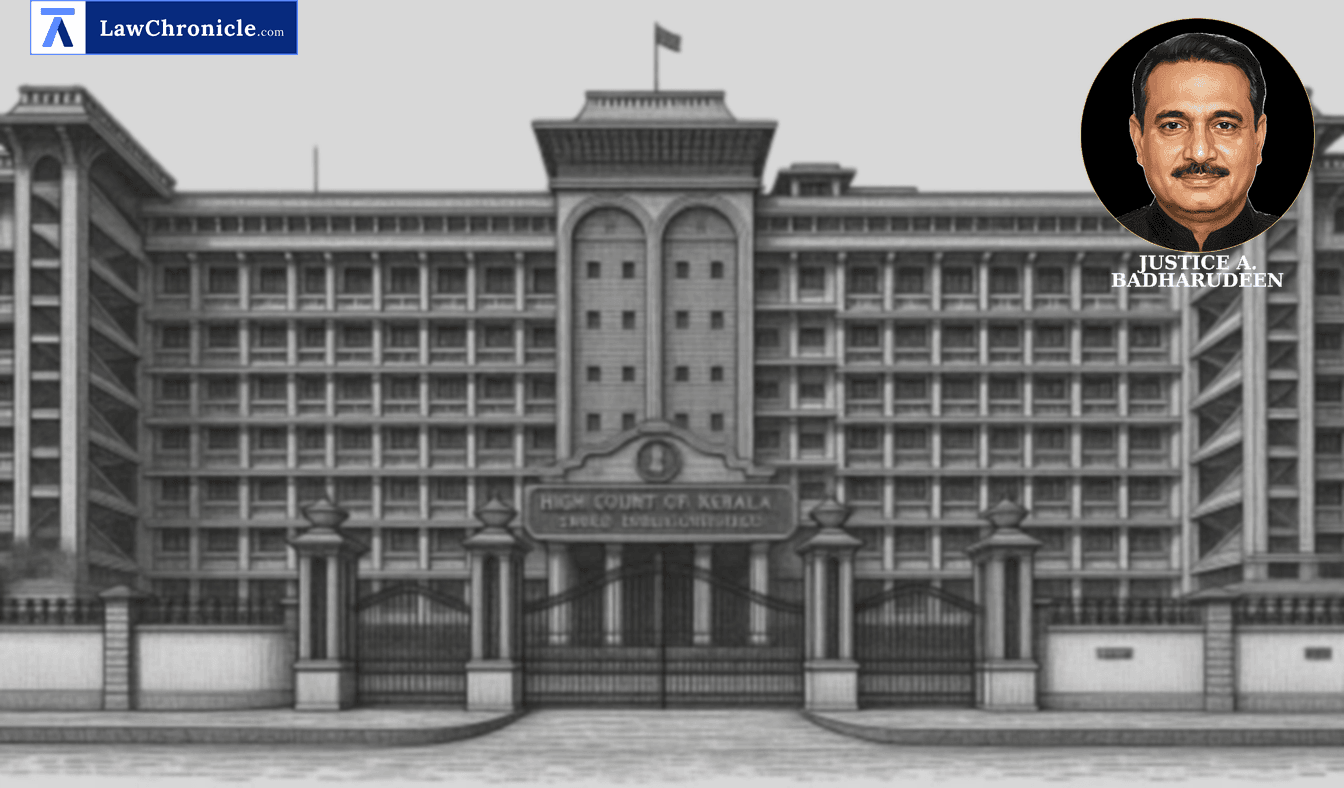
A Single Judge bench of Justice A. Badharudeen heard the appeal challenging the acquittal of the accused under Section 256 of the Code of Criminal Procedure, 1973. The Court navigated the balance between the complainant's right to be heard and the accused's right to a speedy trial, ultimately remanding the case for fresh consideration.
Key Takeaways
Substantive Justice Over Technicalities
Determined that the failure to adduce evidence should not permanently bar a complainant from seeking justice if one more opportunity can rectify the procedural gap.
Conditional Remand via Monetary Costs
Established that the prejudice caused to the accused due to repeated absences can be mitigated by imposing a financial penalty on the complainant.
Fresh Adjudication Mandate
Directed the Trial Court to conduct a fresh consideration of the matter, ensuring both parties are afforded a fair chance to present their evidence and defense.
Court Observations on Section 256 Acquittals
The Court noted that the appellant sought interference in the verdict to gain an opportunity to adduce evidence that was previously missed. Despite objections from the respondents regarding the appellant's history of non-appearance, the Court found it fit to intervene in the interest of justice.
The Court, in its reasoning, observed: "Since the accused was acquitted under Section 256(1) of the Code of Criminal Procedure, 1973, as the complainant failed to adduce evidence, in the interest of justice and to provide one more opportunity to the appellant/complainant, the impugned verdict is hereby set aside and the matter is remanded back to the Judicial First Class Magistrate Court-III, Kottarakkara, for fresh consideration, after affording one more opportunity to the appellant/complainant to adduce evidence."
Addressing the respondent's objections, the Court further stated: "In this case, the respondents/accused seriously objects remand of the matter after setting aside the order on the submission that despite providing many opportunities, the appellant/complainant failed to appear before the court. Even though this submission may have force, the same would not stand in the way of providing one more opportunity to the appellant/complainant to proceed the matter after setting aside the order impugned."
The Court has following directions:
"The impugned verdict is hereby set aside and the matter is remanded back to the Judicial First Class Magistrate Court-III, Kottarakkara, for fresh consideration, after affording one more opportunity to the appellant/complainant to adduce evidence. Needless to say, the accused also to be given opportunity to defend the case. The appellant/complainant is directed to appear before the Judicial First Class Magistrate Court-III, Kottarakkara, on 22.10.2026. However, the same shall be subjected to cost of Rs.3,000/- (Rupees three thousand only) by the appellant/complainant to the accused, within a period of seven days from the date of their appearance before the court. It is made clear that if the cost ordered failed to be paid by the appellant/complainant as directed, the learned Magistrate is at liberty to dispose of the case, in accordance with law, in view of failure to pay the cost."
Ratio
Under Section 256 of the Code of Criminal Procedure, 1973, an order of acquittal passed due to the non-appearance of the complainant or failure to adduce evidence may be set aside in the interest of justice to allow for a decision on merits, provided that any resulting prejudice to the accused is balanced by the imposition of reasonable costs and a strict timeline for compliance.
Background
The dispute originated from a complaint filed by S. Ajithkumar (the appellant) against Pradeep (the respondent). On April 4, 2007, the Judicial First Class Magistrate Court-III, Kottarakkara, dismissed the case and acquitted the accused under Section 256 of the Code of Criminal Procedure, 1973 because the complainant was not present in person or through a pleader.
The appellant challenged this acquittal before the High Court of Kerala under Section 378(4) of the Code of Criminal Procedure, 1973, seeking to set aside the judgment and allow for a conviction after proper evidence. The respondents contended that the appellant had been given multiple opportunities which were squandered. However, the High Court held that while the respondent's concerns regarding delay were valid, they did not outweigh the necessity of providing a final opportunity to the complainant to prove their case.
Case Details:
Case No.: CRL.A NO. 1510 OF 2011
Neutral Citation: 2026:KER:77724
Case Title: S. Ajithkumar V. Pradeep & Another
Appearances:
For the Petitioner(s): Shri.Mohan Jacob George, Smt.P.V.Parvathy (P-41), Smt.Reena Thomas, Shri.L.Ram Mohan
For the Respondent(s): SR PP Sajeev P K
Source: 2026 CaseBase(KER) 29484
Similar Articles



 Breaking News


