


High Court Holds Acquittal Under S.256 CrPC Not Permitted Where Accused Absconded; Directs Expeditious Trial of Multiple NI Act Complaints
 Copy Link
 Share
 Save
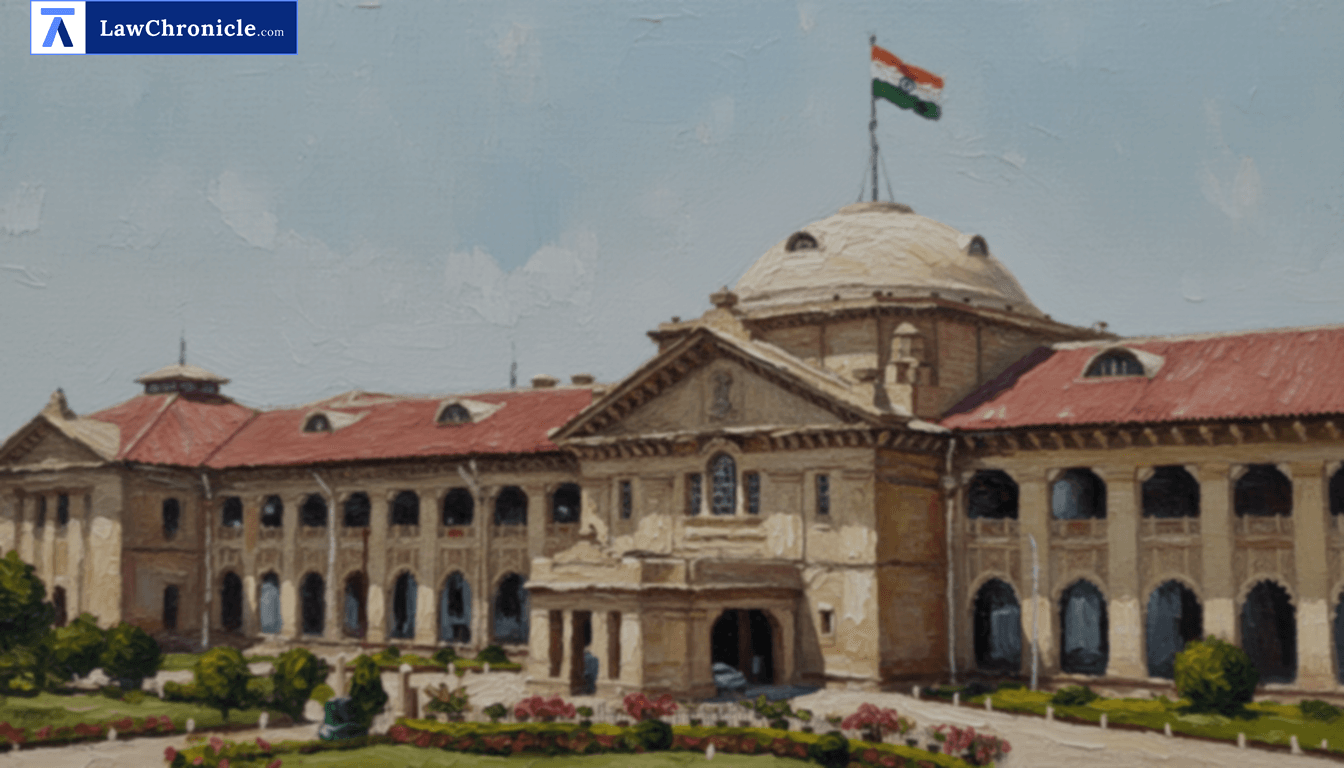
A Single-Judge bench of Justice Avnish Saxena of the Allahabad High Court heard rival applications under Section 482 CrPC concerning eight complaints under Section 138 of the Negotiable Instruments Act arising from a single 2011 transaction. The leading petition by the complainant sought a direction to expedite trial of Complaint Case No. 74 of 2012 and connected matters; the accused filed separate 482 applications to quash revisional orders which had set aside acquittals recorded by the trial Magistrate. Judgment was reserved on December 18, 2025 and delivered on February 11, 2026.
The Court held that a Magistrate could not record acquittal under Section 256 CrPC where the accused never appeared to face trial and the acquittal thereby amounted to an abuse of process. The High Court found the Magistrate’s dismissal dated 29.09.2014 to be "patently illegal" because no post‑cognizance evidence existed and the accused had repeatedly evaded process. The Court observed that revision was the appropriate remedy in the facts and dismissed the accused’s Section 482 applications while allowing the complainant’s petition directing the trial court to proceed expeditiously in accordance with the Supreme Court’s directions in In Re: Expeditious Trial of Cases under Section 138 NI Act. The Court imposed a cumulative cost of Rs. 50,000 on the accused, payable to the complainant within 30 days.
The Court, in its reasoning, observed: “In the present case, the non-appearance of complainant on the date fixed would not lead to acquittal of accused at any stretch of imagination, because the accused was not appearing in the trial. Section 256 CrPC contemplates acquittal of accused, who is before the court and not when he is absconding the trial.”
Background
The dispute arose from a 2011 transaction in which the complainant advanced Rs. 30,00,000 for the proposed purchase of a flat; the accused allegedly returned the amount by eight cheques which were dishonoured for insufficiency of funds, leading to eight criminal complaints filed in January 2012 at Shahganj, Agra. The Magistrate took cognizance on 25.02.2012 and issued summons, but the accused largely did not appear over an extended period. On 29.09.2014, when neither complainant nor accused were present, the Magistrate recorded the order: “29.09.2014—Called out. Complainant not present... so, complaint is dismissed u/s 256 CrPC and accused is acquitted. File be consign to RR.”
The complainant challenged the dismissal by filing criminal revisions before the Sessions Court; the revisional court allowed the revisions (orders in 2017–2018) and directed the Magistrate to decide the complaints on merit. Thereafter processes (summons, bailable and non‑bailable warrants) were repeatedly issued but the accused did not attend, and the accused moved multiple Section 482 petitions seeking quashment of the revisional orders and the summons. The High Court analysed whether the correct remedy was revision under Sections 397–401 CrPC or an appeal under Section 378 CrPC, and whether Section 256 could validly operate where the accused was not before the court.
Relying on precedents including Associated Cement Co. Ltd., S. Anand, Ranjeet Sarkar and related Supreme Court authority on Section 256, the Court concluded that the safeguards in Section 256 required judicial consideration of whether personal attendance of the complainant was necessary and, critically, that acquittal under that provision presupposed the accused’s presence or at least that acquittal follow as a logical consequence. The High Court found no post‑cognizance evidence on which acquittal could legitimately be recorded, held that the revisional jurisdiction had been rightly invoked by the complainant, and characterised the Magistrate’s acquittal as illegal.
Accordingly, the High Court dismissed all eight 482 applications filed by the accused and allowed the complainant’s leading 482 application, directing the trial Magistrate (Additional Civil Judge (Jr. Div.)/Additional Chief Judicial Magistrate, Court No.4, Agra) to expedite trial of the listed complaints in accordance with the Supreme Court’s directions for expeditious trial in Section 138 NI Act matters. The Court ordered cumulative costs of Rs. 50,000 to be paid by the accused to the complainant within 30 days.
Case Details:
Case No.: Application U/s 482 No. - 15862 of 2024
Case Title: Gopal Prasad Sharma Vs. State of U.P. and another
Appearances:
For the Petitioner(s): Rajesh Kumar Pandey, Advocate (for complainant)
For the Respondent(s): Sushil Shukla, Senior Advocate (for accused) assisted by Ravitendra Pratap Singh, Advocate; Raj Shekhar Srivastava, A.G.A.; Government Advocate (for State)
Similar Articles
 Breaking News


